Start with how the garment feels
A casual wardrobe does not need to fit with formal precision. A loose shirt may be exactly what you want, and jeans can be comfortable without following every line of your body. The useful question is whether the fit works for the way you wear the item. If you keep rolling a sleeve that falls over your hand, stepping on a trouser hem or tugging at a waistband, a small alteration may remove that everyday annoyance.
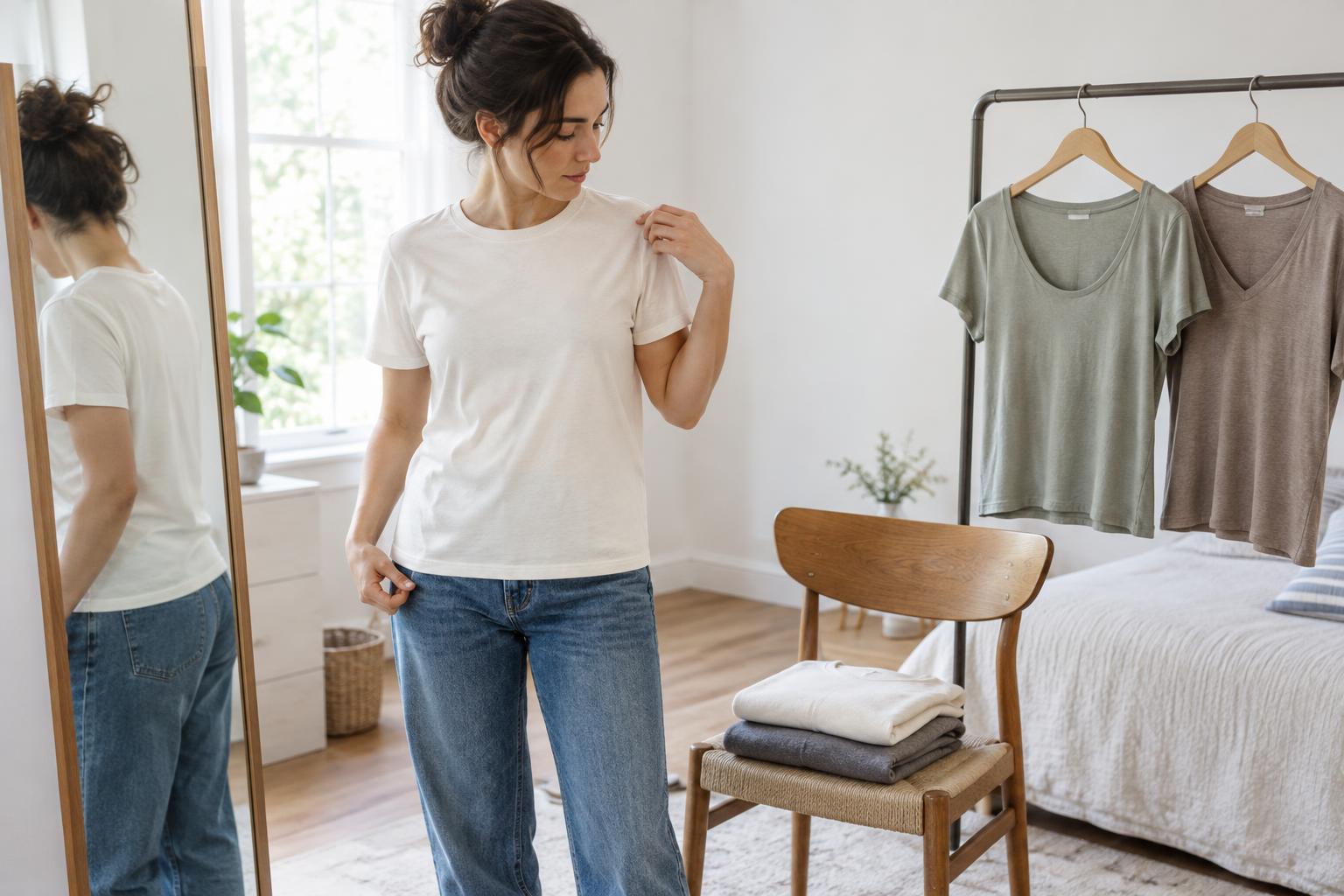
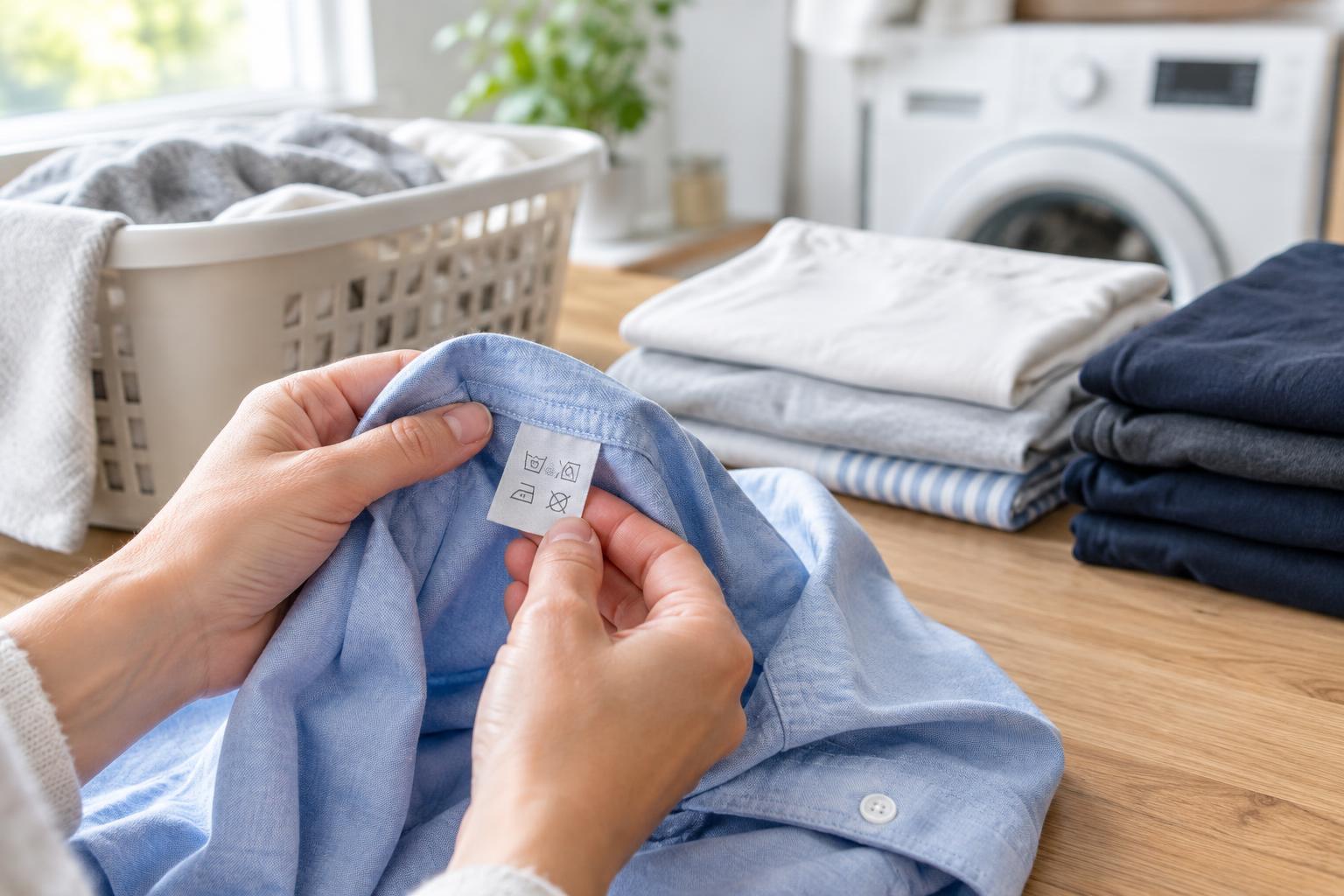
Before changing anything, try the garment on with the shoes and layers you normally pair with it. Sit, walk, reach and bend. Look for repeated problems rather than a single awkward moment in front of the mirror. Washable clothes are best assessed after they have been laundered according to their care instructions, especially if shrinkage is possible. That gives you a more reliable starting point for deciding what needs to change.
Look first at hems and sleeves
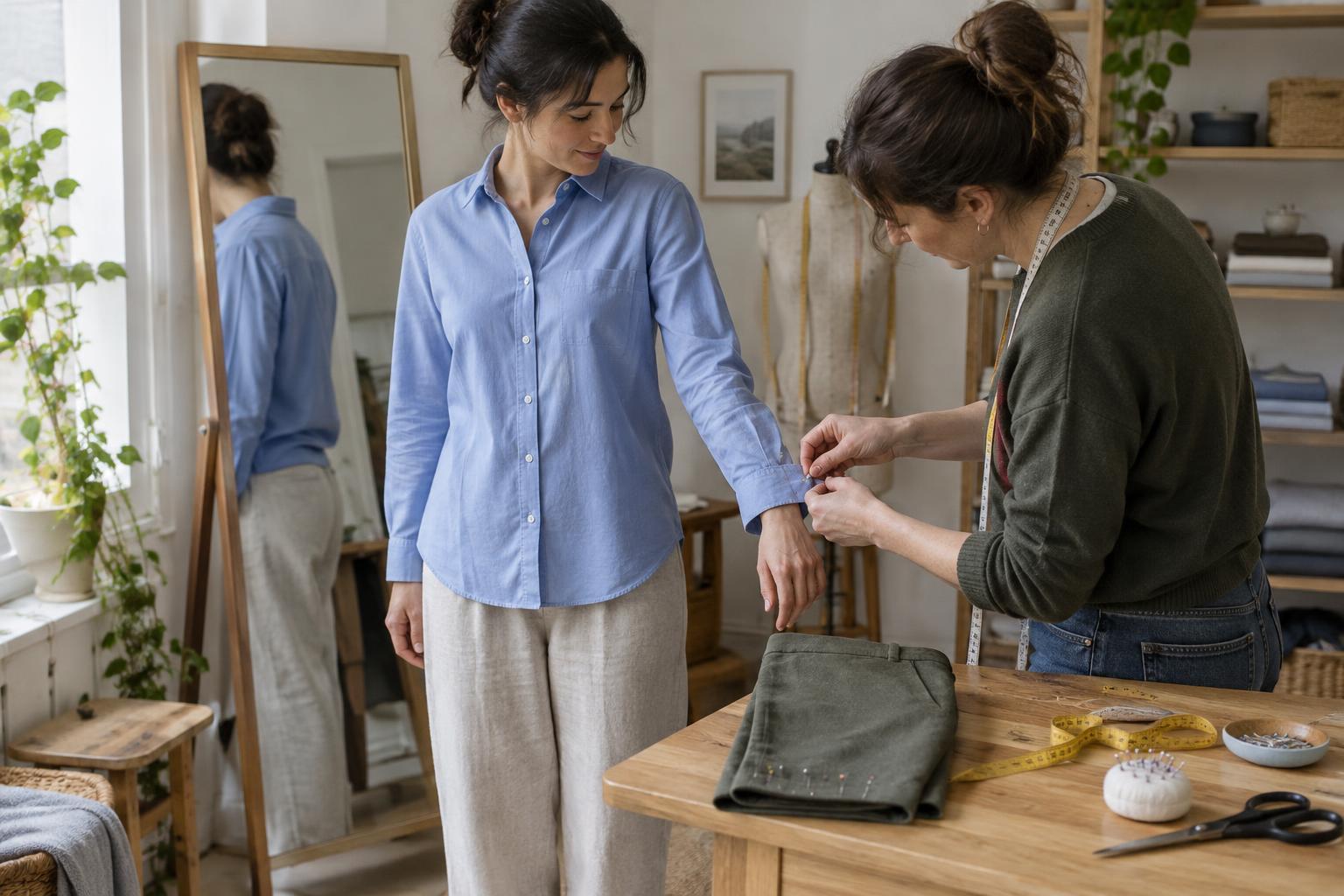
Changing length is often the most straightforward way to improve casual clothes. Trousers that bunch heavily at the ankle can look and feel tidier with a shorter hem. A skirt or dress may become easier to wear if its length works better with your usual shoes and daily movement. For any hem, pin or fold it to the proposed length and walk around before committing; a garment can hang differently once you move.
Sleeves are another useful place to check. Shortening a plain shirt sleeve may stop it covering your hands, while adjusting a jacket sleeve can make an otherwise comfortable layer feel less cumbersome. Details matter, though. Cuffs, zips, lining and decorative stitching can make a length change more involved. Jeans may also have a distinctive original hem you want to keep, so mention that if you take them to an alterations shop.
Consider small changes at the waist and sides
If trousers fit comfortably through the hips and thighs but leave a gap at the back of the waist, taking in the waistband may help. The reverse problem is less simple: letting a waist out requires spare fabric inside the seams, and there may not be enough. For a shirt that feels roomy in the body but fits well at the shoulders and chest, modest side-seam shaping can sometimes make it easier to wear untucked or under a jacket.
These adjustments work best when the rest of the garment already fits. Taking in a great deal of fabric can shift pockets, change how a shirt drapes or make movement less comfortable. Stretch fabric and garments with several panels may also behave differently from simple woven pieces. Ask what the alteration will do to the garment as a whole, not just to the one spot that bothers you.
Know when an alteration will not solve the problem
Some fit issues begin with the garment’s overall shape. If a jacket pulls across the upper back, a shirt’s shoulder seams sit far from where you want them, or trousers twist around the legs, a basic hem or side-seam adjustment may not fix it. Altering shoulders, armholes or a trouser rise is generally more involved than changing length and can affect several other parts of the item.
It is also worth considering fabric condition. A worn-through knee, stretched-out knit or fading along an old fold may remain visible after an alteration. If you are unsure, bring the garment to a person who does alterations and explain both the problem and how you want to wear it. A clear answer that a change is impractical can save you time and help you decide whether the item belongs in your wardrobe.
Make a simple plan before you commit
Choose one or two pieces you already reach for but regularly adjust while wearing. Pin the proposed change, then check the garment in good light from the front, side and back. If someone else will do the work, take the shoes or layer you usually wear with it and describe the outcome in ordinary terms: “I want this hem off the ground” is more helpful than asking for a vague better fit.
For a small repair or a simple straight hem, doing it yourself may be an option if you are comfortable sewing. Otherwise, ask about the proposed change and its cost before leaving the item. The aim is not to make every piece look identical or perfectly tailored. It is to remove a specific obstacle so clothes you already like are more comfortable to wear.