Start with a quick check after wearing
A sweater does not automatically need washing after one wear. Before putting it away, check the underarms, cuffs, neckline and front for odors, marks or stretched areas. If it is clean and still feels fresh, giving it time to air may be enough. If it is visibly dirty or smells unpleasant, follow the garment’s care instructions rather than trying to cover the problem with fragrance.
Let knitwear rest outside a crowded closet for a while before folding it. A clean, dry surface or a drying rack works well; avoid leaving a damp garment in a pile. This small pause also gives you a chance to empty pockets, straighten a twisted hem and spot a loose thread before it becomes harder to deal with.
Fold to help preserve the shape
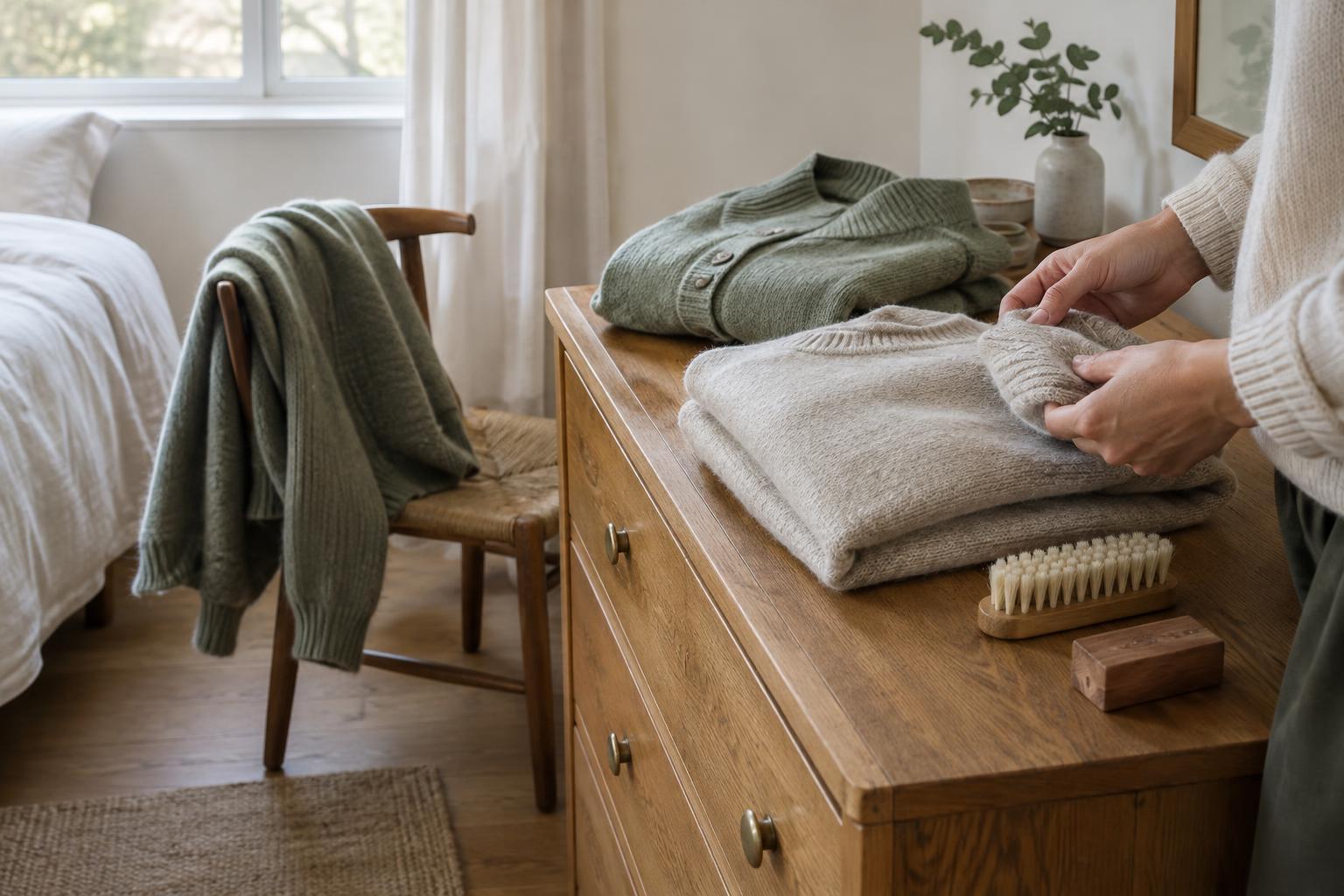
Hanging a heavy sweater for long periods can pull at the shoulders and length. Folding is usually a safer default, especially for loose or chunky knits. Lay the garment flat, bring the sleeves inward and fold the body into a size that fits your shelf or drawer without forcing it. You do not need a perfect fold; the goal is to support the garment and keep it easy to find.
Avoid stacking so many pieces that the bottom ones are compressed and forgotten. If you keep knitwear in a drawer, a single layer or a few short stacks may make it easier to see what you own. When space is limited, consider moving out-of-season pieces to a separate clean, dry spot rather than squeezing everything into the same shelf.
Refresh small problems before they build up
Pilling is a common result of friction, particularly where sleeves rub against the body or a bag rests against a sweater. It does not necessarily mean the garment is poor quality. If pills bother you, remove them gently with a tool intended for knitwear, testing an inconspicuous area first. Work on a flat surface and stop if the fabric starts to snag or look thin.
For a small mark, check the care label and try an appropriate spot-cleaning method before washing the whole garment. Blot rather than scrub, since vigorous rubbing can disturb the knit. Loose threads need similar restraint: pulling one can tighten or distort nearby stitches. If you are unsure how to secure it, set the piece aside for a simple repair instead of wearing it until the snag grows.
Make storage work for the clothes you actually wear
Put your most-used layers where you can reach them without dismantling a stack. Grouping by purpose can be more helpful than arranging by color: lightweight layers for indoor days, warmer sweaters for cold mornings and cardigans that travel easily. Keeping each group visible makes it easier to choose an outfit without repeatedly unfolding the same pieces.
Before putting knitwear away for a longer stretch, make sure it is clean and completely dry. Choose storage that protects it from dust while allowing you to check on it easily. If your home tends to be damp, pay attention to where you store textiles; a musty cupboard is unlikely to keep them feeling fresh. Revisit stored pieces occasionally so a small stain or snag does not surprise you next season.
Keep the routine light
A manageable habit is better than an elaborate system you will not use. After wearing knitwear, decide whether it needs washing, airing, a minor fix or simply folding. Give frequently worn pieces enough room to rest between uses when possible, and keep a small space for items that need attention so they do not disappear back into the drawer.
It also helps to notice which garments demand more care than you are willing to give. A favorite sweater may be worth the extra effort, while a rarely worn one that constantly snags may not suit your routine. Caring for everyday knitwear is less about keeping every piece pristine and more about making the clothes you enjoy comfortable and ready to wear.