Start with the kind of painting you want to make
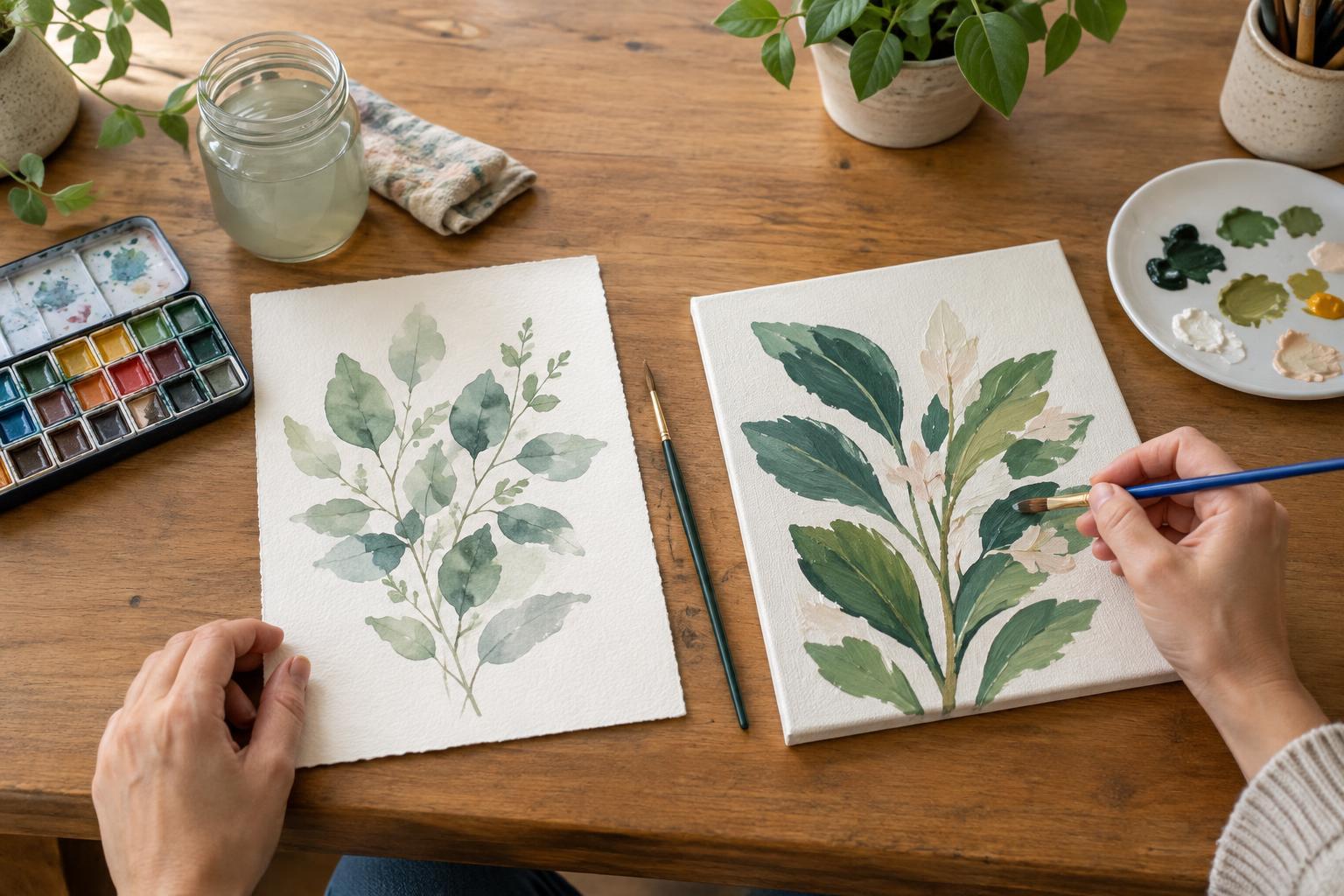
The easier paint is often the one that suits the result you have in mind. Watercolor is a good match for loose flowers, soft landscapes and sketches where the white of the paper becomes part of the picture. Acrylic works well for bold shapes, solid backgrounds and projects where you want to paint over an area and try again. Neither medium requires you to be good at drawing before you begin.
Picture your first project rather than your future collection of supplies. Would you enjoy making a small, airy postcard with a few washes of color? Try watercolor. Would filling a page with bright, overlapping shapes feel more satisfying? Try acrylic. A project you actually want to finish will teach you more than a set of materials you feel obliged to use.
What watercolor feels like at the table
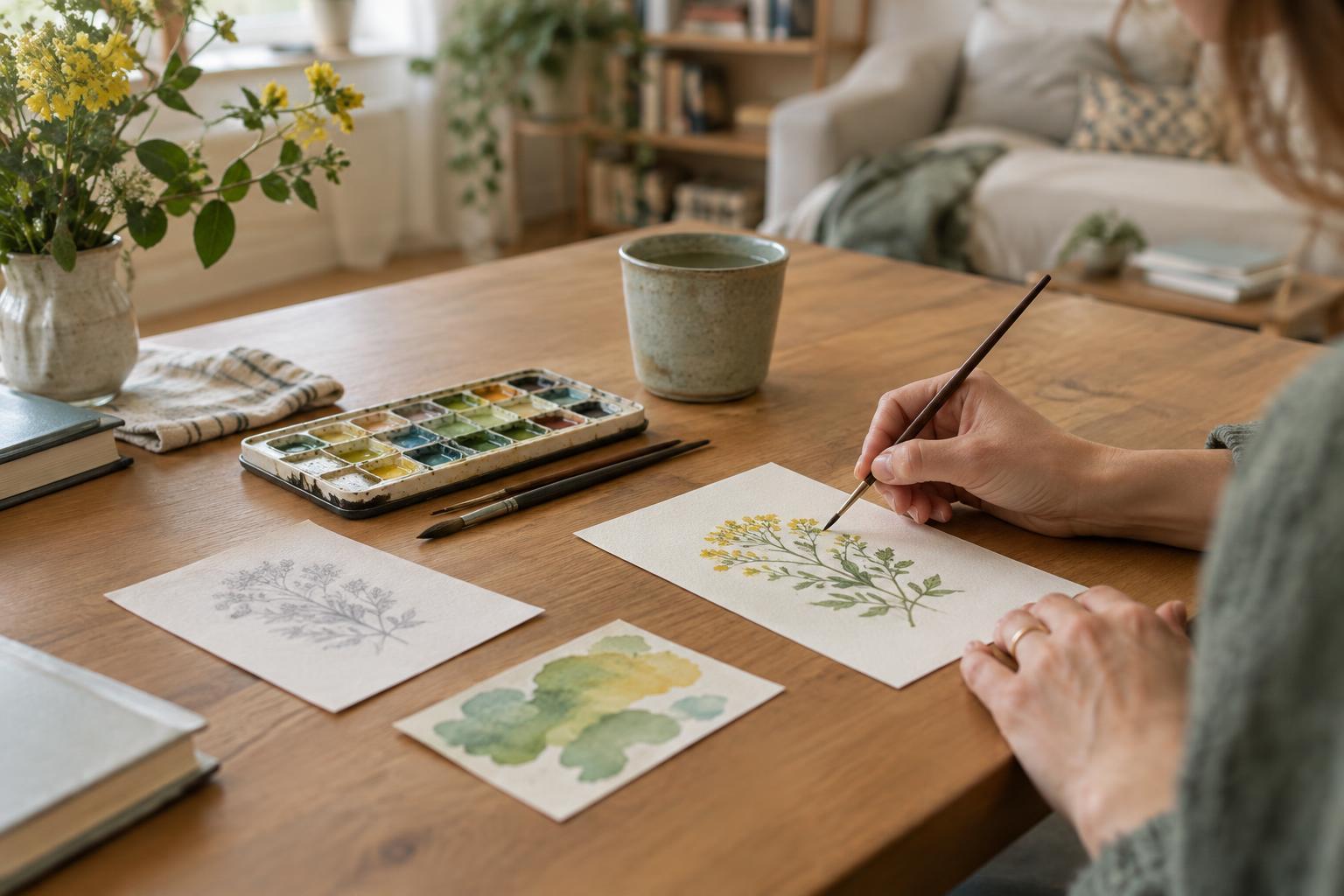
Watercolor is portable and relatively simple to set out: paints, a brush, water, a cloth and watercolor paper are enough for a first session. You can mix a little color with plenty of water for a pale wash, or use less water for a stronger mark. A basic palette can last through many small experiments because you use modest amounts of paint.
Its main challenge is that water has a say in the result. A wet brush can make color spread, and a second pass may move paint that looked settled. The brightness of the paper also matters: once an area becomes dark, getting it back to a clean white is difficult. You can sometimes lift a little color with a damp brush, depending on the paint and paper, but it is easier to leave light areas unpainted from the start.
If that sounds intimidating, give yourself a project that welcomes irregular edges. Paint three leaves, a simple sunset or a row of colorful rectangles. Practice making one pale mark and one darker mark with the same color. Treat unexpected blooms and uneven washes as things to notice, not errors you must repair.
What acrylic feels like at the table
Acrylic usually gives you more control over where color goes. It can make an opaque mark, so you can cover a dry area with a new layer rather than plan every light space in advance. That makes it friendly for first projects with clear shapes, such as a patterned pot, a simple fruit still life or an abstract design. You can paint on a suitable painting surface or on sturdy paper intended for acrylic.
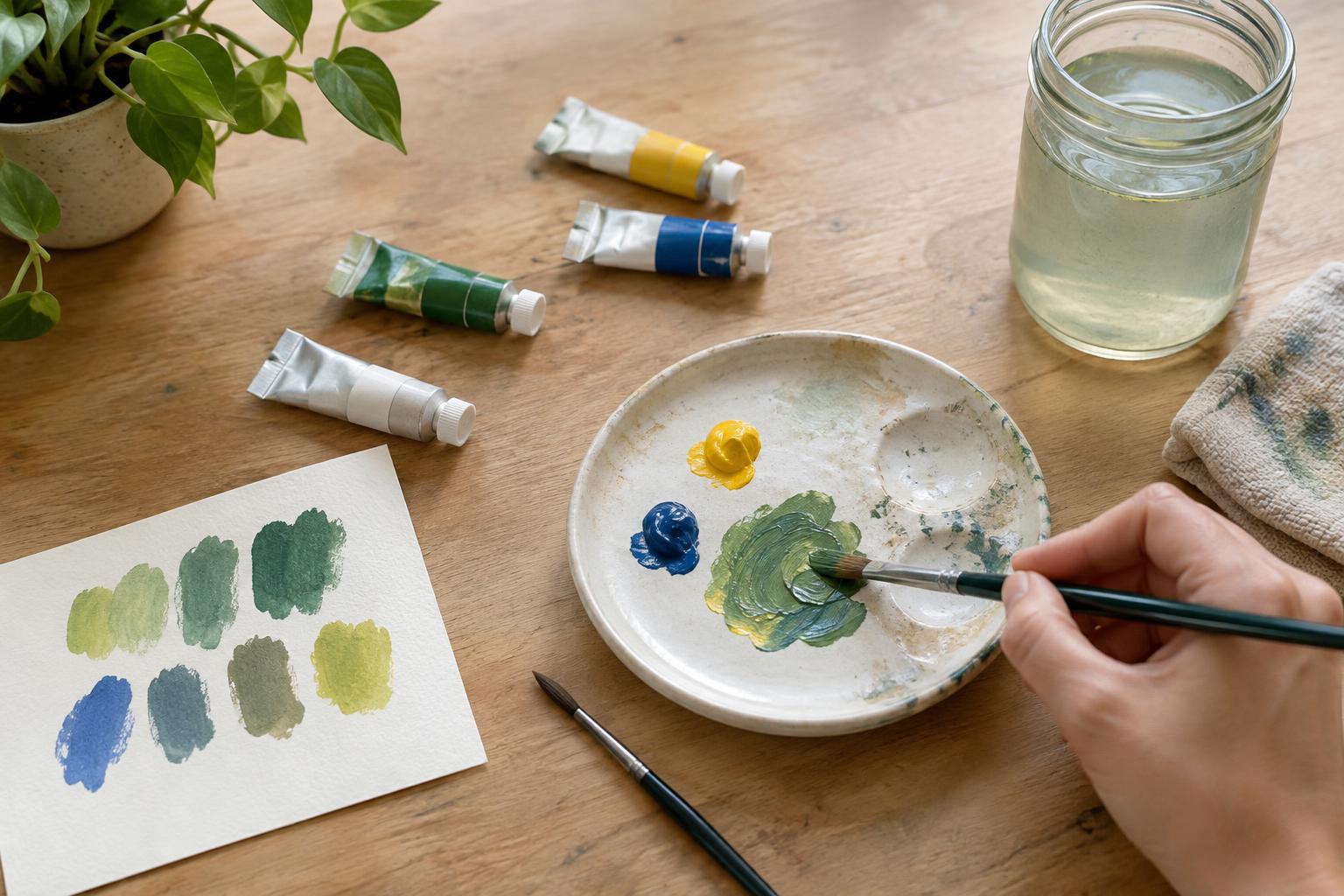
The trade-off is speed. Acrylic can dry on your brush and palette while you work, especially when spread thinly. Put out small amounts of paint, keep a cup of water nearby and rinse brushes before the paint hardens in the bristles. Layers generally need to dry before you cover them cleanly; adding more paint while a layer is still wet may blend the colors instead.
Acrylic may also take a little more space and preparation. Cover the table, wear clothes you do not mind marking and set out somewhere for the painting to dry undisturbed. Most small brush-painting sessions do not need an elaborate setup, but it helps to make cleanup part of your plan.
So which one is easier?
Choose watercolor if you want a compact setup, enjoy gentle color and do not mind letting some marks be unpredictable. Choose acrylic if you prefer strong color, defined shapes and the option to cover a dry mistake. For someone who worries about getting every mark right, acrylic’s layering may feel more reassuring. For someone who wants to sit down for a short, low-mess color study, watercolor may feel easier to begin.
Cost does not have to decide it. Start with a few colors, one or two suitable brushes and the right paper or surface rather than a large kit. Check the paint label for any handling instructions, protect your work area and avoid using painting tools for food. You can always try the other medium later; your first choice is not a commitment.
Try one small project before buying more
For watercolor, divide a sheet of watercolor paper into four loose areas. In each, paint a different simple sky using just two colors, leaving some paper white for clouds or light. Let the first layer dry before adding a hill or horizon. You will learn how much water your brush carries without needing to complete a detailed scene.
For acrylic, paint a small arrangement of five overlapping shapes. Start with a background, let it dry, then add larger shapes followed by a few contrasting details. If you dislike a section, wait until it is dry and paint a new shape over it. Keep the goal modest: one finished page and a better sense of whether you enjoyed the process.
Afterward, ask which parts felt pleasant and which felt frustrating. Did you like watching watercolor move, or did you prefer placing acrylic exactly where you wanted it? That answer is a better guide to your next painting than any rule about which medium beginners are supposed to choose.