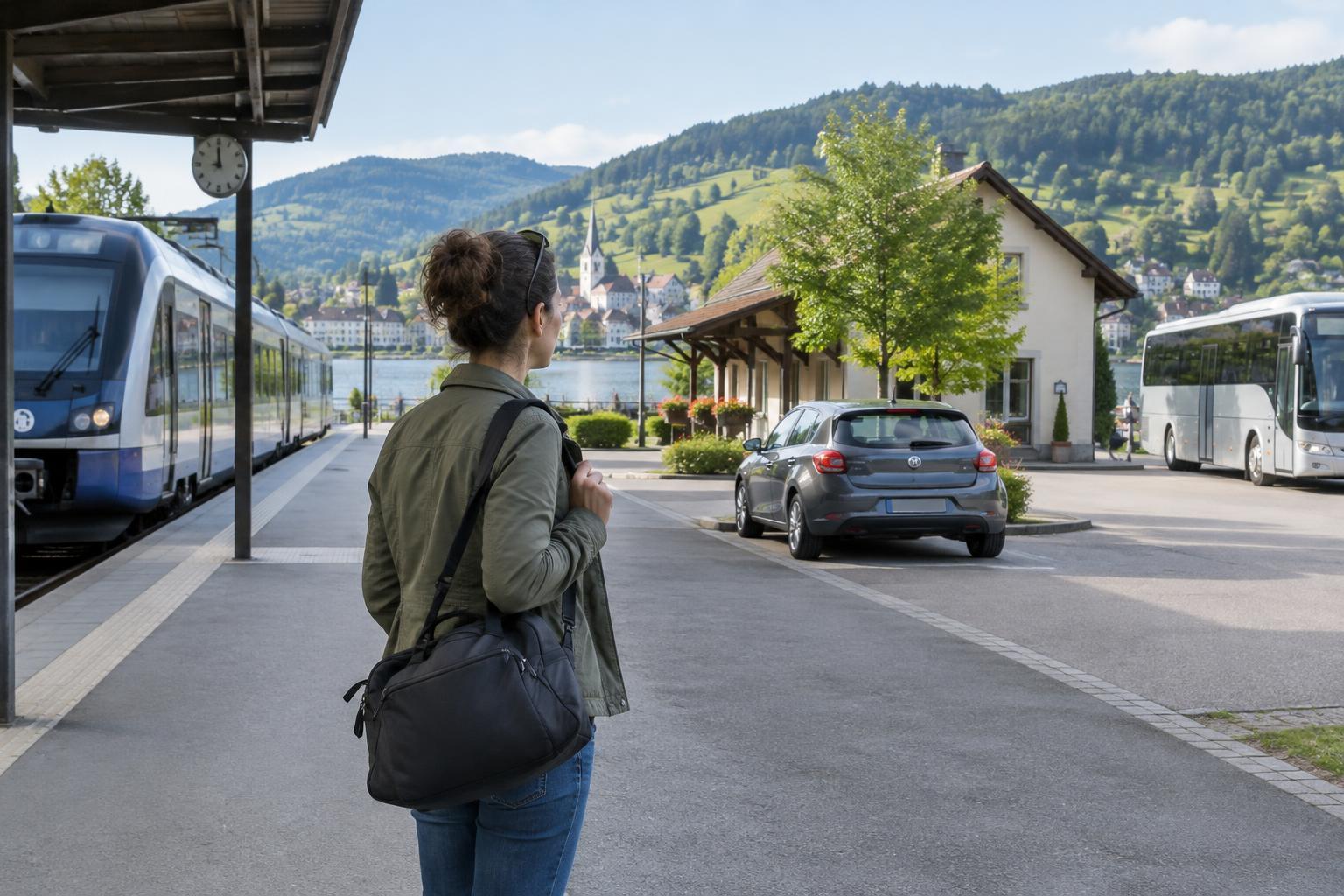
Start with the trip you want to have
For a nearby getaway, transport can shape the break as much as the destination. A quick drive may give you freedom to explore, but it can also mean parking searches and a tiring return journey. A train may feel restful, provided its timetable suits your plans. A bus might leave more room in your budget, though the journey could take longer. There is no universal winner: the useful question is which option supports the kind of break you want.
Before comparing fares or journey times, sketch your plans. Are you staying in one walkable place or hoping to visit several spots? Will you carry one small bag or enough gear for a weekend outdoors? Do you need to arrive by a particular time? If the purpose of the trip is to slow down, give weight to how you expect to feel when you arrive, not just how early you can get there.
Compare the whole journey, not one leg
A station-to-station or highway driving time rarely tells the full story. For each option, map the journey from your door to the place you will stay. Include the time needed to reach a stop or station, wait or make connections, and get from your arrival point to your accommodation. For a car, allow for collecting passengers, breaks and finding parking. Build in a little breathing room so a small delay does not consume the first hour of your break.
Check the return trip just as carefully. A convenient Friday departure is less appealing if the only useful ride home cuts Sunday short. If public transport serves your destination infrequently, note the departure you would realistically take and what you could do if you missed it. If you plan to drive, consider whether you will be comfortable making the trip home after a full day out.
Know what each option makes easier
Trains can make travel time feel like part of the break. You may be able to read, chat or simply look out the window rather than concentrate on the road. They often suit trips where the destination is easy to navigate on foot or by local transport. The trade-offs may include fixed departure times, connections and the need to carry your luggage between stops.
A car is useful when you want to set your own schedule, bring bulky items or reach places away from regular routes. It can also make spontaneous stops easy. In return, someone has to drive, and parking may affect both cost and convenience. Buses can be a straightforward choice for a direct route or a budget-conscious trip. Before booking, look at stop locations, luggage rules and how much flexibility the service offers if your plans change.
Add up costs you might otherwise miss
Compare the likely total for your group rather than a single advertised fare. For trains and buses, count the tickets, travel to and from the stops, and any luggage charges that apply. For a car, consider fuel or charging, tolls and parking. If you are sharing a ride, agree on how to split costs before setting off; it keeps the practical side of the trip simple.
Price is only one part of value. Paying a little more for a direct service may be worthwhile if it gives you another relaxed evening at your destination. Equally, a cheaper, slower option may suit a trip with no firm schedule. Decide what matters most to you—spare time, low effort, flexibility or a smaller spend—and use that priority to break a close tie.
Make a simple plan before you book
Write down your two most promising options with four details for each: realistic door-to-door time, total expected cost, luggage ease and how you would get around after arrival. Then check the details that could change your decision, such as the final return service, parking arrangements or the walk from a bus stop. If travelling with others, ask about their preferences too; the easiest option for one person may be awkward for another.
Once you choose, keep the plan light but clear. Save your tickets or route details somewhere easy to find, note an alternative departure where possible, and pack for the transport you picked. A small bag makes connections simpler, while a car offers room for extras without requiring you to bring them. The right choice is the one that gets you there with enough of your time, budget and energy left to enjoy being away.