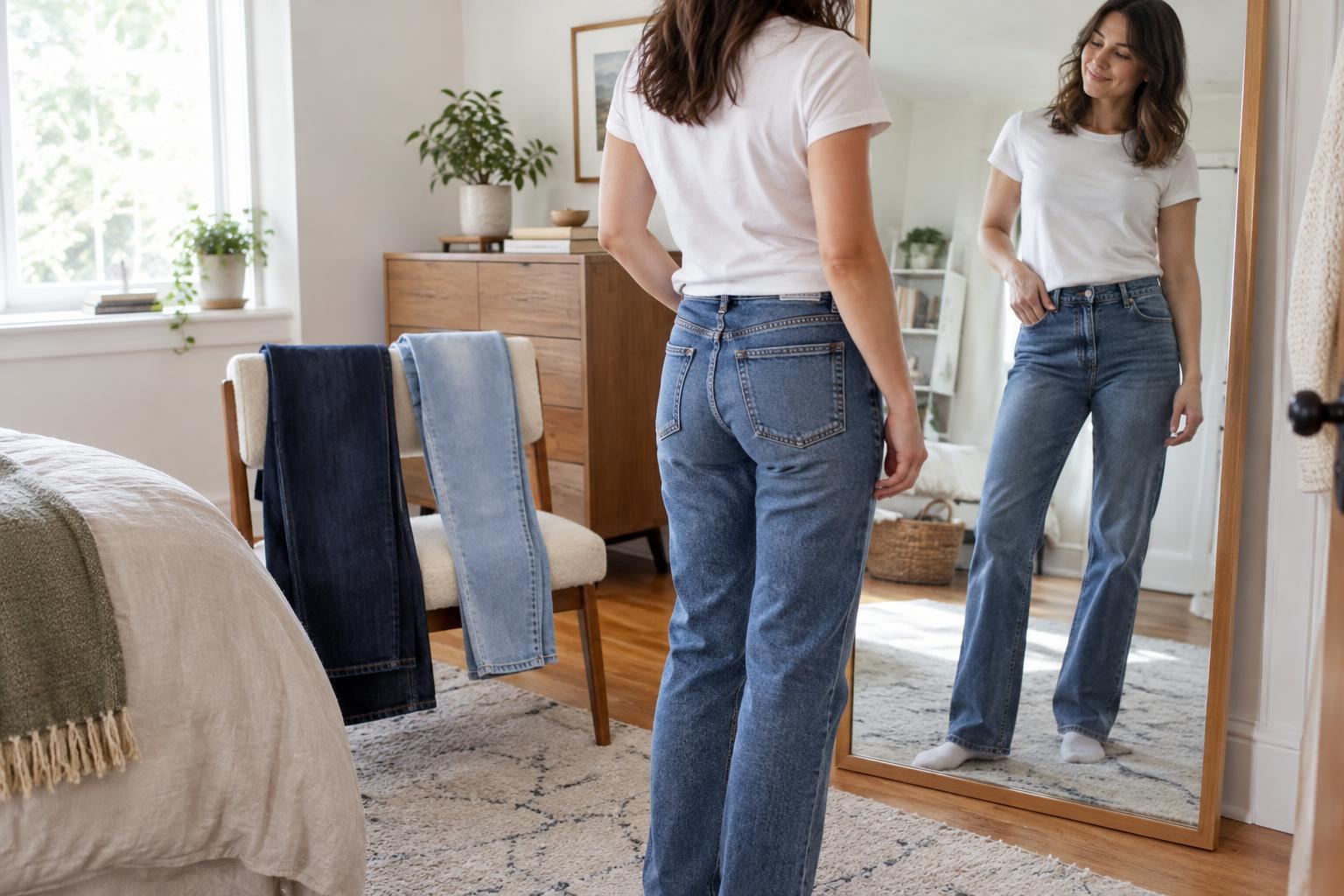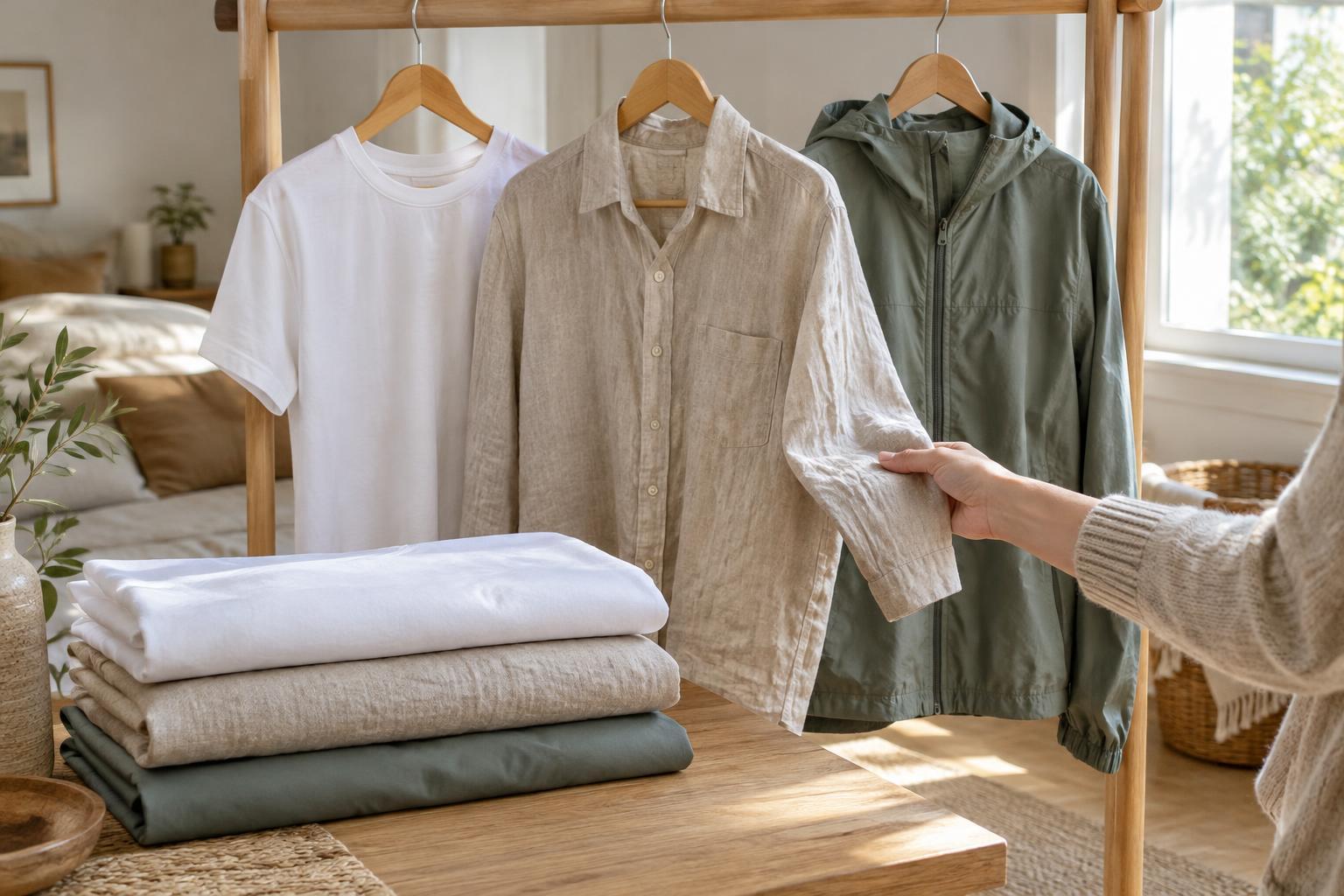
Think in combinations, not individual pieces
A rushed morning is not the ideal time to decide whether a particular shirt works with every pair of trousers you own. An outfit formula gives you a smaller decision to make: choose a familiar combination, then pick the pieces that suit the day. It is a guide, not a rule, and it works best when it reflects what you actually like wearing.
Start by noticing an outfit you regularly reach for. It might be relaxed trousers with a fitted top, or a roomy shirt over straight-leg jeans. Name the combination in broad terms so you can repeat its shape with different colors and fabrics. Before getting dressed, check your plans and the weather. Those two details can help you choose the right version without rebuilding the outfit from scratch.
Formula one: easy trousers, simple top, useful layer
Begin with trousers you can move comfortably in, such as straight-leg jeans, chinos or a relaxed pull-on pair. Add a plain T-shirt or a top with a neckline you like, then finish with a layer: an open shirt, cardigan or casual jacket. The layer gives the outfit a more intentional shape and is easy to remove if the temperature changes.
This formula is especially handy when your day includes different settings. For a more polished version, choose tidy shoes and a layer that sits neatly at the shoulders. For a laid-back version, wear your most comfortable shoes and leave the layer open. If the top and trousers feel too similar in shape, try tucking in just the front of the top or choosing a shorter layer. Small adjustments are often enough.
Formula two: one-piece base, two finishing choices
A dress, jumpsuit or matching set can take the pairing decision out of a busy morning. Treat it as a base rather than a complete outfit. You only need to choose shoes and an extra layer, if the weather calls for one. A casual dress with trainers and a denim jacket, for example, feels different from the same dress with boots and a soft cardigan.
If you prefer separates, a top and bottom in similar tones can serve the same purpose. Keeping the colors close makes the outfit feel cohesive without requiring an exact match. The useful question is not whether every item belongs to a perfect set, but whether the pieces are comfortable together for the hours ahead.
Formula three: familiar basics, one point of interest
When you want to feel a little more put together, keep the main outfit uncomplicated and let one item carry the personality. Wear a familiar combination, such as dark trousers and a plain top, then add a patterned shirt, a textured knit, a colorful scarf or a favorite pair of shoes. Choosing just one point of interest keeps the morning decision short.
That detail does not need to be bold. A different fabric, an interesting collar or a color you enjoy can make everyday clothes feel less repetitive. If accessories tend to slow you down, skip them. A formula should remove decisions, not create another checklist.
Make your formulas ready before you need them
The quickest outfit is one whose pieces are clean, easy to find and comfortable to wear. Pick two or three combinations from your own wardrobe and try them on when you have a moment. Check how they feel when you sit, walk and add a layer. If a formula depends on shoes that pinch or a shirt that never stays in place, change the pieces rather than trying to make it work on a hurried morning.
You can keep a short note of your favorite combinations or place the pieces near one another in your wardrobe. It also helps to have a backup for common changes: a warmer layer, shoes suited to rain or an alternative bottom when your first choice is in the wash. With a few dependable options ready, getting dressed becomes less about finding the perfect outfit and more about choosing one that fits your day.