Start with the experience you want
Knitting and crochet are both approachable ways to make things with yarn. You can learn either one at a kitchen table, carry a small project in a bag and enjoy making something at your own pace. The best first choice is not necessarily the craft someone else finds easiest. It is the one whose motions and finished pieces make you want to pick it up again.
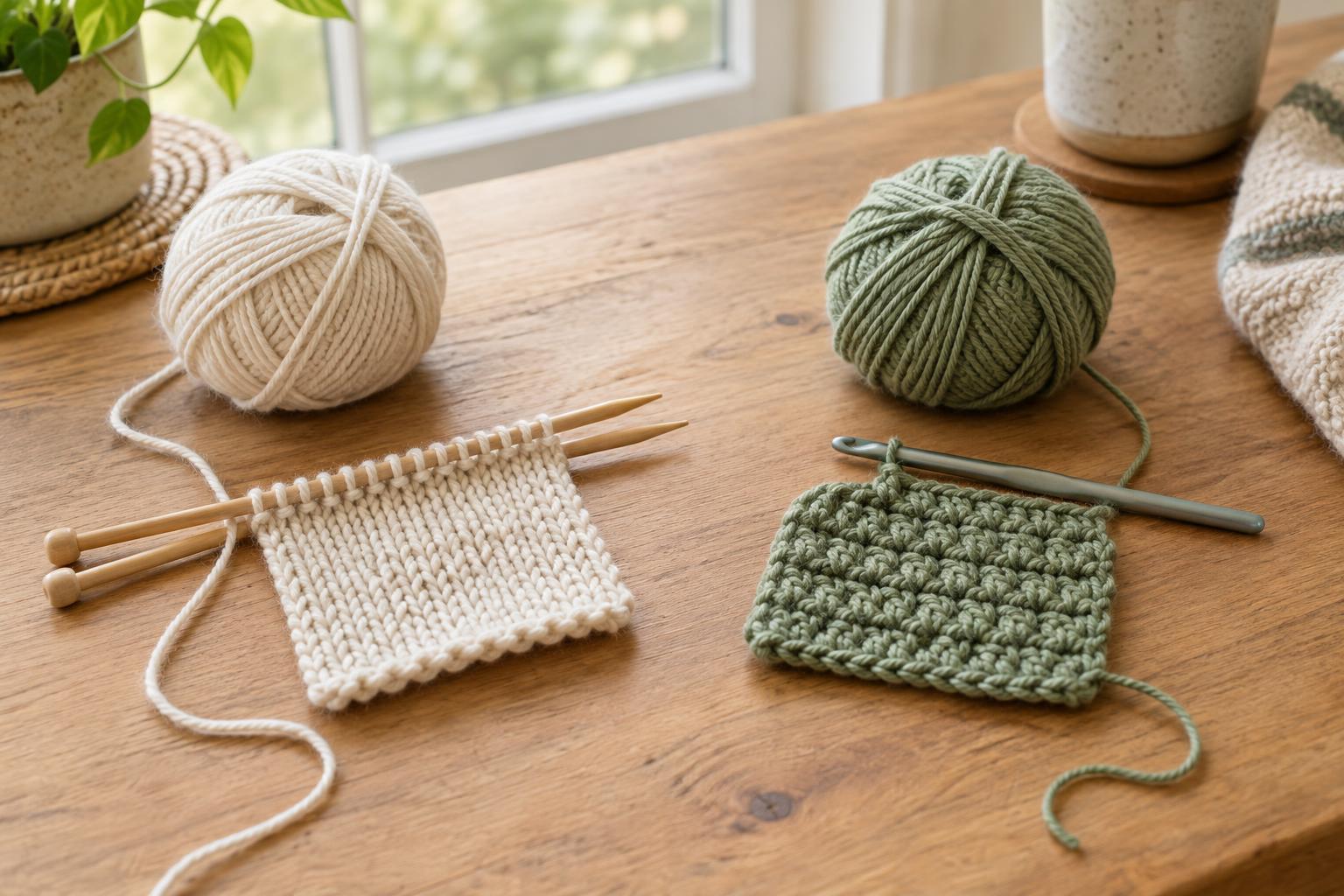
Knitting uses two needles to hold a row of live stitches while you work across them. Crochet uses one hook, and you generally work with one active loop at a time. That small difference shapes much of the experience: knitting often builds a flexible fabric from connected loops, while crochet offers a direct way to form stitches, shapes and textures. Neither is better overall; they simply invite different kinds of projects.
How the tools and motions feel
If you like steady, repeated movements, knitting may appeal to you. Once a basic stitch feels familiar, you can settle into a rhythm as you move across a row. Keeping the stitches on the needles can feel reassuring, though it also means you need to notice if one slips off. Beginners usually start by learning how to cast on, make a knit stitch and finish an edge.
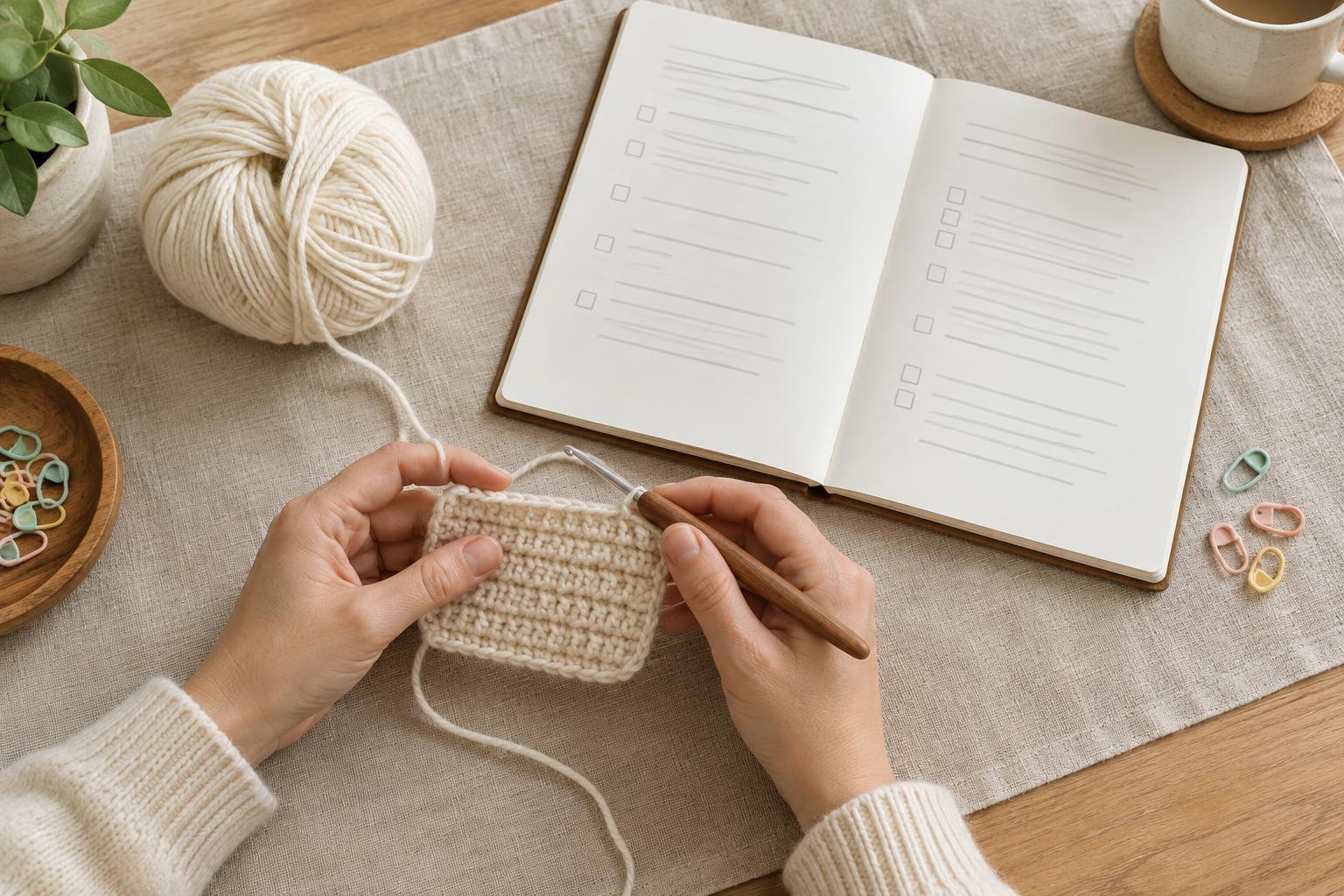
Crochet may suit you if you prefer to work through a stitch and move on. Because the hook holds only the current loop, you can usually pause without managing a whole row of stitches on your tool. You will still need to learn where to place the hook and how to keep your loops a comfortable size. Early practice might include making a starting chain and working a simple stitch into each space.
For either craft, tension—the way you hold and feed the yarn—takes time to settle. Uneven first rows do not mean you chose the wrong hobby. Try a relaxed grip, take short breaks if your hands feel tired and give yourself room to experiment with how you hold the yarn.
Think about what you would like to make
Knitting is a natural starting point if you are drawn to soft scarves, simple hats or smooth fabric for clothing. Its familiar rows can make a plain rectangle a satisfying first project. Crochet is a strong candidate if you want to try small baskets, textured squares, decorative details or playful three-dimensional shapes. These are tendencies rather than rules: both crafts can make blankets, garments and accessories.
Consider your patience for finishing, too. A small item you will actually use is often more motivating than a large project you feel obliged to complete. A dishcloth, coaster or short scarf lets you practice without committing to a blanket. If you love the look of a particular pattern, check which craft it uses; enthusiasm for the finished piece can carry you through the awkward first attempts.
Choose a beginner setup you can enjoy
You do not need a large kit to find out whether a yarn craft suits you. Pick a smooth, light-colored yarn so you can see individual stitches. Very fuzzy or dark yarn can make it harder to spot where your tool should go. Check the yarn label for a suggested needle or hook size, then choose a comfortable basic tool near that recommendation. A small pair of scissors and a yarn needle for tidying loose ends are useful extras.
For knitting, a straightforward first exercise is a small square made with the knit stitch. For crochet, try a square made with one basic stitch throughout. Either way, practice a few rows before deciding whether you enjoy the process. The point of a first square is not to produce a perfect object; it is to learn what a stitch looks like, how your hands move and how to recover when a row goes astray.
Make your choice without making it permanent
If you still cannot decide, choose by the tool you would rather hold: two needles for knitting or one hook for crochet. Give your choice a few short sessions, enough to get past the unfamiliarity of the first row. Notice whether you enjoy the repeated motion and whether the fabric taking shape excites you. If not, try the other craft. Learning one does not close the door on the other.
A pleasant beginner routine is simple: keep your project and tools together, leave yourself a clear place to stop and return when you have a little time. Progress may look like recognizing a stitch you could not see yesterday or fixing a small mistake without starting over. That is a good reason to keep going, whichever yarn craft you try first.