Let a prompt give you a place to begin
A writing prompt is a starting point, not an assignment you have to complete correctly. It might be a question, an image, a first sentence, or a small constraint such as describing a room without naming any of its objects. Its job is to narrow your choices just enough that you can begin. Once you are writing, you can follow the idea wherever it goes, even if the result barely resembles the original prompt.
Start with subjects that make you curious rather than ones you think you ought to write about. If you like noticing everyday details, try describing what is on your kitchen counter as though it belongs to a character in a story. If you enjoy memories, begin with “A place I used to know by its sounds.” You do not need a polished piece at the end. A few lines that surprise you are enough to make the session worthwhile.
Choose a session small enough to repeat
A regular practice is easier to maintain when the minimum version is genuinely manageable. You might write for ten minutes, fill half a page, or make five observations. Pick one measure and stop when you reach it, unless you want to continue. A short session can fit between other parts of the day, and it gives you a clear way to begin when you do not have the energy for a larger project.
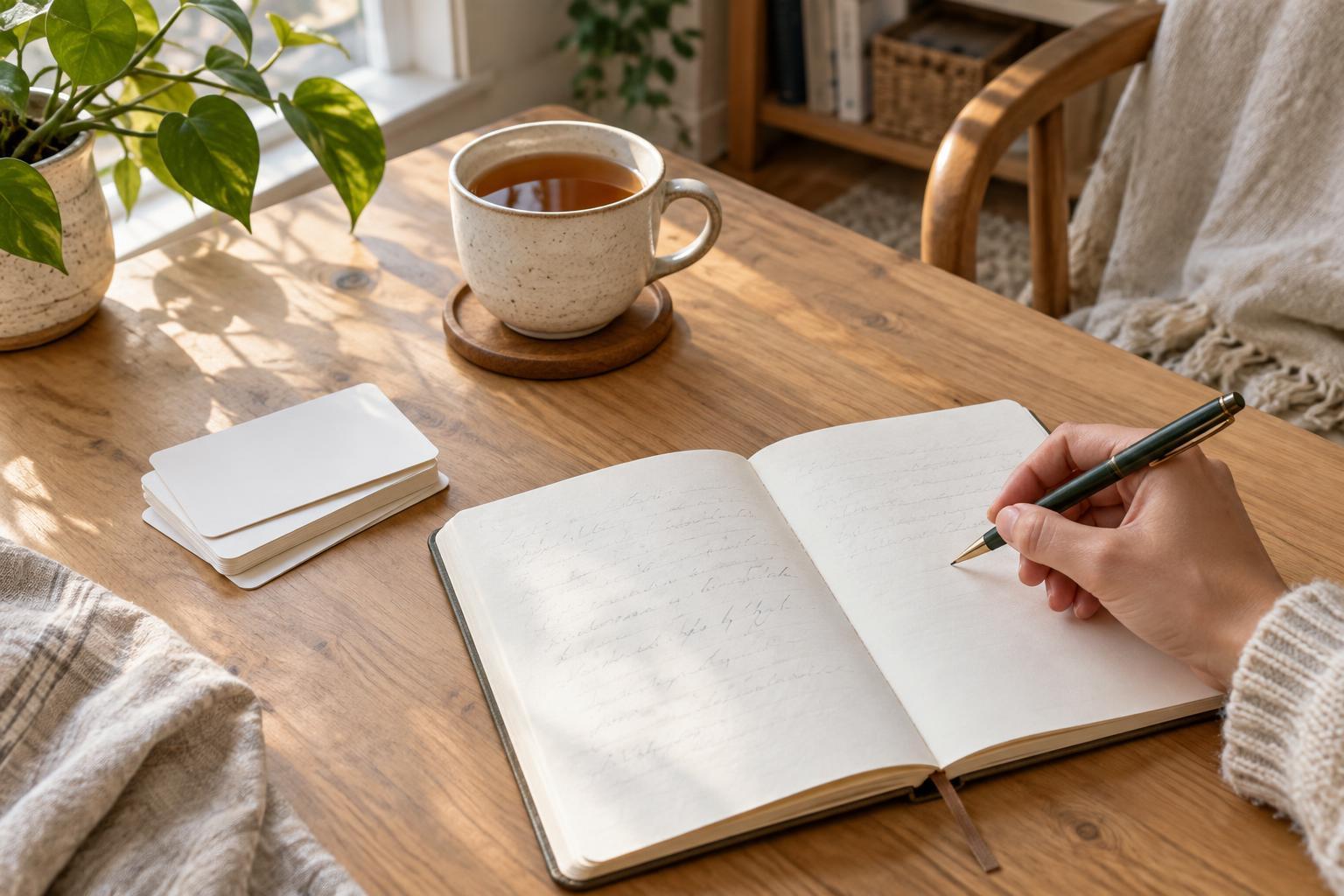
Make the setup simple, too. Keep a notebook near a chair you often use, or save a document where you can find it quickly. Attach writing to an existing moment, such as after making coffee or before putting your phone on charge. Treat that moment as an invitation rather than a strict appointment. If your schedule changes, moving the session still counts.
Build a prompt collection you want to open
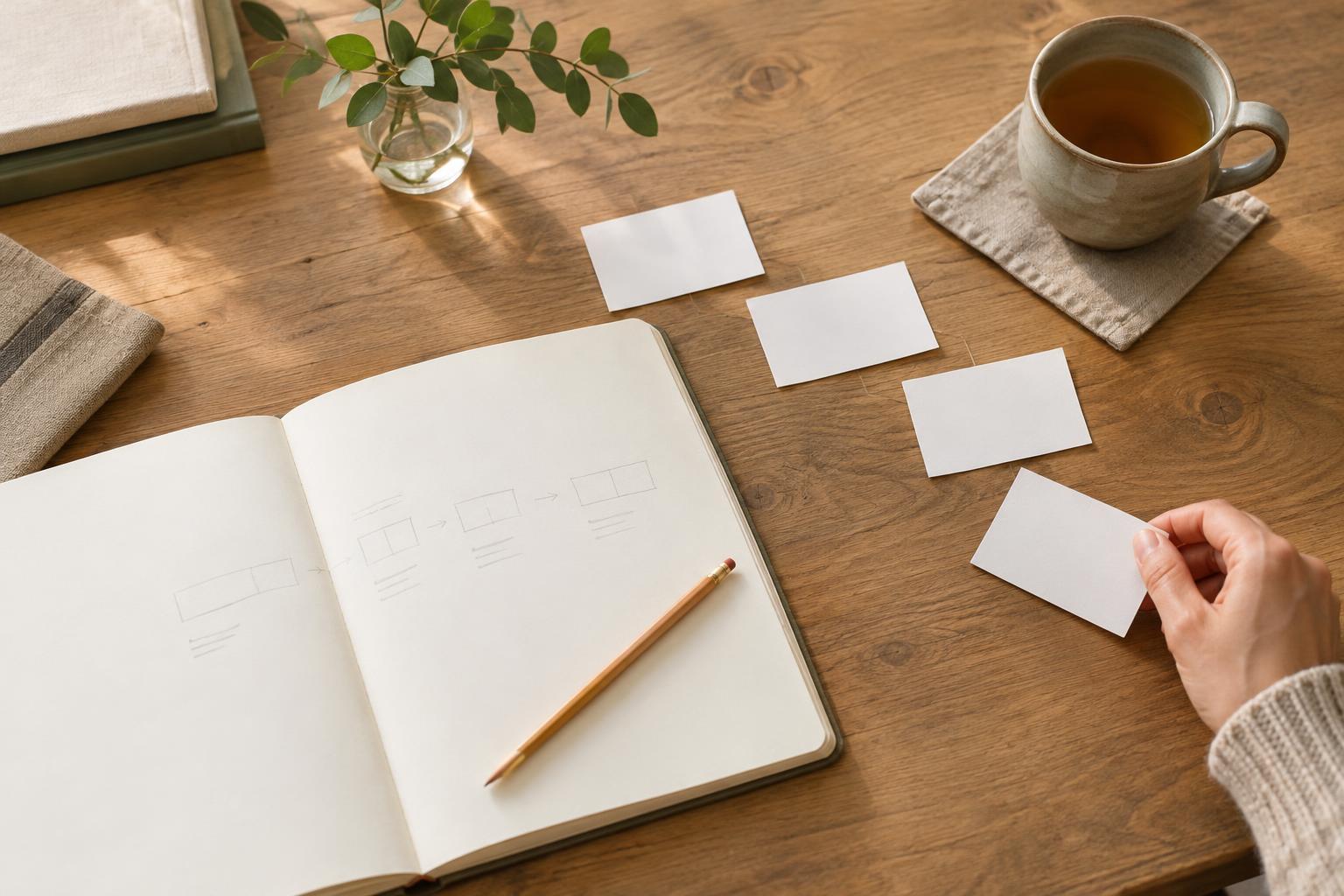
Having a few prompts ready removes one more decision from writing time. Collect ideas in the same notebook or note you use for your sessions. You can borrow questions from your own day: What did I notice on the way home? Which conversation stayed with me? What would this room look like to a visitor? Ordinary observations often make useful prompts because they already hold your attention.
Include different kinds of invitations so you can match a prompt to your mood. For a playful day, try “Invent an unlikely use for an object on your desk.” For a reflective day, try “Describe a small change you resisted, then welcomed.” For a day when words feel hard to find, write a list of ten things you saw. You can turn any item on that list into a scene later, or simply leave the list as it is.
Write first, decide what it is later
When you begin a prompt, give yourself permission to write an imperfect first response. Set aside spelling fixes and sentence polishing until the session ends. If you get stuck, describe the thing you are trying to say: “I remember the doorway, but not what happened next.” That sentence may lead somewhere more interesting than the one you were trying to force. You can also switch from a story to a list, a letter, or a description without starting over.
Not every session needs to produce something you want to keep. Some prompts will feel flat; others may reveal an idea worth revisiting. After writing, underline one phrase, question, or detail that catches your eye. This quick look back helps you notice what you enjoy without turning every session into an editing task. Leave the rest alone for now.
Make returning more important than catching up
Missing a few days does not erase the writing you have done. Instead of trying to make up every missed session, use a prompt that helps you re-enter: “What is on my mind today?” or “Describe the view from where I am sitting.” If a daily routine feels too demanding, try writing a few times a week. The aim is to create a practice you can return to, not a streak you have to protect.
Over time, you may notice a subject, voice, or character appearing more than once. You can follow that thread into a longer piece, or keep enjoying separate short exercises. Either choice is a creative practice. A prompt gives you somewhere to start; returning, with room to experiment, is what makes the practice your own.