Take a little distance before you edit
Finishing a first draft can make every awkward sentence feel urgent. If you can, set the piece aside for a day or two before reading it again. Even a short break helps you return as a reader rather than as someone still trying to get words onto the page. When you come back, read the whole draft without changing anything. Note where you feel interested, confused, or tempted to skim.
Then write one sentence describing what the piece is trying to do. For a story, that might be the central change a character faces. For an essay, it might be the idea you want a reader to carry away. This sentence is a guide, not a rule: you can revise it as you learn what the draft contains. Its job is to help you distinguish a useful change from a change made simply because a line feels imperfect today.
Mark what works, not just what needs fixing
Before making a list of problems, identify three things worth keeping. They might be a vivid opening, a clear explanation, an appealing voice, or a scene that gives the piece energy. Marking these passages makes revision less like demolition. It also gives you a standard: if a proposed edit weakens one of the draft’s strengths, consider a smaller solution.
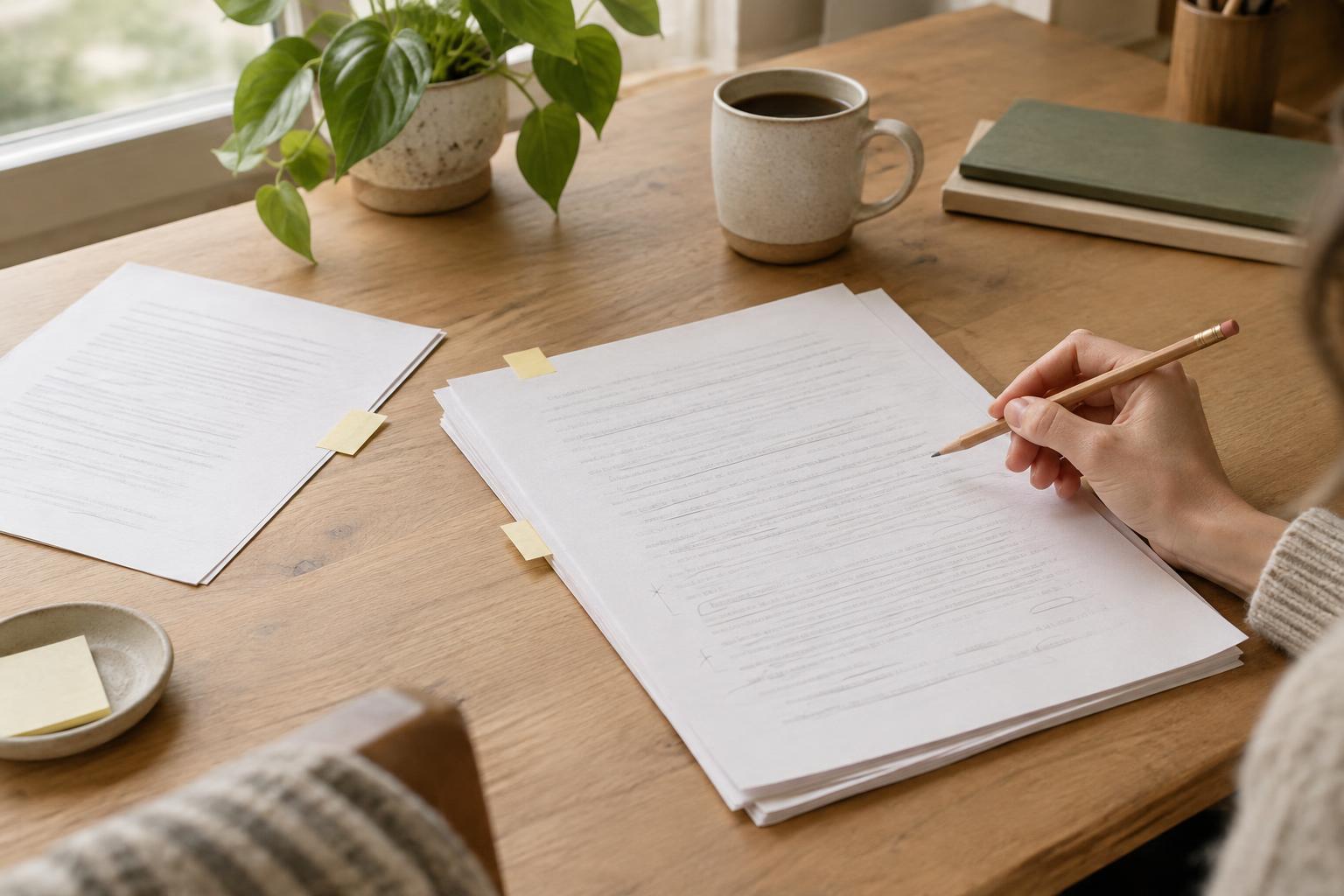
Next, leave brief notes in the margins about places that need attention. Use questions rather than immediate replacements: “Do I need this example?” or “What does the reader need to know here?” You do not have to solve each issue while reading. Separating diagnosis from editing keeps you from polishing a paragraph that may later move, shrink, or disappear.
Choose the biggest useful change first
Look over your notes and group them by scale. Large changes affect the shape of the piece: its focus, order, missing context, or ending. Medium changes improve paragraphs and transitions. Small changes tidy word choice, repetition, and punctuation. Start with the large issues that genuinely interfere with the piece’s purpose. A draft with one unclear section may need a new paragraph or a better transition, not a new beginning.
Give yourself a short revision plan with no more than two or three priorities. For example: clarify the main point near the start, move one example earlier, and make the ending more specific. If you cannot decide whether a section belongs, copy it into a separate notes file before removing it. Nothing is lost, but the working draft becomes easier to judge.
Work in passes instead of fixing everything at once
A focused pass gives each reread a job. On the first pass, address structure: move sections, add missing information, and cut passages that repeat the same point. On the next, read for flow. Check whether each paragraph leads naturally to the next and whether a reader has enough context to follow along. Only then turn to sentences, trimming extra words and replacing vague phrases where a clearer one is available.
You can make these passes as light as your draft needs. If the structure already holds, leave it alone. If a sentence sounds like you and communicates clearly, it does not need to become more elaborate. When you feel the urge to rewrite a whole page, try stating the specific problem first. “This scene starts too early” suggests a targeted cut; “this page is bad” offers no useful direction.
Finish with a reader’s check
After revising, read the piece from start to finish without stopping to tinker. Ask whether it delivers what its opening seems to promise and whether the ending feels earned. Reading aloud can reveal crowded sentences or abrupt jumps, but a quiet read works too. If possible, ask a trusted reader one focused question, such as where they lost the thread, rather than asking whether they liked everything.
A draft may always offer another word to adjust. Set a practical stopping point: the main idea is clear, the sections support it, and remaining edits are mostly matters of preference. Save a copy, call this version finished, and carry any lessons into the next piece. Revision is not proof that the first draft failed; it is how you help the good material already there do its job.