Start with the written instructions
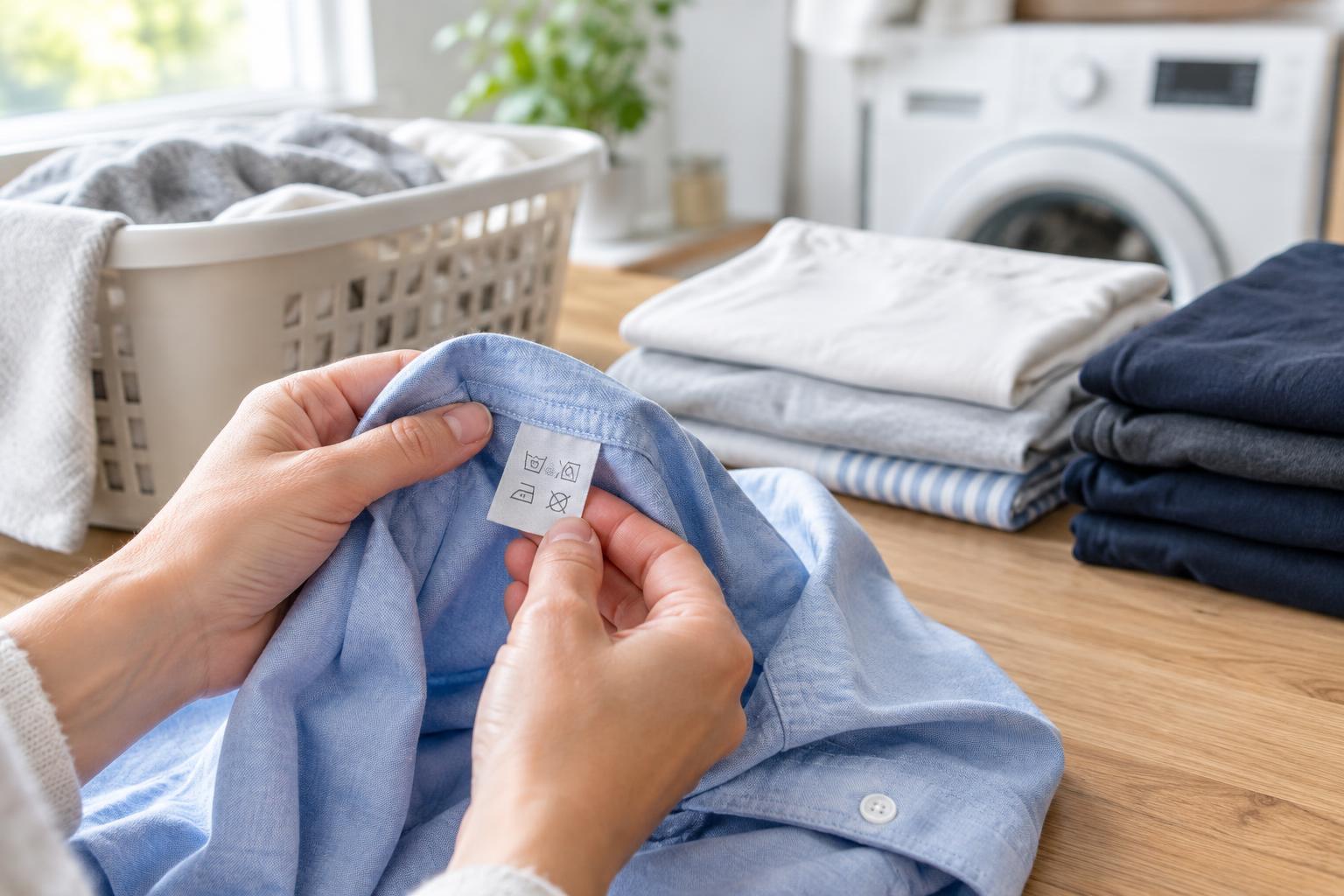
Before a new item goes into the laundry basket, take a moment to find its care label. It is usually sewn into a side seam or near the neckline or waistband. Read any words as well as the symbols: the label may specify a maximum temperature, a gentle cycle or a drying method that is easy to overlook. Check the whole garment, too. A sturdy-looking jacket may have a delicate lining, trim or decoration that affects how it should be cleaned.
Treat the label as your starting point, not as a challenge to find the hottest or fastest setting it permits. If it allows machine washing at a certain temperature, a cooler wash may still work for lightly worn clothes. If you remove an itchy label, photograph it first so you can refer to the instructions later.
Recognize the five main symbol families
A wash tub represents washing. A number inside it usually indicates the maximum wash temperature; dots may be used to show temperature instead. A hand in the tub means hand washing, while a crossed-out tub means do not wash. Lines beneath the tub call for a gentler cycle. Because symbol systems and machines vary, use the label’s written wording when available and check your machine’s cycle descriptions if you are unsure.
A triangle covers bleach: a crossed-out triangle means avoid it. A square covers drying; it may contain a circle for tumble drying or lines that indicate air-drying methods. Dots inside a tumble-dry symbol indicate heat level, and a crossed-out version means do not tumble dry. The iron symbol works similarly, with dots indicating heat and a cross meaning do not iron. A plain circle relates to professional cleaning. Letters inside it are instructions for the cleaner, not settings to recreate at home.
Sort for color, fabric and level of dirt
Sorting does not have to mean making a separate load for every item. Start by keeping light colors apart from dark or strongly dyed pieces, especially on their first few washes. Then consider fabric weight and texture: heavy jeans and towels can rub against thin tops, while fluffy items can leave lint on smooth dark clothing. Keep heavily soiled items apart from lightly worn ones when possible so you can choose a suitable cycle for each load.
Close zippers and fasten hooks to reduce snagging. Turn printed or dark garments inside out if you want to limit surface wear. Give clothes room to move in the drum; packing it tightly can make washing and rinsing less effective. Use detergent according to its directions and your load size rather than assuming more will clean better. Too much can be difficult to rinse away.
Handle stains and drying with care
When you notice a stain, check the garment label before treating it. Gently blot a fresh spill instead of rubbing it deeper into the fabric. Test a stain remover on an inconspicuous area if you are unsure how the color or finish will react, and follow the product directions. Avoid putting a visibly stained item in the dryer until you have checked the result of washing; heat can make some stains harder to remove.
Drying is where many avoidable changes in fit and feel happen. High heat may shrink some fabrics or damage elastic, prints and delicate finishes. Follow the label’s drying instruction, and choose a lower-heat or air-dry option when appropriate. Reshape knits while damp and lay them flat if the label calls for it; hanging a heavy wet knit may stretch it. For items that can hang dry, smooth seams and cuffs before they set.
Build a small routine for the clothes you reach for most
You do not need to memorize every care symbol to get better results. Keep a simple reference near the washing machine or look up unfamiliar symbols before starting a load. Set aside items labeled for professional cleaning, hand washing or air drying as you sort, so they do not travel through a standard wash-and-dry cycle by accident. If a garment is especially important to you and its instructions seem unclear, pause rather than guessing.
Finally, check clothes before storing them. Make sure they are fully dry, since damp folds can develop an unpleasant smell. Put clean items away in a way that suits their shape: fold pieces that stretch on hangers and hang those that crease easily. A few seconds of attention at each stage—label, sort, wash and dry—can make laundry feel less like a gamble and help favorite clothes stay ready to wear.