Decide what the break is for
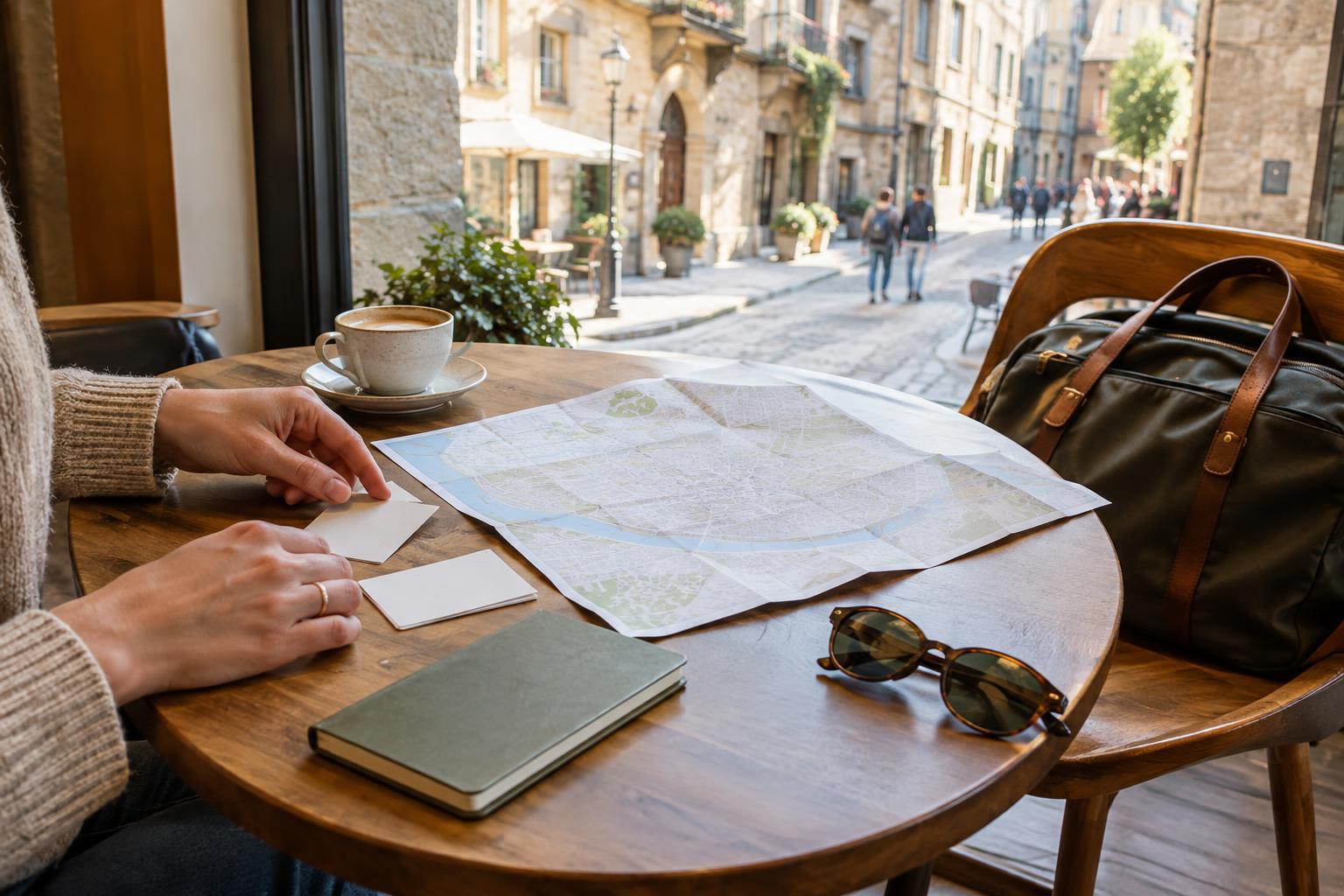
Before looking at maps or lists of things to do, ask what you want from the time away. Do you need a quiet change of scenery, an easy walk, a meal somewhere new or a full day of activities? A destination that suits one of those wishes may not suit another. Naming the main purpose gives you a better filter than searching for the “best” place nearby.
Keep the answer short: “somewhere green with a café,” “a town I can wander without a schedule” or “a place with one activity the kids will enjoy.” If you are going with someone else, ask each person to name one priority and one thing they would rather avoid. You do not need a perfect match for every preference; you need a place that makes the day feel worthwhile.
Set limits before you start browsing
Choose a comfortable travel-time limit rather than the farthest distance you could manage. A destination might look close on a map but feel less appealing if getting there takes up most of your free time. Think about the whole outing, including the trip home. Then set a rough spending limit that covers transport, food, admission if relevant and a little room for an unplanned stop.
Add any practical must-haves: a route that works without a car, somewhere to sit indoors if the weather changes, or a walk that fits your energy level. These limits are not meant to make the break less spontaneous. They remove options that would require too much effort, so the remaining choices are easier to enjoy.
Make a shortlist of three places
Start with one familiar option, one place you have been meaning to visit and one wildcard that fits your limits. Nearby parks, small towns, waterfronts, museums or neighborhoods you rarely explore can all count as a short break. You do not have to leave your region for an outing to feel different from an ordinary day.
For each option, look for one anchor activity: a walking route, a market, a gallery or a place to have lunch. Check only the details that could affect whether the trip works, such as how you would get there, whether the anchor activity is open when you plan to go, and whether you need to book. If a place needs extensive planning to be enjoyable, save it for another time. The point of a shortlist is to make a choice, not to build a complete guide to every destination.
Compare the experience, not just the attractions
Look at your three options side by side. Which has the simplest journey? Which offers something you would genuinely enjoy even if you did nothing else? Which leaves room to change plans if you feel tired or the weather turns? A place with fewer attractions may be the better choice if it offers an easy arrival and a pleasant way to spend a few hours.
Try a quick test: imagine it is the end of the break and you are heading home. What would make you glad you chose that place? This can reveal whether you are excited by the outing itself or only by how it looks in photos. If two options still seem equal, pick the easier one. You can keep the other for a future free day.
Stop searching and make a light plan
Once a destination meets your main purpose, travel limit and practical needs, give yourself permission to decide. More searching may turn up more possibilities, but it can also make a simple outing feel like a project. Choose a departure time, confirm any essential details and save the information you will need to get there. That is often enough preparation for a nearby break.
Plan one anchor activity and one optional extra, rather than filling every hour. You might visit a garden and keep a café in mind for afterward, or explore a town center and take a short walk if you have the energy. Leaving space in the day makes it easier to linger somewhere you like, head home early without feeling disappointed or follow an interesting detour. The best nearby destination is not necessarily the most impressive one; it is the one that makes taking the break feel easy.