Start with how you use the kitchen
An organized cupboard does not need to look like a display. Its job is to make ordinary moments easier: finding a mug before work, putting clean plates away, or starting dinner without moving three things to reach one pan. Before buying containers or emptying every shelf, notice which cupboards slow you down. Choose one to start with, especially if the whole kitchen feels like too much to tackle at once.
Open that cupboard and take everything out. Group similar items together on a clear counter or table: dishes, food, cooking tools, baking supplies, or whatever belongs there. Set aside anything that belongs elsewhere. As you sort, ask which items you use daily, occasionally, or rarely. Check food dates and the condition of stored items, and discard anything you no longer want or can safely use.
Give the easiest spots to everyday items
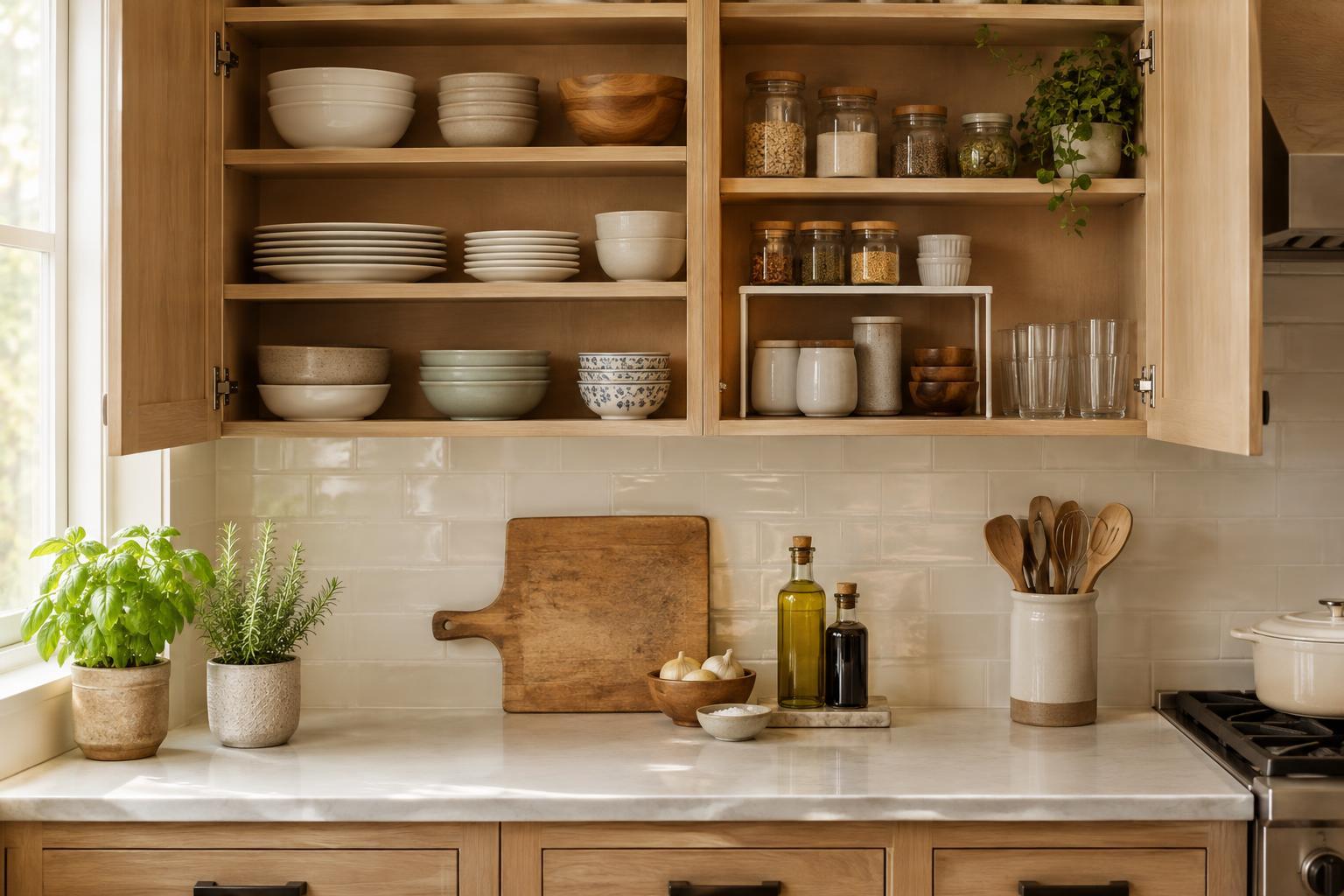
The most convenient cupboard space is generally between waist and eye level. Reserve it for things you reach for often, such as everyday plates, glasses, breakfast foods, or frequently used cookware. Put heavier items on lower shelves where you can lift them without reaching overhead. Higher or less accessible shelves are better for lightweight items used only now and then.
Think about where each item is used as well as how often. Mugs may fit best near the kettle or coffee supplies; plates may be easier to put away close to the dishwasher or drying rack. Cooking oils and seasonings are useful near the preparation area, provided their storage spot suits the product and keeps them away from excessive heat. You do not have to move everything to the nearest cupboard. A practical arrangement balances easy access with enough room to open doors, take things out, and put them back.
Make each shelf simple to navigate
Deep shelves often become awkward because the back row disappears. Keep frequently used items at the front, and place occasional items behind them only if you can still see and reach them. A small tray or basket can gather related packets or baking decorations so they come out together. Shelf risers can help with short stacks of dishes or food containers when there is enough height to use them comfortably.
Avoid squeezing a shelf full just because there is space. Leave enough clearance to lift a plate or pull out a jar without disturbing its neighbors. For food cupboards, group items by purpose rather than packaging size: breakfast supplies together, cooking staples together, and snacks together, for example. Clear containers may help you see what is running low, but they are optional. Keeping food in its original packaging can be simpler, especially when you need the instructions or label information.
Deal with the usual cupboard trouble spots
Food-storage containers tend to spread out. Match each base with a lid, then keep the sets in one cupboard or drawer. If stacking bases saves space, store the lids upright in a shallow bin or divider so you can find the right one. Consider whether you need every container; too many can make the useful ones harder to reach.
Pans and small appliances need a different approach. Store the pan you use most where it can come out without unstacking a heavy pile. Give seldom-used appliances a less prominent spot, but only if you can retrieve them safely. If a cupboard is difficult to use because of a fixed shelf or awkward corner, do not force an elaborate system into it. It may work better for a few bulky, occasional items than for daily essentials.
Keep the arrangement easy to maintain
Once everything has a place, try the setup during a normal week. If you repeatedly leave an item on the counter or put it in a different cupboard, its assigned spot may be inconvenient. Move it rather than treating the system as a rule you must follow. Labels can help when several people use the kitchen, but broad labels such as “baking” or “snacks” usually allow more flexibility than a label for every item.
A brief reset when you put groceries away can prevent shelves from becoming crowded again. Bring older food forward where appropriate, return stray items to their homes, and check whether a category needs more room. The goal is not a cupboard that stays perfectly arranged. It is one that lets you find what you need and put it back with little effort.