Start with what you use in the bathroom
Before buying baskets or adding shelves, take everything off the counter and out of the cabinet. Group similar items together: daily toiletries, occasional products, towels, cleaning supplies and backups. This makes duplicates and forgotten items easier to spot. Discard empty packaging and products you no longer want, following any disposal guidance on their labels. Set aside things that belong elsewhere, such as spare cosmetics you usually apply in a bedroom.
Keep storage decisions tied to your routine rather than to the room’s appearance. The items you reach for every morning and evening deserve the easiest spots. Products used once a week can sit higher or farther back. Extra bottles do not have to live beside the sink at all; if another dry cupboard is available, moving backups there can free a surprising amount of space.
Give the counter a clear job
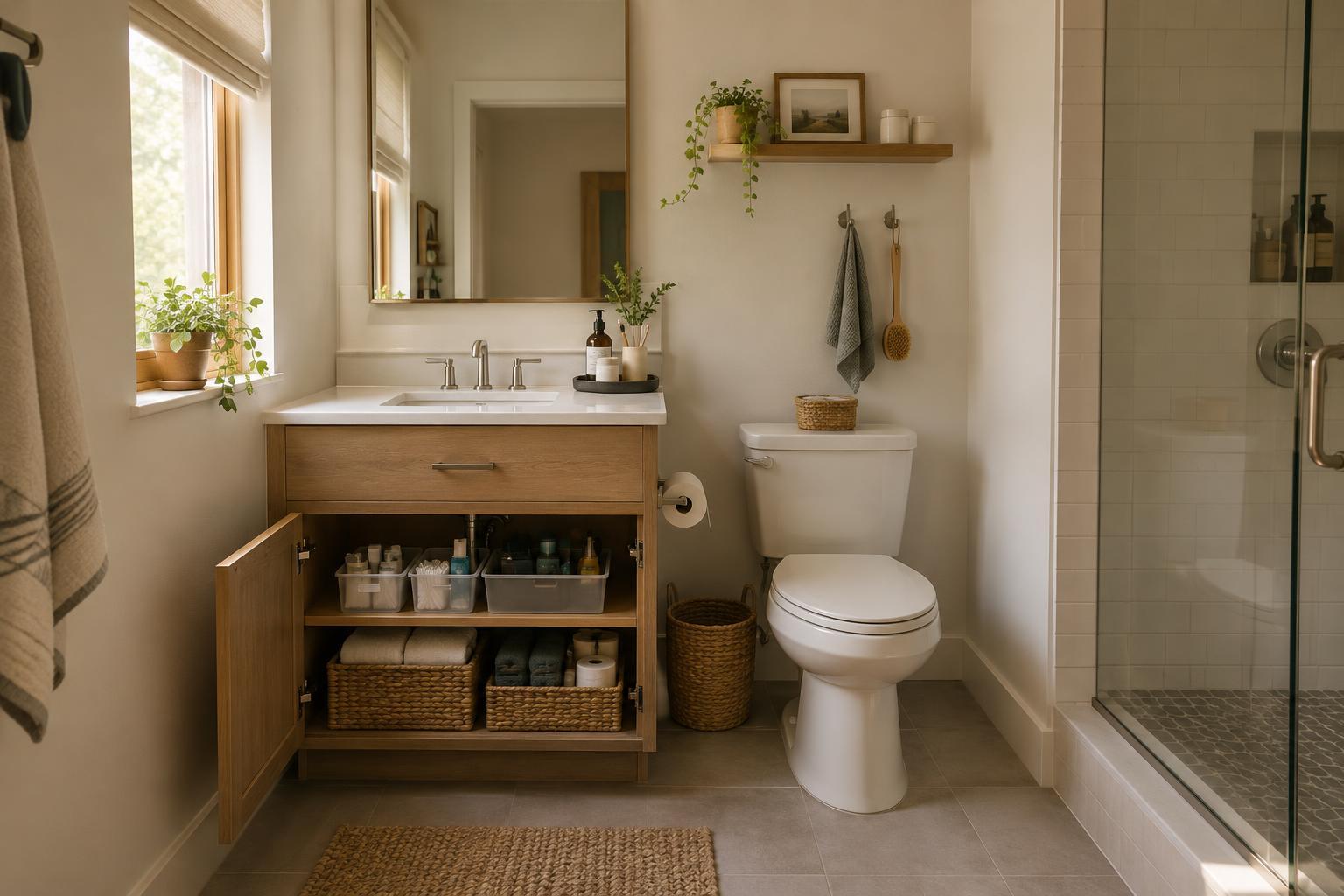
In a bathroom with little counter space, an empty patch is useful storage too: it gives you room to wash your face, set down a toiletry bag or wipe the surface. Aim to keep only a few daily items out. A small tray can make those items feel contained and easy to lift when cleaning, but choose one that leaves usable space around the sink.
If several people share the bathroom, give each person a small caddy rather than lining up every product on the counter. A caddy can sit on an assigned shelf or travel in and out of the room. For toothbrushes and other items that stay by the sink, choose a holder that is easy to clean and place it where it will not be routinely splashed.
Make cabinets and drawers easier to use
Deep cabinets often become awkward because small items disappear behind tall bottles. Low, open bins let you pull out a category without unloading the whole shelf. A compact riser may create a second level for short containers, provided everything remains easy to remove. Measure the cabinet first, including any pipes or door hinges, so an organizer does not make the space harder to access.
Use drawer dividers for loose items such as hair ties, razors or travel-size toiletries. They need not be a perfect fit; the goal is to stop small things from mixing together. Store products upright where possible, and check that lids are closed before putting them in a bin. Keep cleaning products in their original containers and follow label directions for storage, especially in a bathroom children can access.
Use vertical space without making it feel crowded
The wall above the toilet, the back of the door and unused corners may offer room for light storage. A narrow shelf can hold folded hand towels or a small bin of supplies. Hooks can give damp towels a place to hang instead of piling them on a stool. Before installing anything, check that doors, drawers and people can move comfortably around it.
Choose storage to suit the surface and your home. Freestanding units avoid wall holes but need a stable position; adhesive hooks have weight limits and may not suit every finish. In a rental, check what changes are allowed before drilling. Keep frequently used items at a comfortable height, and avoid placing heavy or breakable containers where they could be knocked down.
Leave room for the routine to change
A bathroom system works best when putting things away takes little effort. Label shared bins if their contents are not obvious, and leave a little empty space so a new product does not immediately create a pile. If you decant anything into a smaller container, retain the information you need from its original packaging; for many products, keeping the original bottle is simpler.
After a week or two, notice where clutter gathers. If a daily product keeps returning to the counter, it may need a more accessible home. If a shelf stays untouched, it may be better suited to backups. Small adjustments are more useful than trying to maintain a display that does not fit how you actually use the room.