Start with a print you already wear
Print mixing is easier when one item feels familiar. Choose a striped T-shirt, checked shirt, floral skirt or patterned scarf you would happily wear with plain clothes. Make that your starting point rather than trying to build an outfit around two unfamiliar pieces at once. You will have a clearer sense of whether the finished look still feels like you.
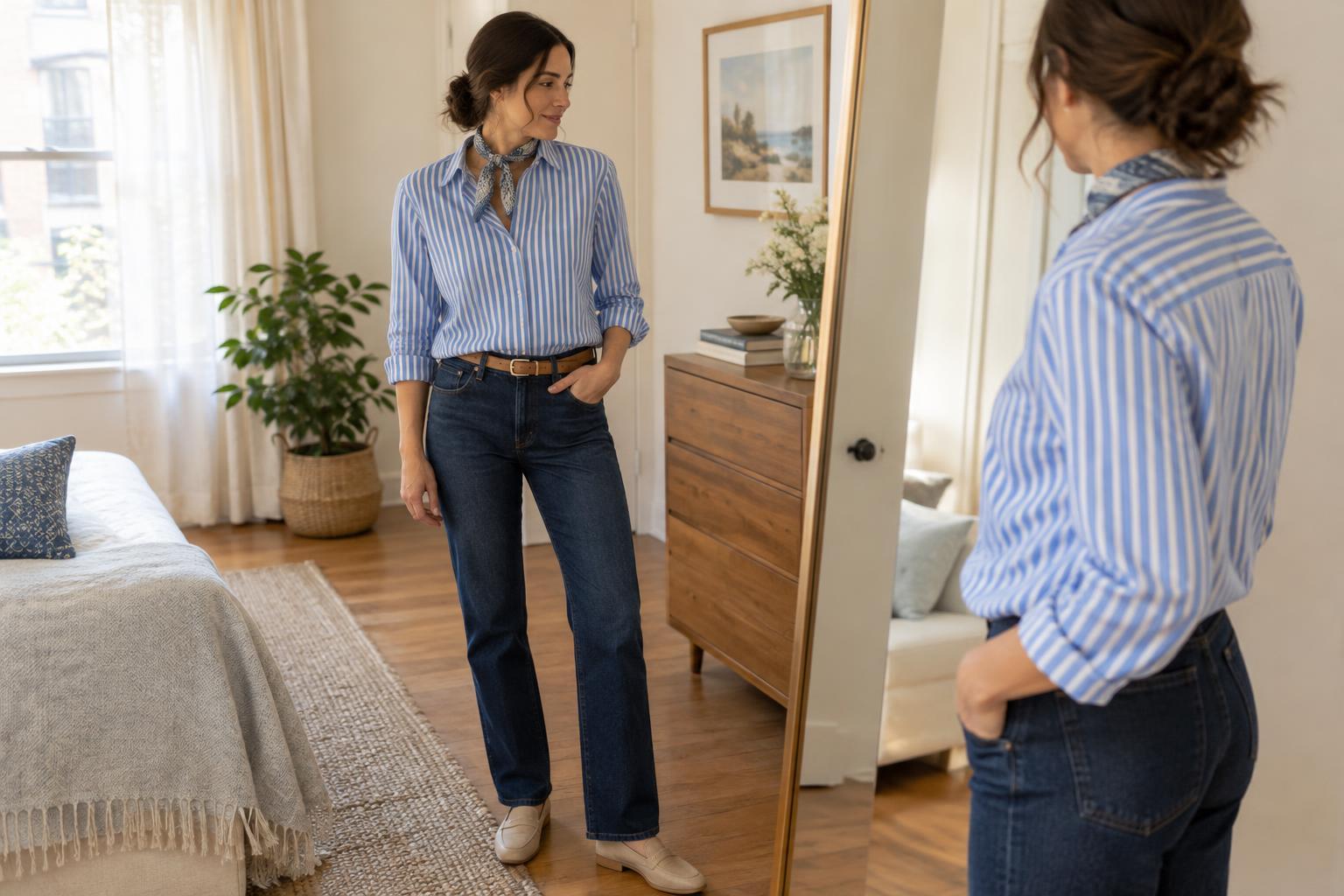
Add a second print in a smaller dose. A printed shirt under an open jacket, a scarf near a striped top or patterned socks below cropped trousers lets you experiment without making the whole outfit about the prints. You can always add more once you know which combinations you enjoy wearing.
Give the prints something in common
A shared color is one of the simplest ways to connect different patterns. If a checked overshirt contains navy, try it with a navy-and-cream striped tee. The prints do not need to match exactly; repeating one noticeable color can make the pairing feel deliberate. For an understated outfit, choose prints with a similar background color, such as two patterns on cream or dark blue.
You can also connect prints through the rest of the outfit. Plain jeans, a solid jacket or shoes in a color that appears in both patterns give the eye somewhere to rest. If the combination feels unsettled, look at the colors before changing the prints: sometimes swapping one bright accessory for a quieter one is enough.
Vary the size and strength of each pattern
Two equally bold prints can compete for attention, especially when they sit next to each other. Try pairing a broad stripe with a small floral, or a prominent check with a fine dot. Let one print be the main feature and the other play a supporting role. This does not mean one must be dull; it simply gives the outfit a clearer focus.
Contrast matters as much as size. A black-and-white pattern may read more strongly than a larger pattern in muted colors. If both pieces seem loud, test a softer colorway, wear less of one print or separate them with a solid layer. An open cardigan between a printed top and patterned trousers, for example, can make the mix feel more relaxed.
Use familiar casual shapes to keep it easy
Simple pieces help unusual combinations feel wearable. A striped tee and patterned loose trousers can work with an uncomplicated denim jacket. A floral shirt and checked scarf may feel calmer with straight-leg jeans and plain trainers. These familiar shapes make room for the prints without asking every part of the outfit to make a statement.
Think about where the patterns sit, too. Prints do not have to touch. A patterned bag with a printed blouse creates space between them, while a printed sock offers just a glimpse below plain trousers. If you prefer a subtle look, keep the larger print farther from your face and use a small accessory as the second pattern.
Check the whole outfit, then stop adjusting
Before heading out, take a step back and look at the outfit as a whole. Notice where your eye goes first. If it jumps between several pieces, remove one printed accessory or replace one item with a solid. If it feels flat, bring back a small accent print. The aim is not to follow a fixed rule but to find a balance you are comfortable wearing.
For a simple starting formula, pair one familiar print with one smaller print, repeat a color between them and keep the remaining pieces plain. Once that feels natural, try combinations that break the formula. Some of the best casual outfits have a little surprise; they just leave enough quiet space for you to enjoy it.