Start with the view from your bed
You do not need to perfect the whole bedroom to make it feel more restful. Begin by sitting on your bed and noticing what is directly in sight. An overflowing chair, a pile of unopened mail or a crowded bedside table can make the room feel like an extension of your to-do list. Choose one visible area to clear first, rather than trying to organize every drawer.
Give items a destination that fits how you actually use the room. A basket can hold clothes that are not quite ready for laundry. A small tray can contain the few things you need by the bed. Move paperwork and unrelated projects elsewhere if you can. If the bedroom has to double as a workspace, put work items in a box or close a cabinet at the end of the day. The aim is not an empty room; it is a room that feels easier to settle into.
Make light easier to control
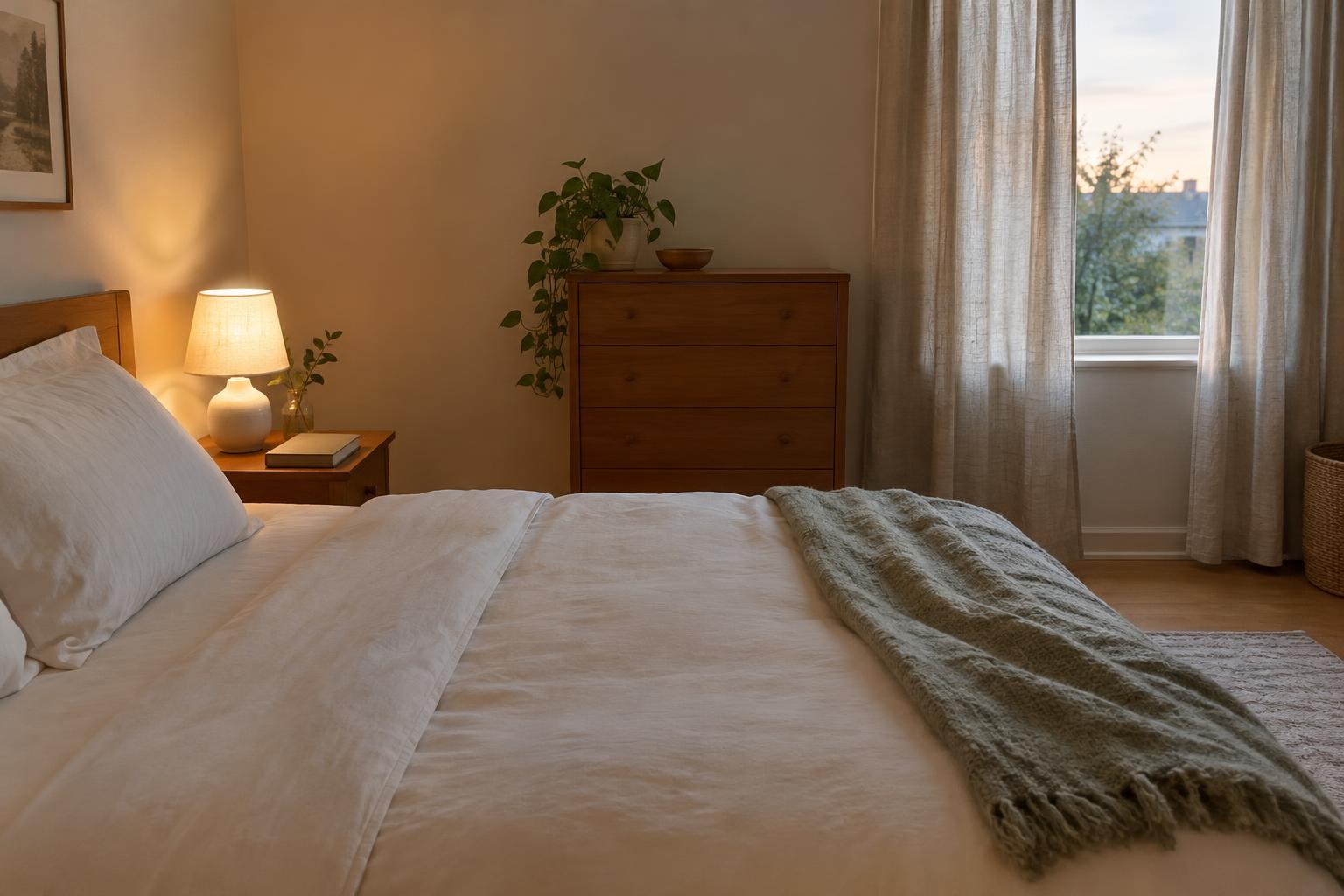
Bedroom lighting works best when you can adjust it to the moment. Bright overhead light may be useful for finding clothes or cleaning, but a softer lamp can make winding down more comfortable. If you already own a lamp, try moving it within easy reach rather than buying another one. Position its light so you can read or move around without lighting the entire room.
Notice unwanted light, too. A streetlight, hallway glow or bright device indicator may bother you more than the room’s decor does. Closing a door, repositioning a device or using curtains you already have may help. If you share the room, look for changes that work for both people: a small reading light, for example, may be less disruptive than the ceiling fixture. You can adjust one source at a time and keep what feels useful.
Check comfort before buying bedding
A neatly made bed can look inviting, but how it feels matters more. Before replacing anything, consider whether your current layers suit the room. If you often feel too warm or too cool, try changing the combination of sheets, blankets and covers you already own. Keeping an extra layer nearby makes it simple to adjust during the night without rebuilding the bed.
Pillows and bedding can also become less comfortable when they are crowded together or difficult to keep clean. Remove decorative cushions if they end up on the floor every evening, and give everyday bedding a practical place to go while you change the sheets. If you do decide to buy something, identify the specific problem first. A clear need is a better guide than the idea that a restful bedroom must have a matching set.
Reduce the little interruptions
Small annoyances can stand out when the rest of the home is quiet. Listen for a rattling fan, a ticking clock or sounds coming through a door. You may be able to move the clock, steady the fan or change where the bed sits without rearranging the whole room. For noise you cannot control, a consistent background sound may be worth trying if you find it comfortable.
Keep nighttime essentials easy to reach so you are not searching for them in the dark. Water, tissues, glasses or a book might belong on your bedside surface; anything you rarely use can live elsewhere. Leave enough clear space to set something down safely. A simple layout is especially helpful in a small bedroom, where extra furniture can make the path around the bed feel cramped.
Let the room support a simple evening reset
The best bedroom setup is one you can maintain on an ordinary weeknight. Consider a short reset that takes only a few minutes: put clothes in their usual place, clear a cup from the bedside table and set out what you will need in the morning. Doing this earlier in the evening may feel easier than facing a list of chores when you are ready to rest.
There is no single restful look. Some people prefer almost bare surfaces; others feel at ease with books, photographs or soft textures around them. Keep the things that make the room welcoming, and change what creates friction. Start with one adjustment tonight, live with it for a few days and then decide what to try next. Small, workable choices can do more for the feel of a bedroom than a makeover that is hard to maintain.