Start with what feels uncomfortable
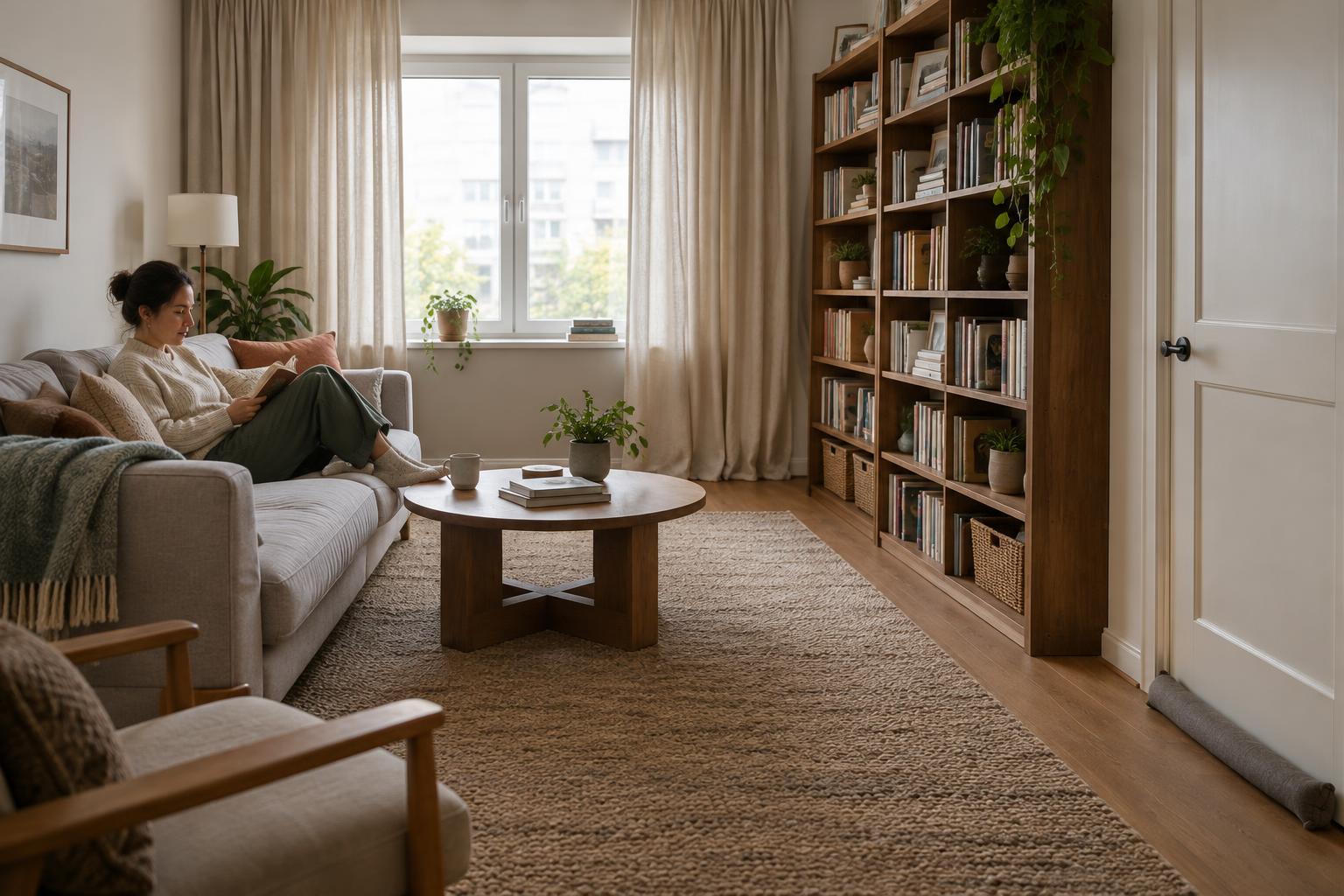
Before adding anything to the sofa, sit in your usual spot for a few minutes. Notice whether you want more support behind your lower back, a softer place to rest your arm or something warm within reach. The answer will help you choose pieces you will actually use, rather than piling on cushions that have to be moved every time you sit down.
Cushions and throws can make a sofa feel more welcoming, but they cannot repair a broken frame or badly worn seat filling. If you sink unevenly or feel a hard edge through the upholstery, check the sofa itself first. For a sofa that is sound but not quite comfortable, small changes in placement and texture can make a useful difference.
Choose cushions for support as well as softness
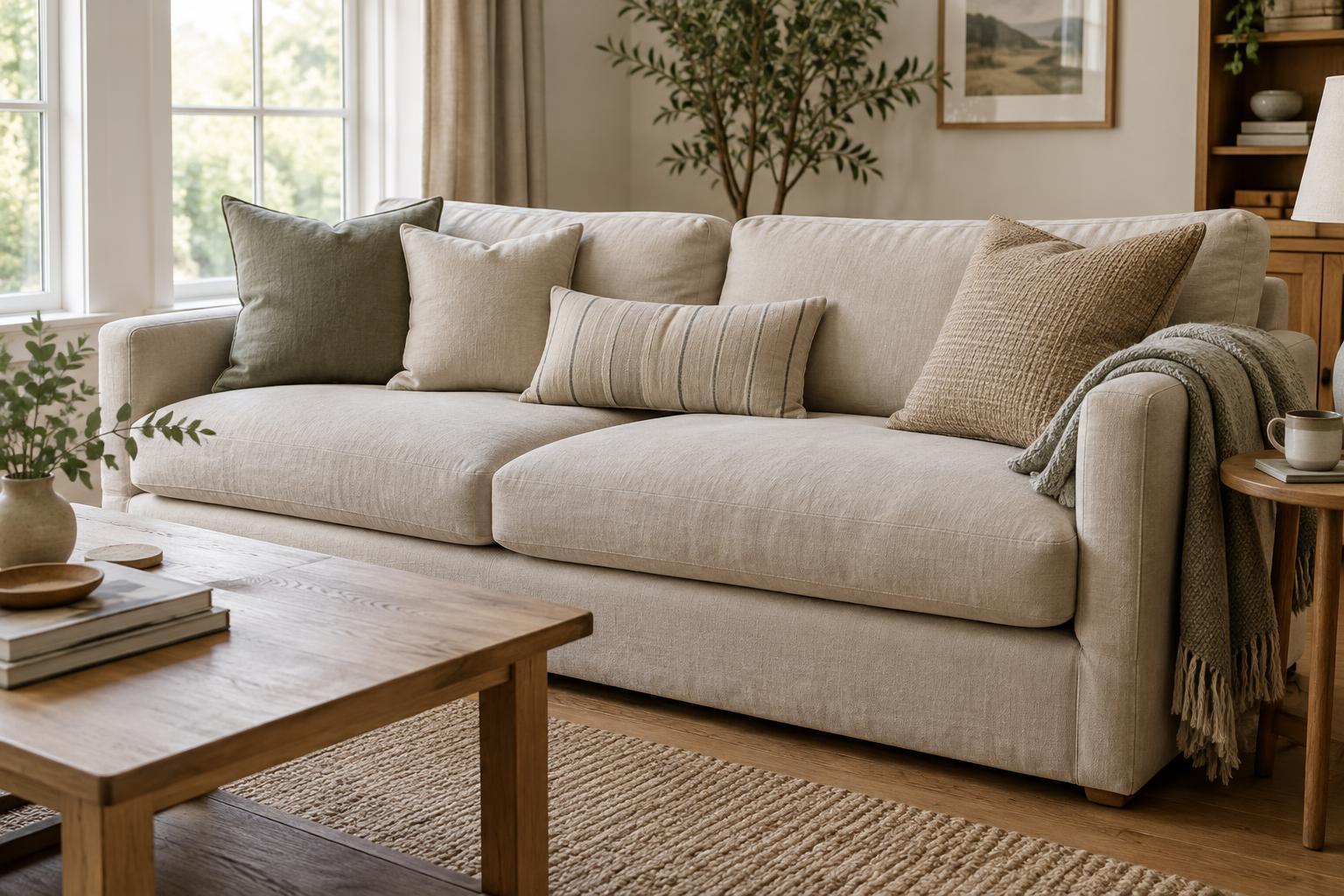
A cushion works best when it fills a particular gap. If the seat is deep, place a supportive cushion behind your back so you can sit upright without stretching your legs forward. A small rectangular cushion can fit at the lower back, while a larger square one can support more of your shoulders. If an armrest feels too firm, a softer cushion beside it gives you somewhere to lean.
Pay attention to how a cushion holds its shape. A very soft one may be pleasant to hug but offer little support; a firmer one may be better behind your back. Removable covers are handy for cushions that get daily use, especially where snacks, pets or children are part of sofa time. You do not need matching cushions: a few that serve different purposes are often more useful than a large coordinated set.
Arrange cushions without losing the seat
Leave enough open space for people to sit down easily. On a compact sofa, one cushion at each end and perhaps one smaller cushion in the middle may be plenty. On a longer sofa, you can group cushions near the arms and keep the central seats clear. Try the arrangement by sitting down, not just by looking at it from across the room.
Think about how the sofa is used throughout the day. Someone who likes to stretch out may prefer cushions that can be picked up with one hand and set aside. If several people share the sofa, keeping a little space between cushion groups makes it easier for everyone to settle in. The most comfortable arrangement is one you can reset quickly, without treating the sofa like a display.
Add a throw where it earns its place
A throw brings warmth and another layer of softness, but its size and texture matter. Choose one long enough to cover your lap without constant tugging. If you often feel too warm, a lighter fabric may get more use than a thick, fluffy one. Consider how the material feels against bare arms or legs, and check its care instructions before choosing a throw for everyday use.
Keep the throw within reach by folding it over an arm or along the back of the sofa. For a relaxed look, drape it loosely over one end, leaving most of the seats uncovered. If a throw tends to slide off slippery upholstery, a simple fold may stay in place better than a wide drape. The aim is to make it easy to grab when you want it and easy to put away afterward.
Make the setup easy to live with
Once you have a combination you like, spend a few evenings using it as you normally would. Notice which cushions support you and which ones end up on the floor. Remove anything that gets in the way, and move the most useful pieces to the spots where people naturally reach for them. Comfort is easier to maintain when every item has a reason to be there.
A quick shake of the cushions and a fold of the throw can refresh the sofa in less than a minute. Wash covers and throws according to their labels, and let them dry fully before putting them back. With a manageable number of soft layers, the sofa can feel ready for a quiet break or a conversation without requiring a major tidy-up first.