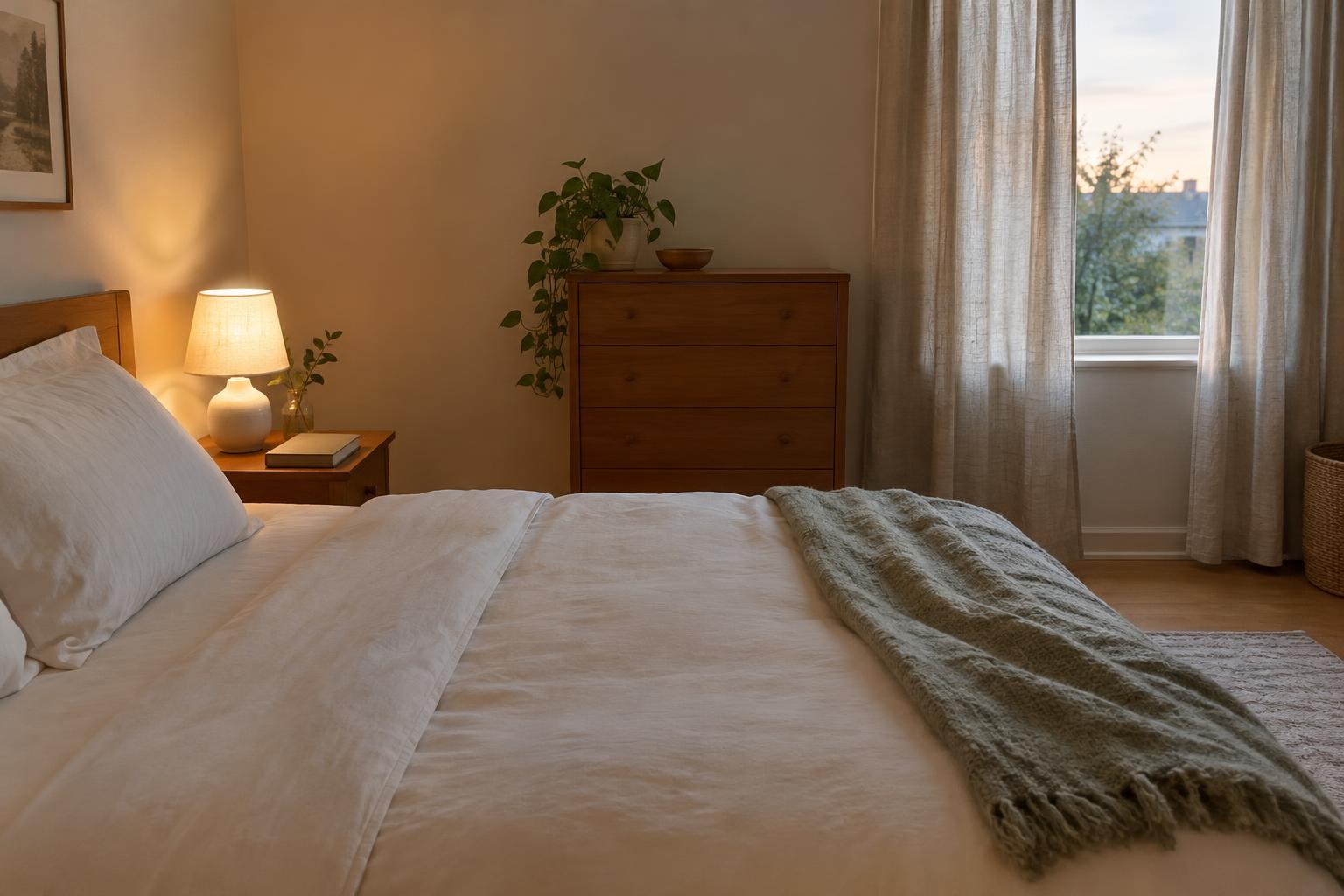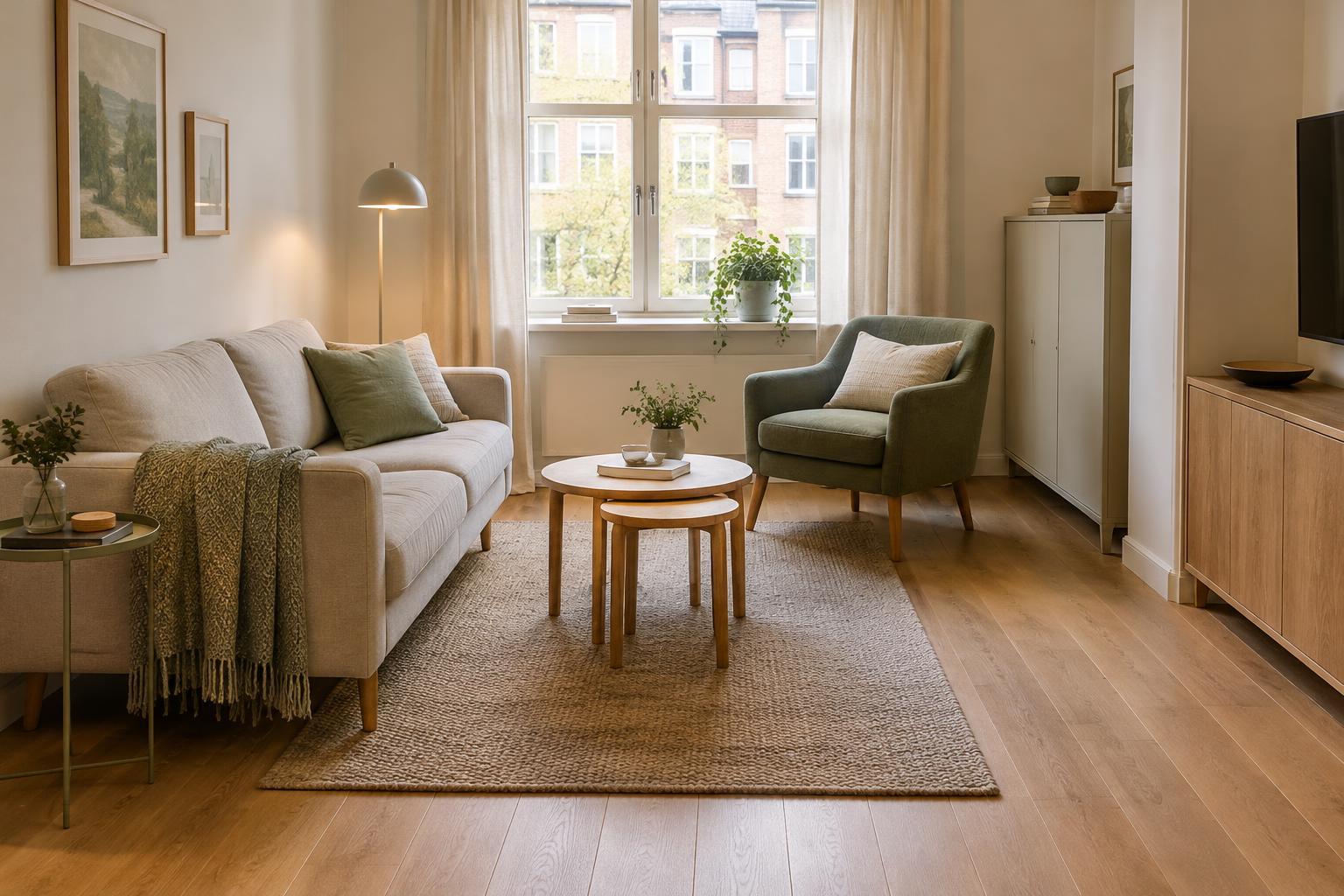
Begin with what the room needs to do
A comfortable living room is one that supports your ordinary day. Before moving furniture or buying anything, think about what happens there: watching a film, reading, talking with friends, working for an hour or letting children play. Pick the two or three uses that matter most. A room does not need a separate piece of furniture for every activity; the same table might hold a drink in the evening and a notebook during the day.
Notice where people naturally walk, where daylight enters and which seats you actually use. Then clear anything that makes those routines awkward. You do not have to strip the room bare. The aim is to give useful things enough space to work, rather than filling every wall and corner simply because they are available.
Choose a layout that leaves breathing room
Start with the largest seat and arrange smaller pieces around it. In a narrow room, pushing every item against a wall may create an empty strip through the middle without making conversation or relaxation easier. Try shifting an armchair closer to the sofa, or angling it slightly, while keeping a clear route to doors and frequently used storage. If you need to squeeze past a table to sit down, that table may be too large or in the wrong spot.
Leave some visible floor and a few quiet areas on shelves or walls. These pauses help the room feel settled and make the things you keep more noticeable. If rearranging feels daunting, move one piece at a time and live with the result for a few days. What looks balanced from the doorway is less important than whether you can reach a lamp, set down a cup and move around comfortably.
Let furniture earn its footprint
In a small room, proportions often matter more than the number of pieces. A deep sofa can be lovely, but not if it leaves no comfortable walking space. Look at the depth as well as the width of seating, and consider whether a compact sofa with a separate chair would suit your habits better. Furniture with visible legs can show more floor underneath, though comfort and sturdiness should come first.
Choose flexible pieces only when you will use their flexibility. A nesting table can offer an extra surface when guests visit, then tuck away; an ottoman can serve as a footrest and occasional seat. But a storage bench is not helpful if opening it means moving everything piled on top. Before bringing in a new item, decide where it will sit, what job it will do and what, if anything, it will replace.
Add softness without adding piles
Comfort is not the same as having many cushions or throws. One supportive cushion, a blanket you enjoy using and a rug that suits the seating area may do more than a collection of accessories that must be moved each time you sit down. Varying texture—a smooth lamp shade beside a woven basket, for example—can make a room feel warm without demanding much space.
Lighting also affects how welcoming the room feels. If you rely on one bright ceiling light, try adding a lamp near your usual seat for reading or winding down. Place it where the cord will not cross a walkway. During the day, keep window coverings easy to open so you can use the natural light available. A few well-placed sources of light give you options without filling surfaces with decorations.
Make tidying easy enough to repeat
A small living room often feels crowded when everyday items have no obvious home. Give frequently used things a nearby place: a basket for throws, a tray for remotes or a shelf for books in progress. Closed storage can calm a busy-looking room, while open shelves work best when you leave room to take things out and put them back. The right solution is the one you can maintain on a tired evening.
Finally, protect a little space for personality. A favorite print, a plant that suits the light or a small group of meaningful objects can make the room feel like yours. You need not display everything at once. Keeping some items elsewhere and changing them occasionally lets the room stay personal without becoming crowded.