Start with the life you live there
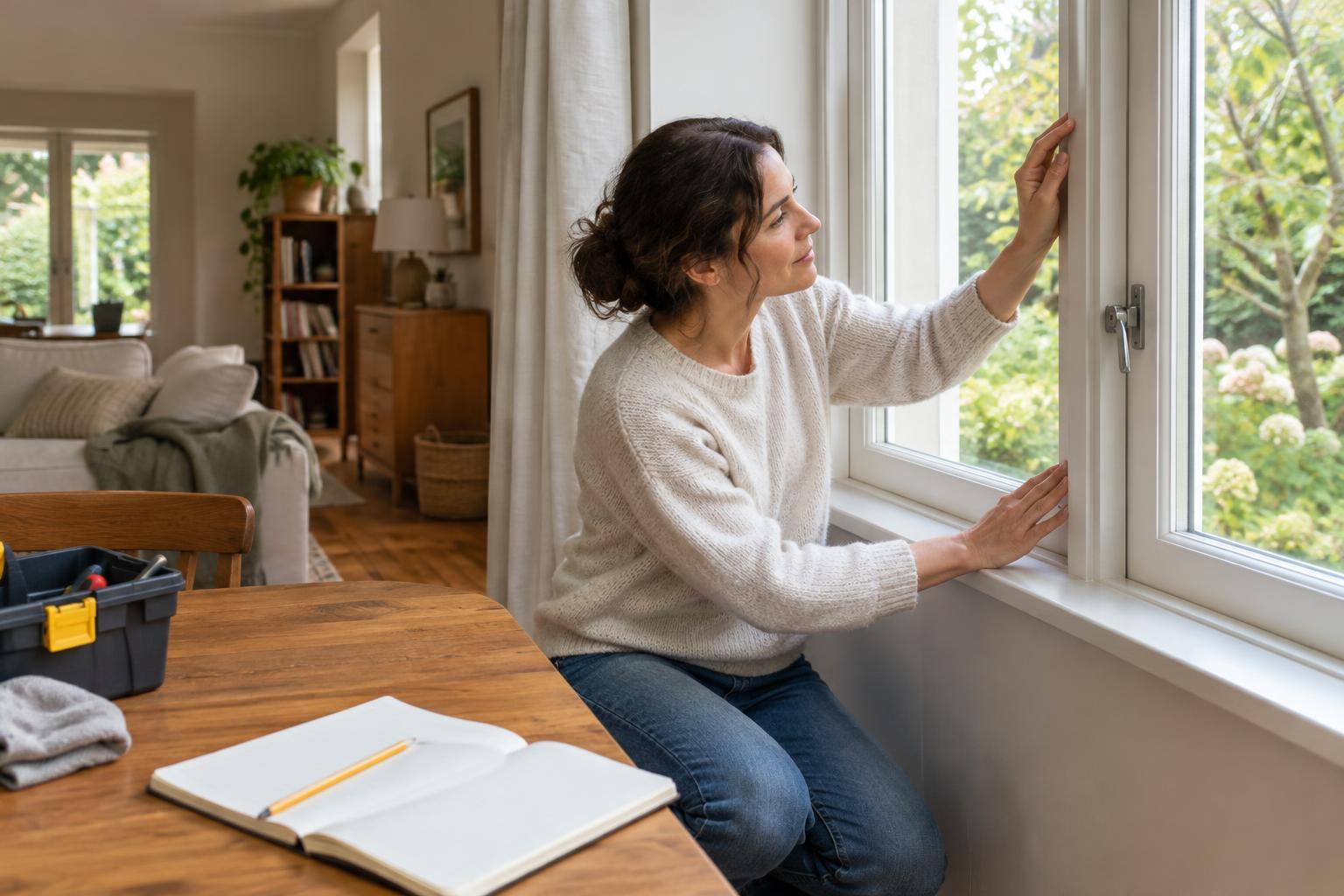
Making a rental feel personal does not have to begin with changing its walls. Begin by noticing what happens in each room. Where do you drop your bag when you come in? Which chair gets the best afternoon light? Is there a corner you avoid because it has become a place for things with no other home? These observations can tell you more about what to change than a shopping list can.
Choose one small improvement for each space based on how you want to feel and what you need to do there. A tray by the door can make arrivals calmer. Moving a chair beside a lamp can create a place to read. A cleared stretch of kitchen counter may make cooking feel easier. Work with your existing furniture first: changing a layout costs nothing, and living with it for a week helps you decide whether it works.
Build a look with pieces you can take along
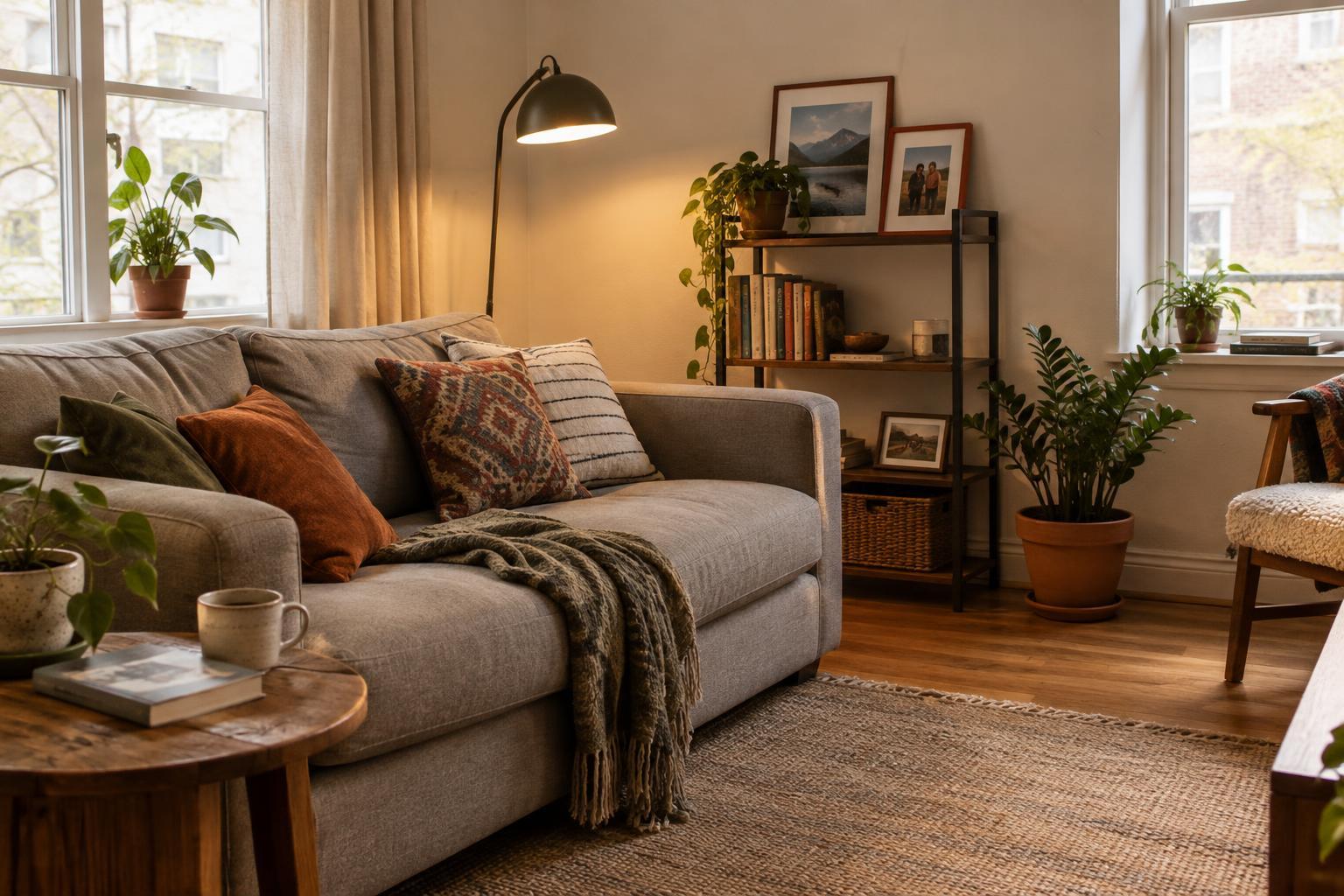
Textiles are an easy way to soften a rental’s fixed features. A rug can define a seating area, curtains can frame a window, and cushions or a throw can bring colour to a neutral sofa. You do not need to match everything. Repeating two or three colours across a room can make belongings gathered over time feel connected, while different textures add interest without making the space busy.
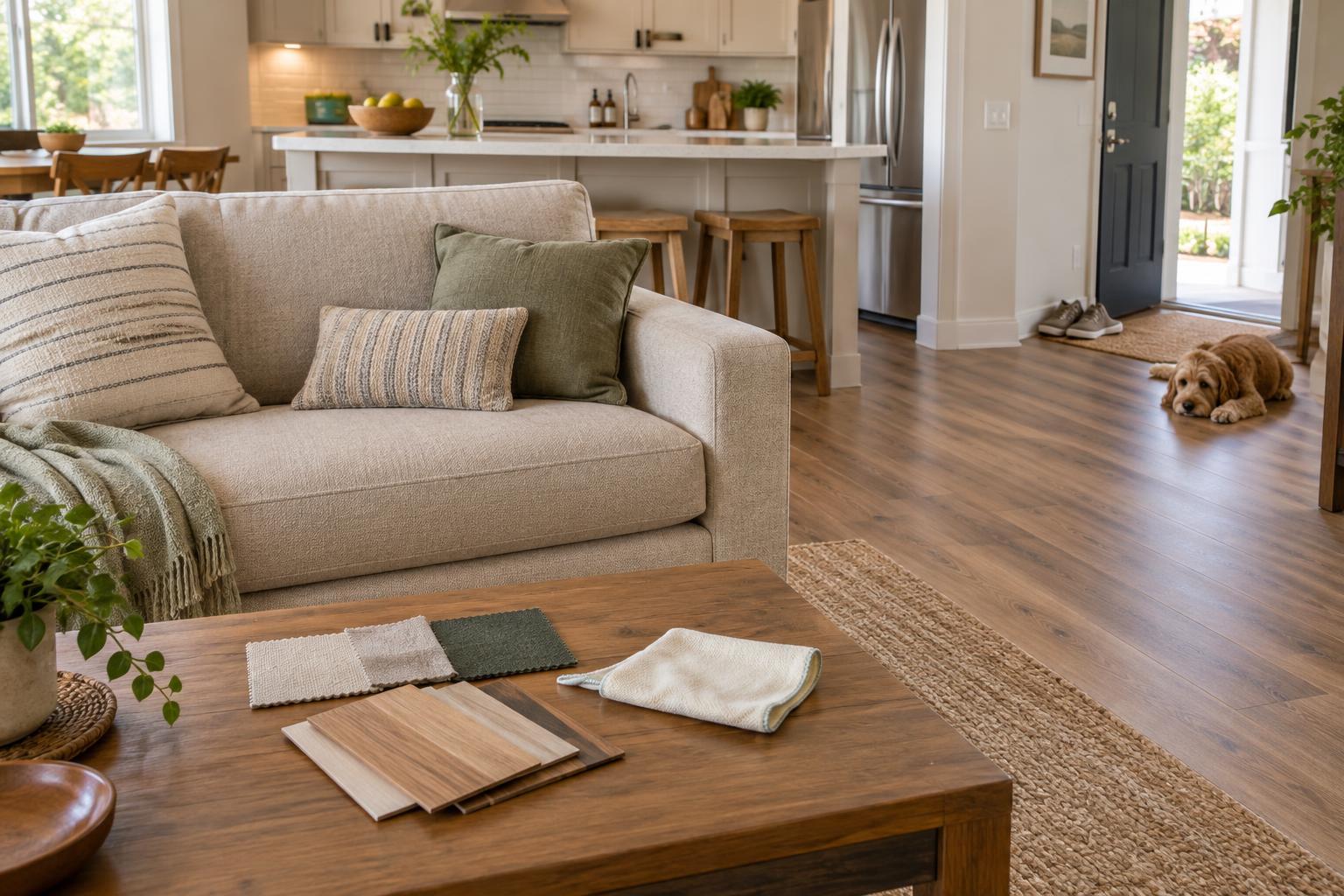
Before buying, measure the room and consider what might fit a future home. A versatile rug or curtain panels that can be hemmed may be easier to reuse than something chosen for one awkward corner. Washable covers and durable fabrics can also be practical in spaces used every day. If you are covering a hard floor, check that any rug pad is suitable for its finish and will not leave marks.
Use light to change the mood
Overhead lighting is not always where you need it. A table lamp near the sofa or a floor lamp beside a desk can make a room feel more comfortable while helping with a specific activity. Try switching on a few smaller lights in the evening instead of relying on one bright fixture. Choosing bulbs with a consistent tone can help the room feel settled.
Think about daylight, too. Keep window areas clear enough to let it in, and place a mirror where it reflects a pleasant part of the room rather than a cluttered one. Freestanding mirrors and lamps are useful choices when you cannot alter fixtures. Keep cords out of walkways, use bulbs that suit the fixture, and avoid putting fabric close to hot lights.
Display what matters without marking the walls
Personal details make a home recognizable: a framed photo, a favourite book, a ceramic piece from a trip, or something you made yourself. Group a few items on a shelf, mantel or sideboard rather than spreading them across every surface. Leaving some open space lets each object stand out and makes cleaning simpler. Frames can also lean securely on a sturdy surface if hanging them is not an option.
If you want to attach anything to a wall, check your rental agreement and test any removable product according to its instructions. Adhesive hooks and strips are not risk-free on every paint or wall finish. For heavier items, freestanding shelves or furniture designed for display may be a better choice, provided they are stable and used safely. The aim is to enjoy your belongings now without creating a difficult move-out task later.
Make room for everyday comfort
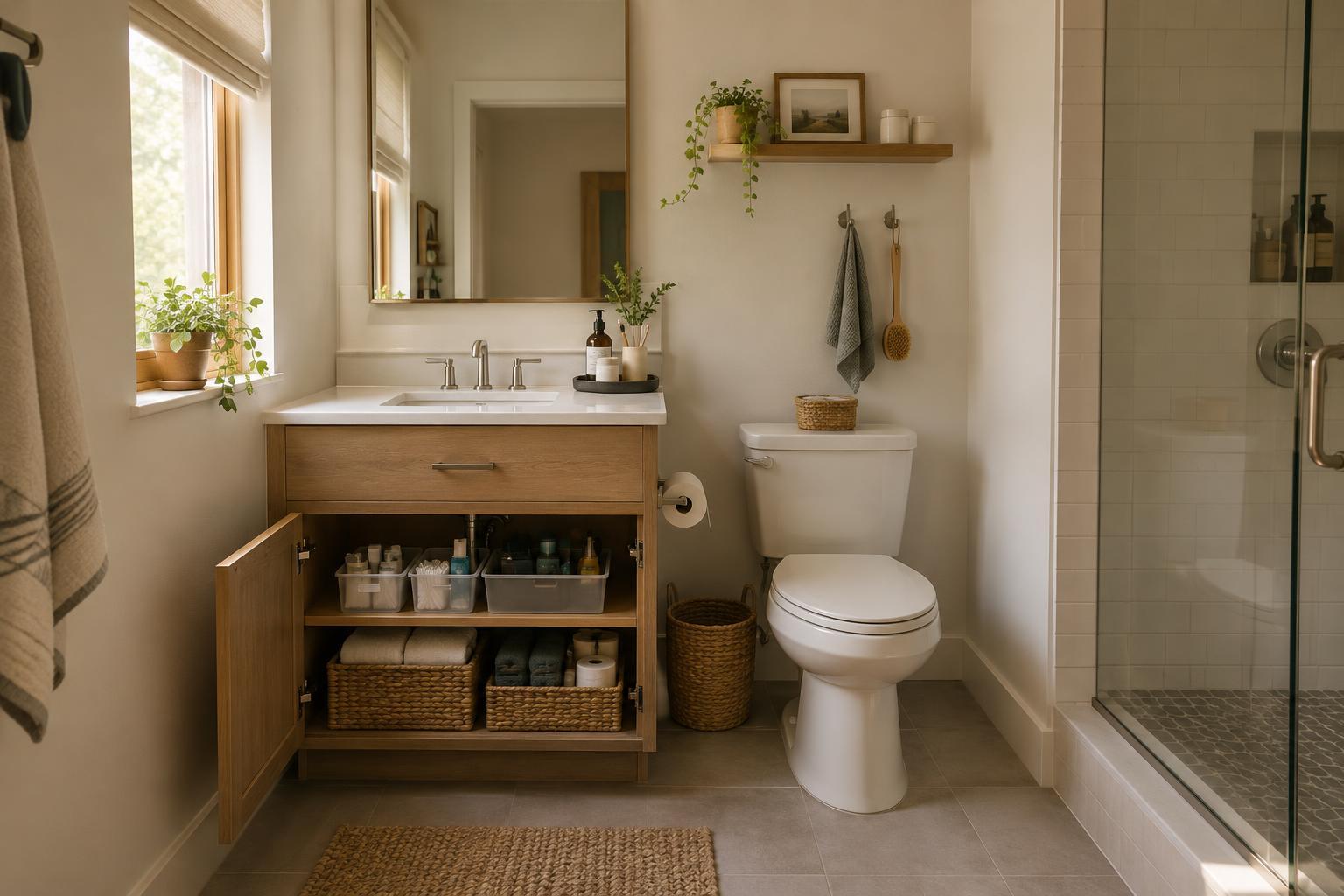
A personal home is not only about how it looks. Give frequently used things an obvious place: a basket for blankets, a dish for keys, or a box for hobby supplies you can pull out when you have time. These small systems reduce the effort of settling in and help the room return to a comfortable state after a busy day. A plant or fresh flowers can add life if you enjoy caring for them, but they are not a requirement.
Finally, keep a simple record of what belongs to the rental and what you have added. Store any original fittings you are permitted to swap, and leave yourself time to remove your additions carefully when you move. The best changes suit your daily life, respect the space you are borrowing and can travel with you to wherever home is next.