Start with what you actually forget
A good leaving-home checklist is not a complete inventory of your life. It is a prompt for the few things that tend to be missing when you reach the bus stop, your desk or the grocery store. For a few days, notice what you go back for, what you search for at the door and what you wish you had brought. Write those items down without trying to organize them yet.
Look for patterns in that rough list. You may always need keys, a wallet and a phone, but only sometimes need headphones, a lunch or a reusable bag. Separate the true everyday essentials from the items that depend on your plans. Keeping the main list short makes it easier to check quickly, especially when you are in a hurry.
Write prompts you can check at a glance
Turn your everyday essentials into a simple sequence, such as “Keys, wallet, phone, glasses.” Use the names you naturally say to yourself. A checklist is more useful when each prompt points to a clear action: “Water bottle filled” may help more than “water,” while “Laptop in bag” is clearer than “work stuff.” If an item has a usual place, you can include that location as a cue: “Keys from hook.”
Aim for a list you can scan in a few seconds. If it grows long, group related things under a short heading rather than adding every small object. For example, “Work bag ready” could mean you checked its contents the night before. The leaving-home list then serves as a final confirmation, not a reminder to pack from scratch while standing in the doorway.
Give occasional items their own space
One checklist rarely fits every kind of day. Keep a small second area for common departures, such as work, exercise or errands. Under “Work,” you might put a laptop and lunch; under “Errands,” a shopping list and returns. Add only what you routinely need for that type of trip. A special event can have a temporary note of its own instead of permanently crowding the everyday list.
If you share a home, avoid assuming everyone needs the same prompts. One person may need to remember medication they already use, while another needs a transit card or a child’s bag. Individual lists can sit side by side, or each person can keep a version on their phone. The point is to make the check relevant, not to create another household task for someone to manage.
Put the reminder at the right moment
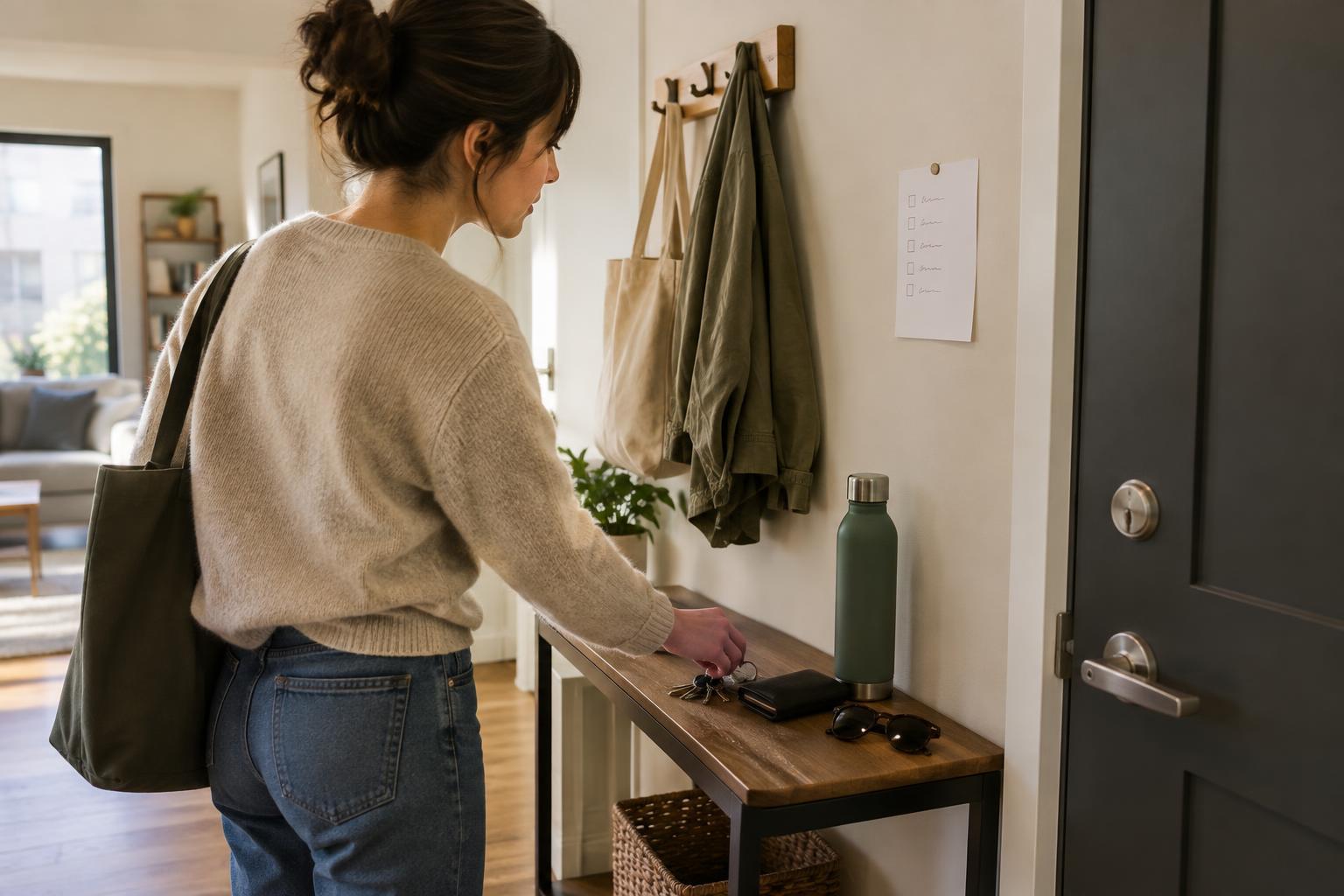
Place the checklist where you naturally pause before leaving: beside the door, above a shoe rack, on a bag hook or on a phone screen you open before heading out. Visibility matters more than making it decorative. If you tend to overlook wall notes, try a small card attached to your bag or a reminder connected to your usual departure time. Choose one place to start rather than covering the home with prompts.
Make the physical setup support the list. A tray for keys and a regular spot for your bag reduce the amount of searching a checklist can only point out. When possible, put tomorrow’s occasional items in or beside the bag the night before. At the door, you can then touch or see each essential as you check it, rather than relying on a quick mental guess.
Keep it useful as your routine changes
Try the checklist for a week or two and notice where it helps and where it gets in the way. If you keep skipping a line because it never applies, move it to an occasional list. If you still forget something, make its prompt more specific or move the checklist closer to the moment you need it. A list is a tool you can edit, not a rule you have failed to follow.
Before walking out, take one unhurried pause: check your everyday essentials, glance at the relevant trip list and think about anything unusual planned for today. Then leave. The aim is not to guarantee that you never forget anything; it is to give your attention a reliable place to land when the morning is busy.