Plan for the week you actually have
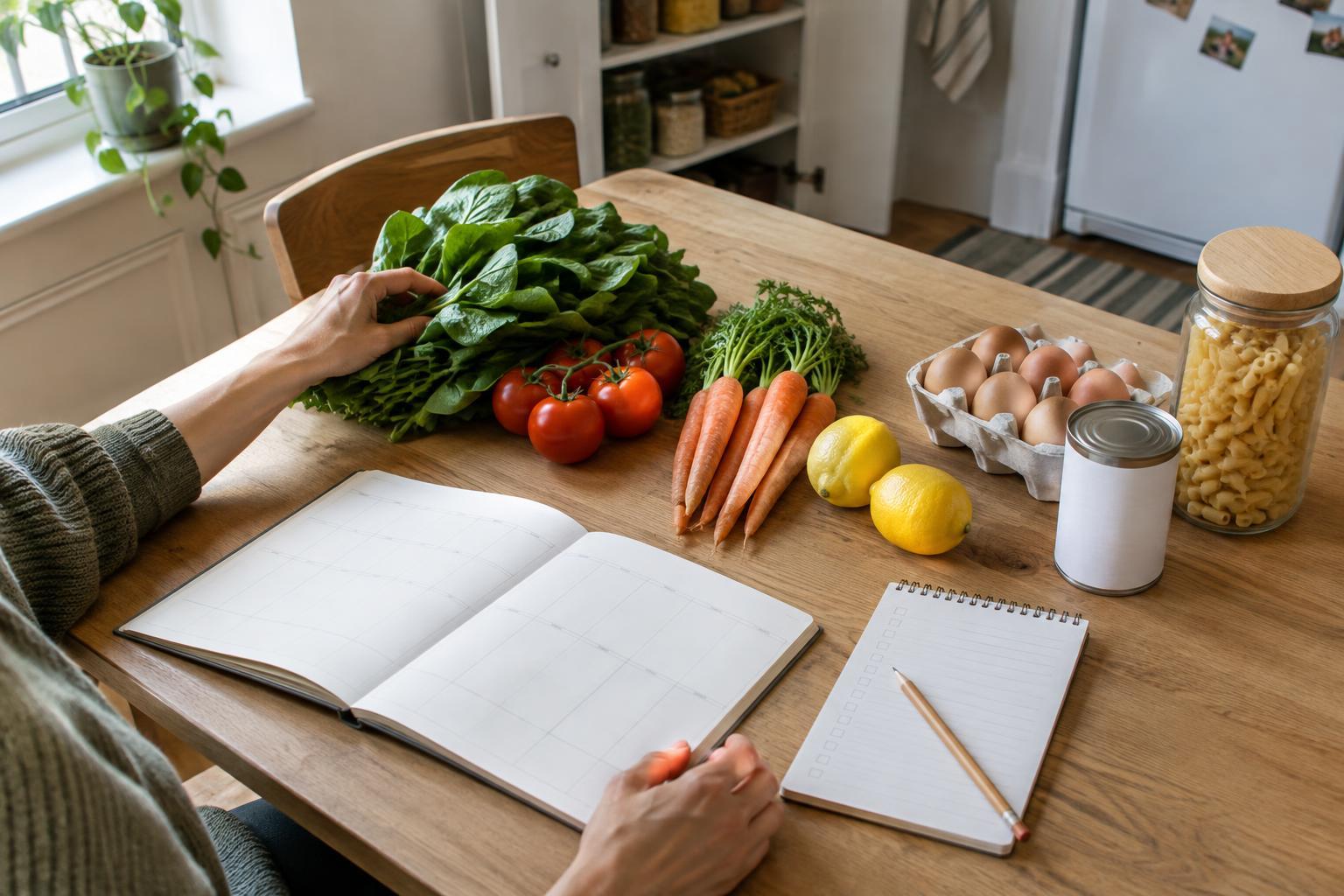
Before choosing meals, look at your calendar. A late meeting, an evening out or a busy weekend can change how much time and energy you have for cooking. Decide which meals need a plan: perhaps five dinners, a few packed lunches and easy breakfasts. You do not need to account for every bite to make a useful grocery list.
Match each meal to the day it will fit best. Save recipes with more steps for quieter evenings, and put quick meals or planned leftovers on busier days. If you already know you will eat away from home, leave that slot open. This keeps you from buying ingredients for meals you are unlikely to make.
Check your kitchen before adding anything
Once you have a rough meal plan, take a quick look in the fridge, freezer and cupboards. Note ingredients that need using soon and meals you can make mostly from what you have. A half bag of rice, a jar of sauce or vegetables in the freezer might help shape the plan without another purchase.
Then check the amount you have, not just whether an item is present. A recipe may call for two cans of beans when only one is in the cupboard. If you share groceries with someone, it can help to ask what they have already used or plan to use. This small check makes the list more accurate and reduces the chance of buying a duplicate.
Turn meals into one combined ingredient list
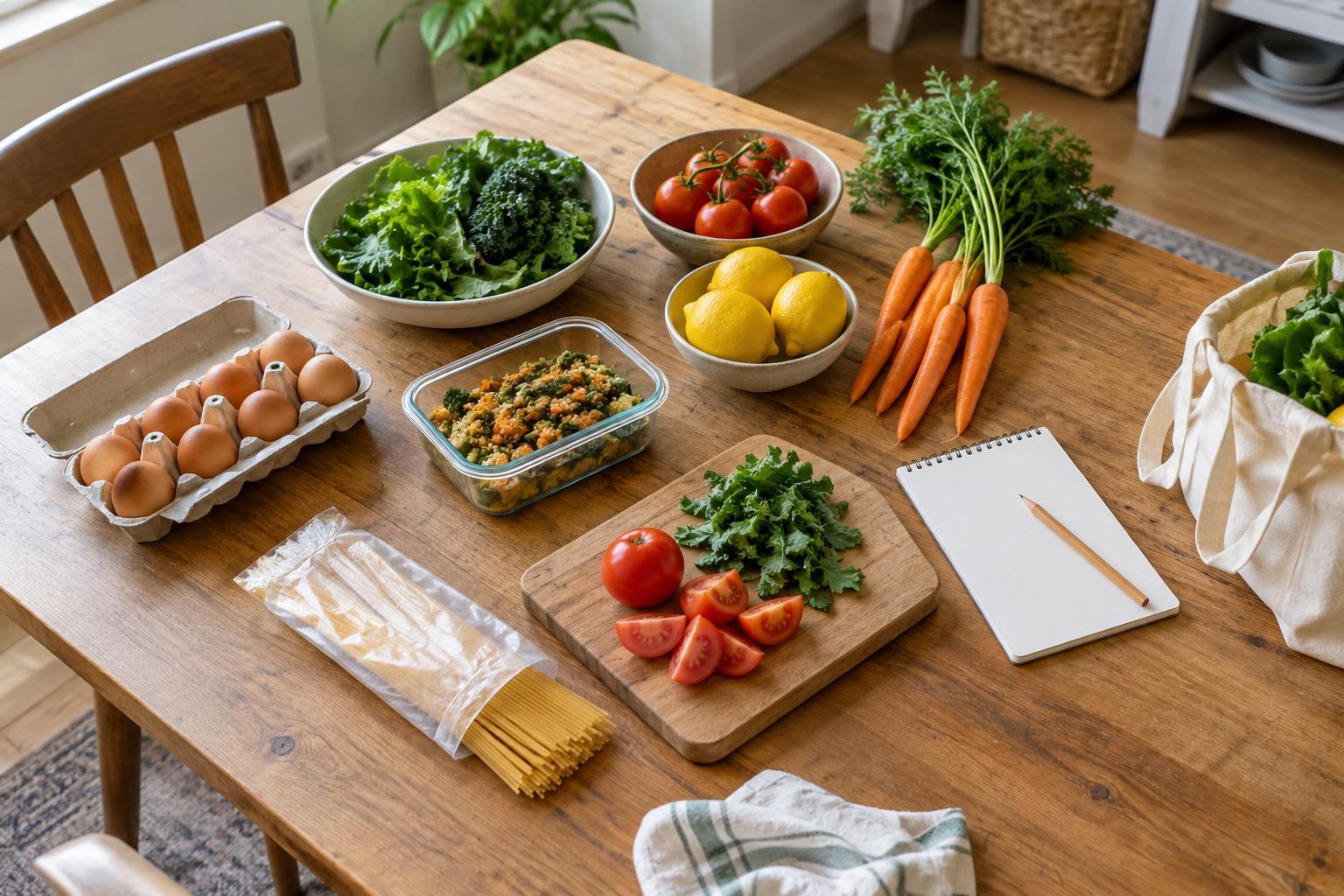
Write down the ingredients for each planned meal, including the easy-to-forget parts: cooking oil, toppings, sides and anything needed for lunches made from leftovers. Next, combine repeated ingredients into a single entry. If two dinners use carrots, list the total amount you expect to need rather than writing “carrots” twice.
Keep amounts practical. “One bag of spinach for pasta and lunches” may be more helpful in the shop than two separate recipe measurements. For ingredients sold in larger packs, think about where the remainder will go. If a meal needs only a little yogurt, could the rest work for breakfast? If not, consider a smaller pack or a different ingredient.
A simple format is meal name, ingredients needed and quantity to buy. Cross off anything already at home, then transfer what remains to the shopping list. This extra pass takes a few minutes but connects every item to a meal or another clear use.
Arrange the list for the way you shop
Group items into sections such as produce, dairy, pantry goods, frozen foods and household essentials. You can change the order to match your usual route through the shop. Keep non-meal items in their own section so they do not get lost among recipe ingredients.
Add brief notes where a choice matters. “Firm tomatoes for sandwiches” is clearer than “tomatoes,” and “any leafy green for pasta” gives you room to choose what looks suitable. If someone else may do the shopping, write quantities and acceptable substitutes plainly. A list should be easy to use while standing in an aisle, not just easy to understand at home.
Leave enough room for real life
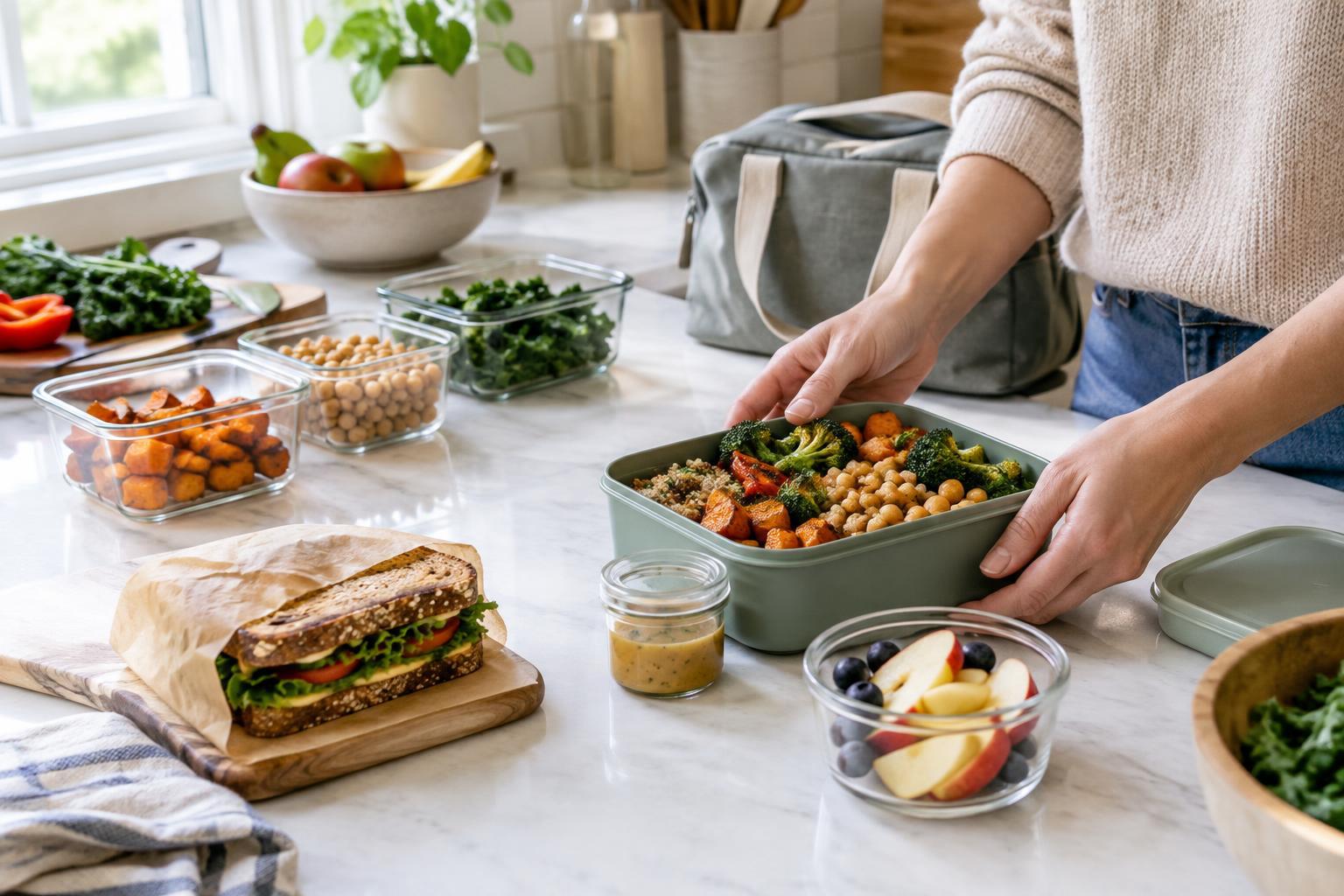
A matching grocery list does not have to be rigid. Keep one low-effort meal in reserve, using ingredients that store well, for a day when plans change. You might also mark one planned meal as flexible: a grain bowl, for example, can use whichever vegetables you have left later in the week.
Before you leave for the shop, scan the list one last time. Ask whether each perishable item has a likely use and whether each meal has what it needs. After the week, notice what you repeatedly bought but did not use, or what you had to pick up later. Adjusting the next list from that experience is often more useful than trying to build a perfect system at once.