Start with what happens in the room
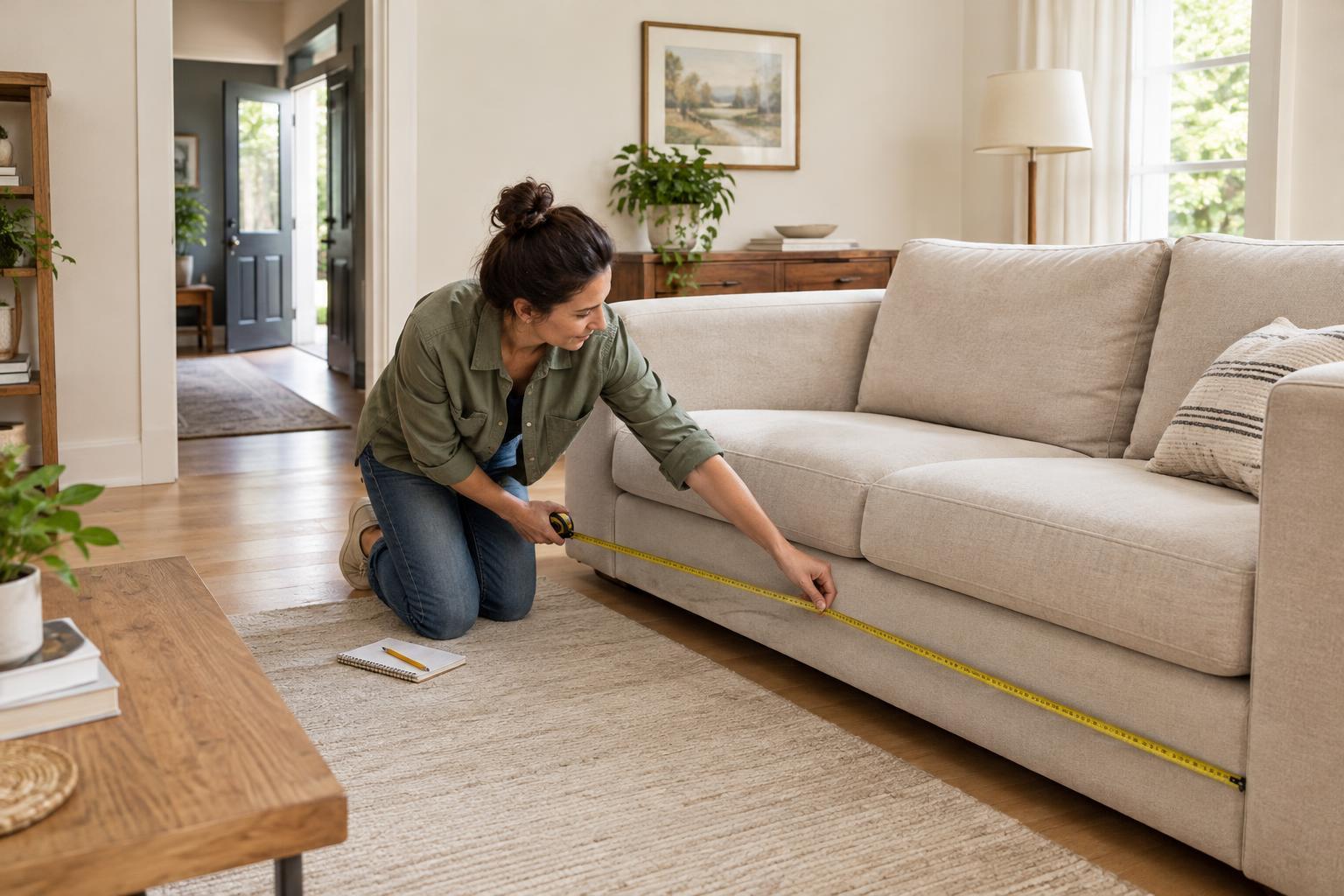
Before moving lamps or buying bulbs, notice how you use your living room. You might read on one end of the sofa, play games at a table and watch television from several seats. Lighting each activity is more useful than trying to make every corner equally bright. A simple sketch of the seating, outlets and darker areas can help you see what you already have and what is missing.
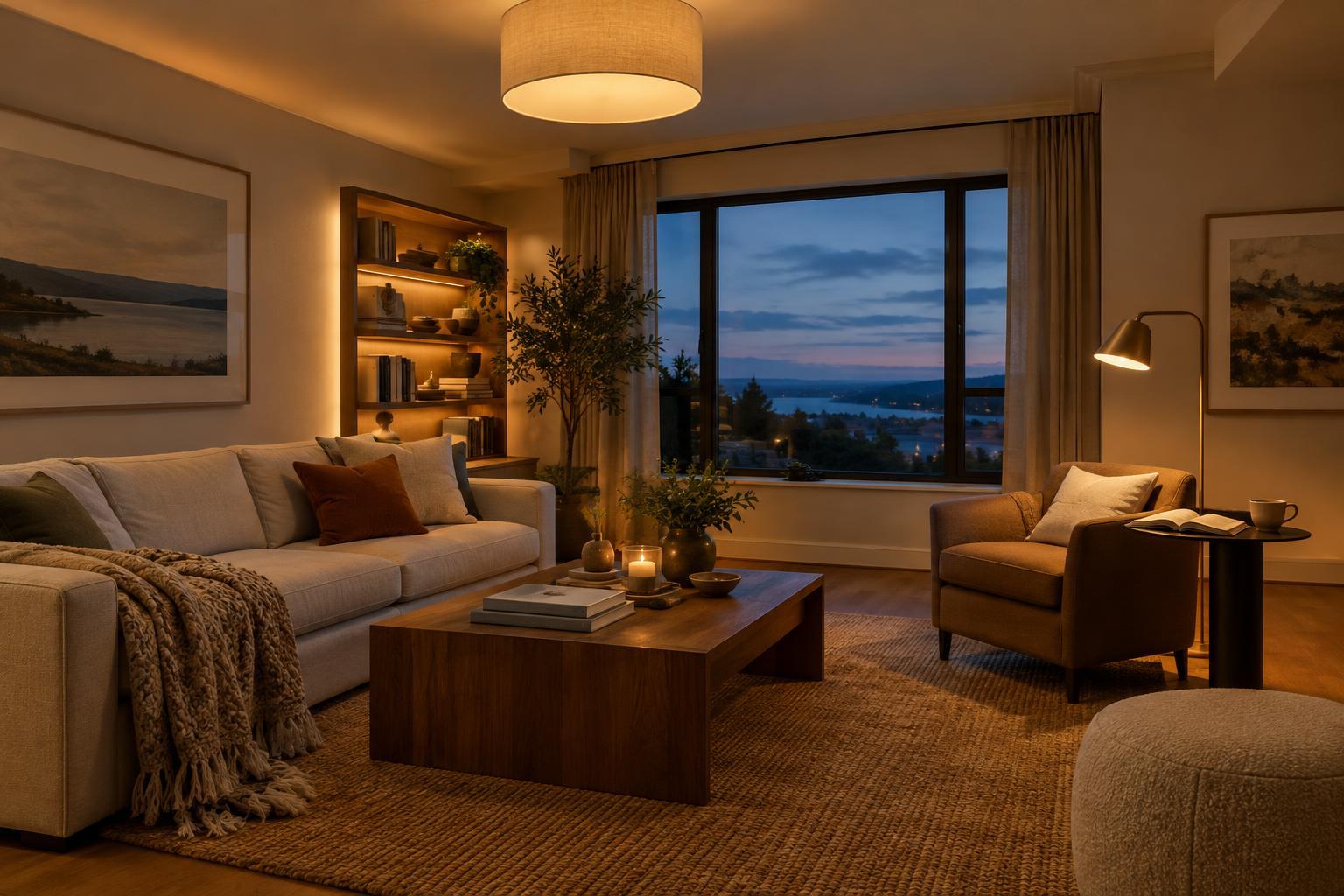
Think of living room lighting in three layers. Ambient light makes it comfortable to move around and see the room as a whole. Task light gives you enough light for a particular activity. Accent light draws attention to a feature or adds a soft glow. The layers can overlap: a shaded floor lamp may help someone read while also brightening a dim corner. You do not need three separate fixtures in every part of the room.
Build a gentle ambient layer
Ambient lighting is the room’s general background light. Ceiling fixtures can provide it, but a single bright fitting often creates glare while leaving the edges of the room in shadow. If that sounds familiar, try spreading light around the space instead. A floor lamp near one wall and a table lamp on the opposite side can make the room feel more balanced, whether or not you use the ceiling light.
Shades that diffuse light and lamps that bounce light off a wall or ceiling can make the overall effect softer. If your main fixture has a dimmer, lower it for relaxed evenings and raise it when you need to tidy up. Check that any bulb you choose is compatible with the dimmer and fixture. In a small room, improving the position of one or two existing lamps may do more than adding another light source.
Put task light where you need it
Task lighting belongs close to the activity it supports. For reading, place a lamp beside or slightly behind the seat so light reaches the page without shining into your eyes. An adjustable shade or arm makes it easier to direct the beam. If two people use the sofa differently, each end may need its own lamp rather than a brighter overhead light that suits neither person.
Consider other regular tasks, too. A table used for puzzles or crafts may benefit from a nearby lamp that lights the work surface. Avoid placing a lamp where your body casts a shadow over what you are doing. Sit in your usual position to test the setup before deciding it works. A lamp that looks well placed from across the room may be awkward to switch on or too bright at eye level when you are seated.
Add accents without adding clutter
Accent lighting gives the room depth by illuminating something you enjoy looking at: a bookshelf, a plant or an interesting wall texture. A small lamp on a shelf can be enough. Aim for a subtle contrast with the surrounding light rather than a spotlight that competes with the rest of the room. Accent lights are optional; they should make the space more pleasant, not create another decorating obligation.
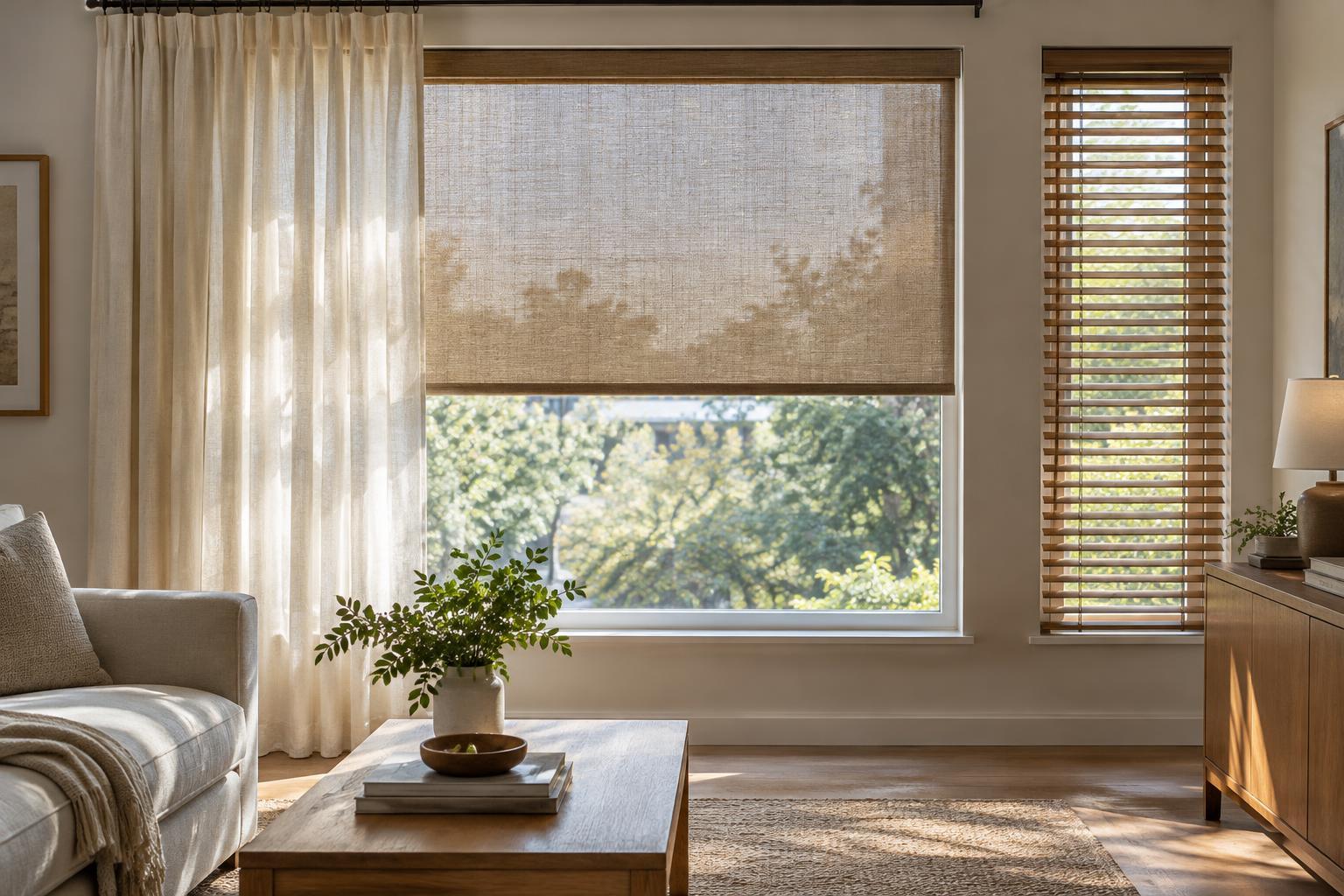
Pay attention to what the light hits from your normal seats. A bare bulb reflected in a window, framed print or television screen can be distracting. Changing the lamp’s angle, moving it a short distance or choosing a shade may solve the problem. Leave clear space around bulbs and fixtures as their instructions require, and keep cords out of walking routes.
Make the layers easy to use
The best lighting plan is one you can adjust without fuss. Try turning on only the lamps you want for a quiet evening, then check whether you can still walk through the room comfortably. For reading or games, add the relevant task light. If you routinely have to switch on every fixture, you may need a better-placed ambient lamp rather than more brightness everywhere.
For a cohesive feel, choose bulbs with similar light appearance in lamps that are on at the same time; mixing a very cool-looking bulb with a warm-looking one can feel disjointed. You can still vary brightness by purpose. Make one change at a time and test it after dark, when glare and dim spots are easier to notice. Often, a comfortable living room comes from being able to choose the right combination of lights, not from filling every corner with fixtures.