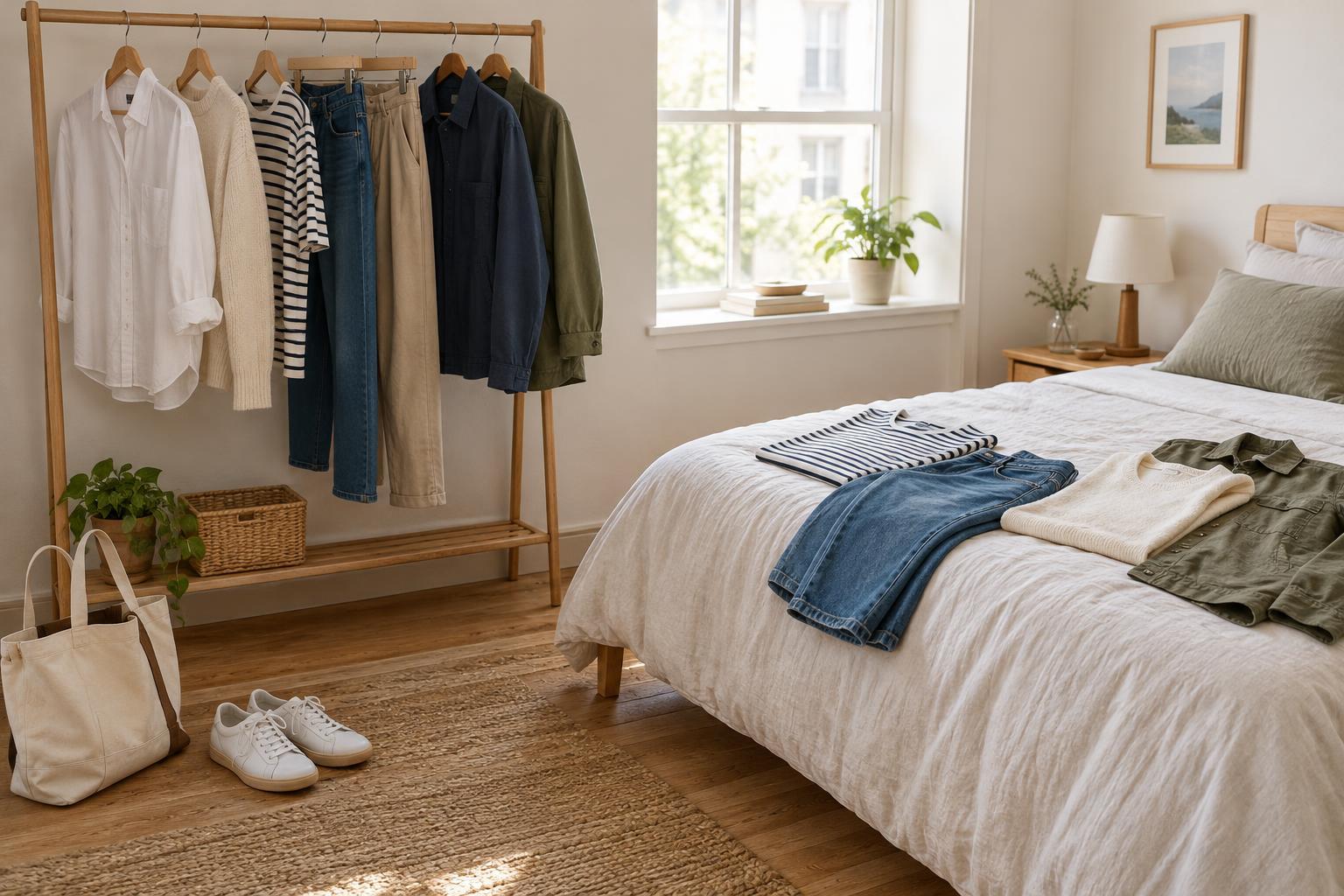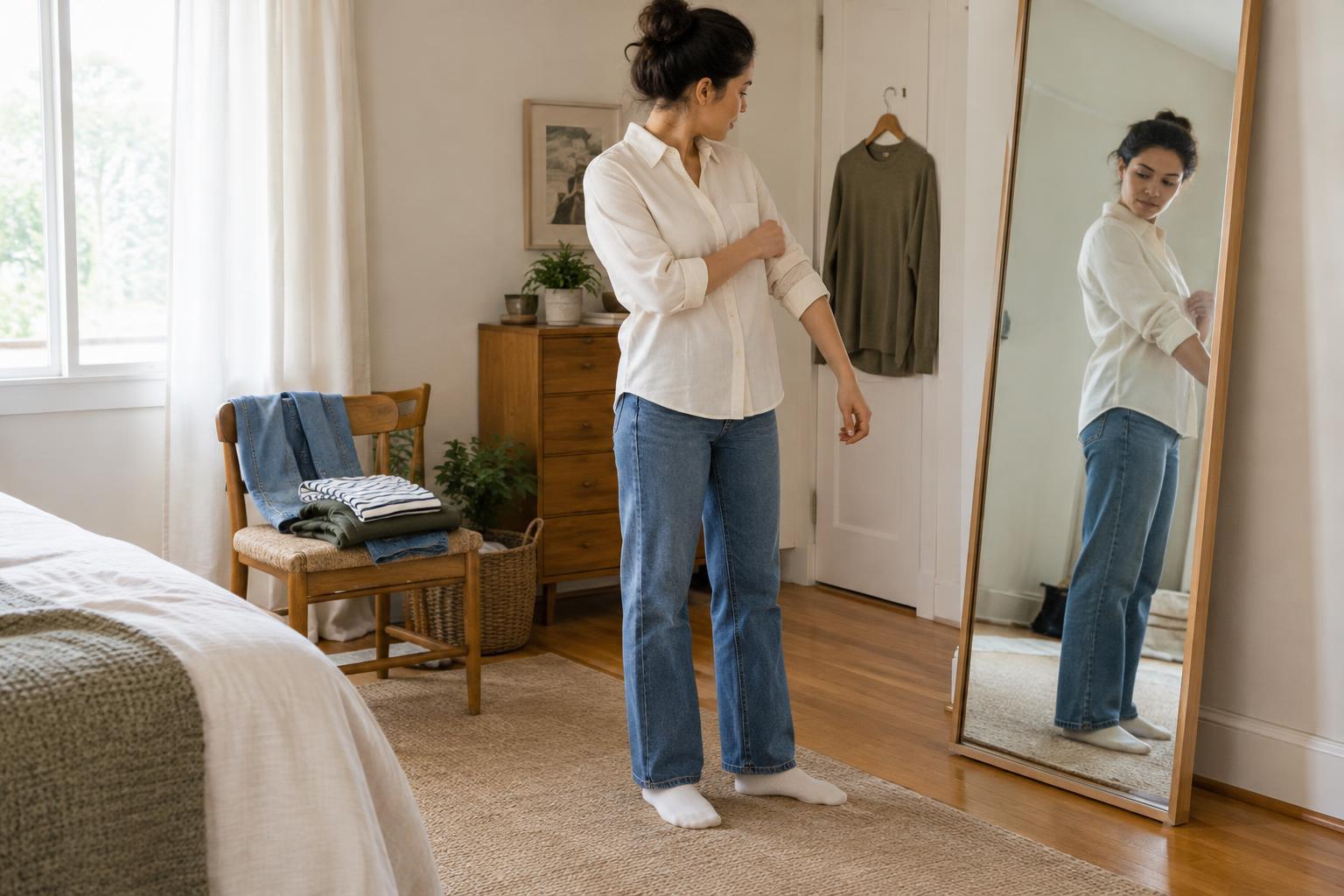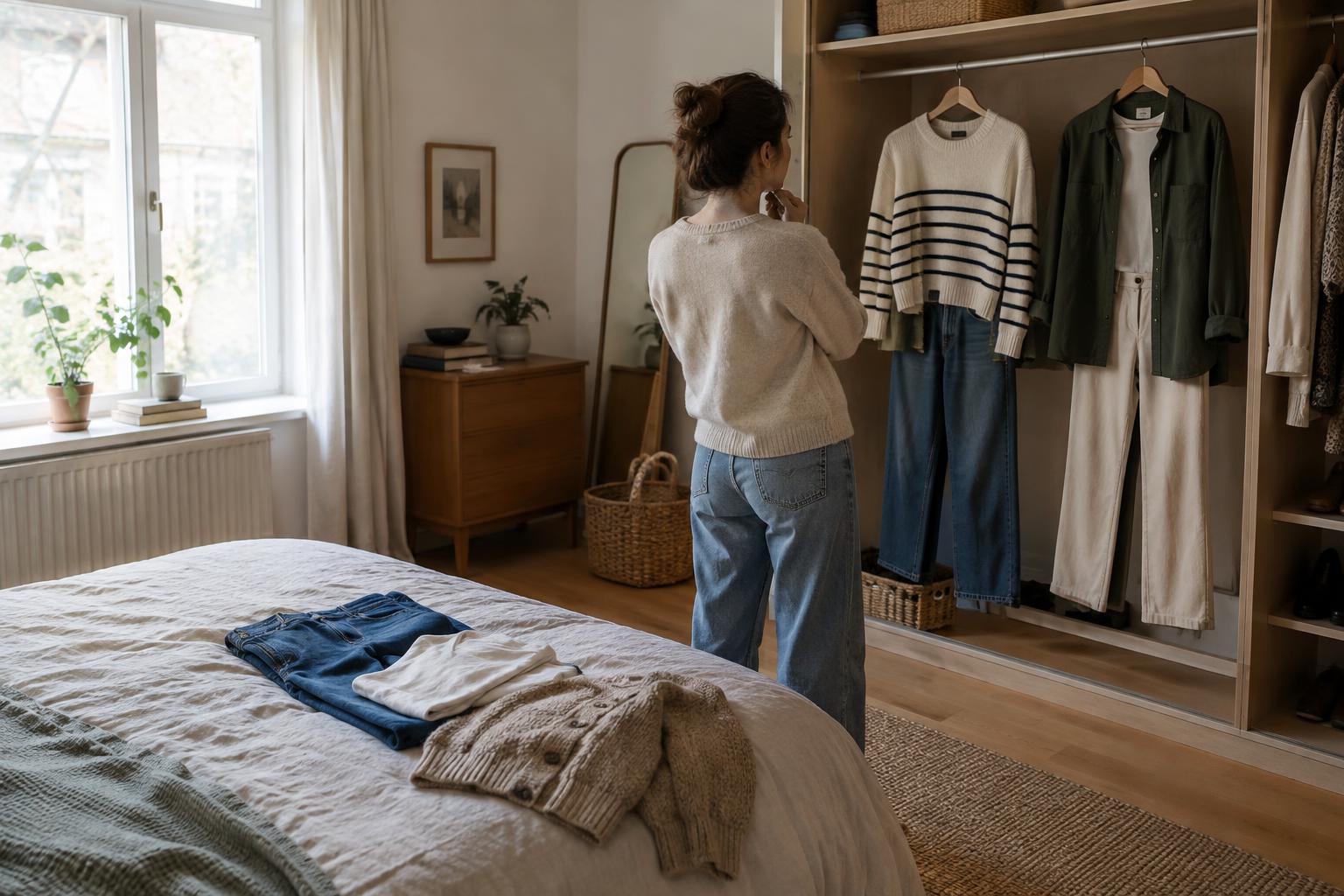
Start with the clothes you actually wear
Defining your style can sound like a project that begins with a shopping trip. It is usually more useful to begin at home. For a week or two, notice which clothes you choose when you have an ordinary day ahead: work, errands, time with friends or a quiet afternoon. These repeat choices show what already fits your life better than an outfit saved for an imagined occasion.
Look for specifics without judging them. Perhaps you keep choosing relaxed trousers because they let you move easily, or a certain jacket because it makes a simple outfit feel finished. Notice what stays unworn, too. A piece can be lovely and still feel too fussy, stiff or difficult to pair with the rest of your wardrobe. The goal is not to justify every past purchase. It is to learn from it.
Put your preferences into plain words
You do not need a named aesthetic to have a clear sense of style. Try writing down three to five words that describe how you want to feel in your everyday clothes. “Easy,” “neat,” “soft” and “playful” are more useful than a label you feel obliged to follow. Then check those words against the outfits you already enjoy. If “relaxed” matters to you, what does that look like in practice: roomy layers, flat shoes or fabrics that do not need much attention?
Take a closer look at the details that make familiar outfits feel like yours. You might prefer muted colours with one bright accent, simple shapes with interesting texture, or loose pieces balanced by something more fitted. These patterns can guide you without turning into rules. Your preferences may also change with the season, your schedule or your mood; an everyday style should leave room for that.
Make room for your real routine
An outfit can look appealing in a photo and still be wrong for a typical Tuesday. Think through the places you regularly go, how you travel, the temperature changes you deal with and how much effort you want to spend getting dressed. If your days involve walking, your footwear choices matter. If you move between casual and slightly dressed-up settings, you may value layers that adjust easily.
Comfort is worth defining for yourself rather than treating it as a single look. It might mean a waistband that does not distract you, a sleeve length you do not have to adjust, or clothes you can wash without a special plan. Pay attention to fit and care as well as appearance. The pieces you enjoy wearing repeatedly are often the ones that meet all three needs.
Experiment with combinations before adding anything
Once you have a few style words and practical needs in mind, try making outfits from what you own. Lay out two or three pieces you wear often and change one element at a time. Swap shoes, add a layer or try a different colour combination. A simple phone photo can help you compare outfits later without having to remember exactly how each one looked.
As you experiment, notice whether a genuine gap appears. You may find that several outfits would work better with a lighter layer, or that you have plenty of tops but few bottoms you like wearing with them. You may also discover that nothing is missing; you simply needed a new way to combine familiar clothes. Both outcomes are useful, and neither requires you to change your style overnight.
Use a short shopping filter
Before buying something, ask where you would wear it and which pieces you already own would go with it. Consider whether its fit, fabric and care suit your routine. If you can picture a few comfortable outfits and a realistic place to wear them, the item has a stronger case than one that appeals only on a hanger.
It also helps to wait when you feel uncertain. Keep a note of the item or the gap it might fill, then return to the idea after you have worn your existing clothes a few more times. Defining your everyday style is not about making every purchase perfectly. It is about recognising what you enjoy, what your life asks of your clothes and what you can happily reach for again.