Start with the problem you want to solve
The best evening routine is not a list of everything a well-organized person might do. It is a short response to the moments that regularly make your mornings harder. Maybe you search for your keys as you leave, forget what needs to go in your bag or wake up to a kitchen that feels overwhelming. Pick one or two recurring frustrations before deciding what belongs in your routine.
Then choose a small action for each one. If mornings involve a hunt for essentials, give your keys, wallet and bag a consistent place. If breakfast decisions slow you down, decide what you will eat before you go to bed. Starting with real friction keeps the routine useful rather than turning it into another set of expectations.
Give the day a quick closing check
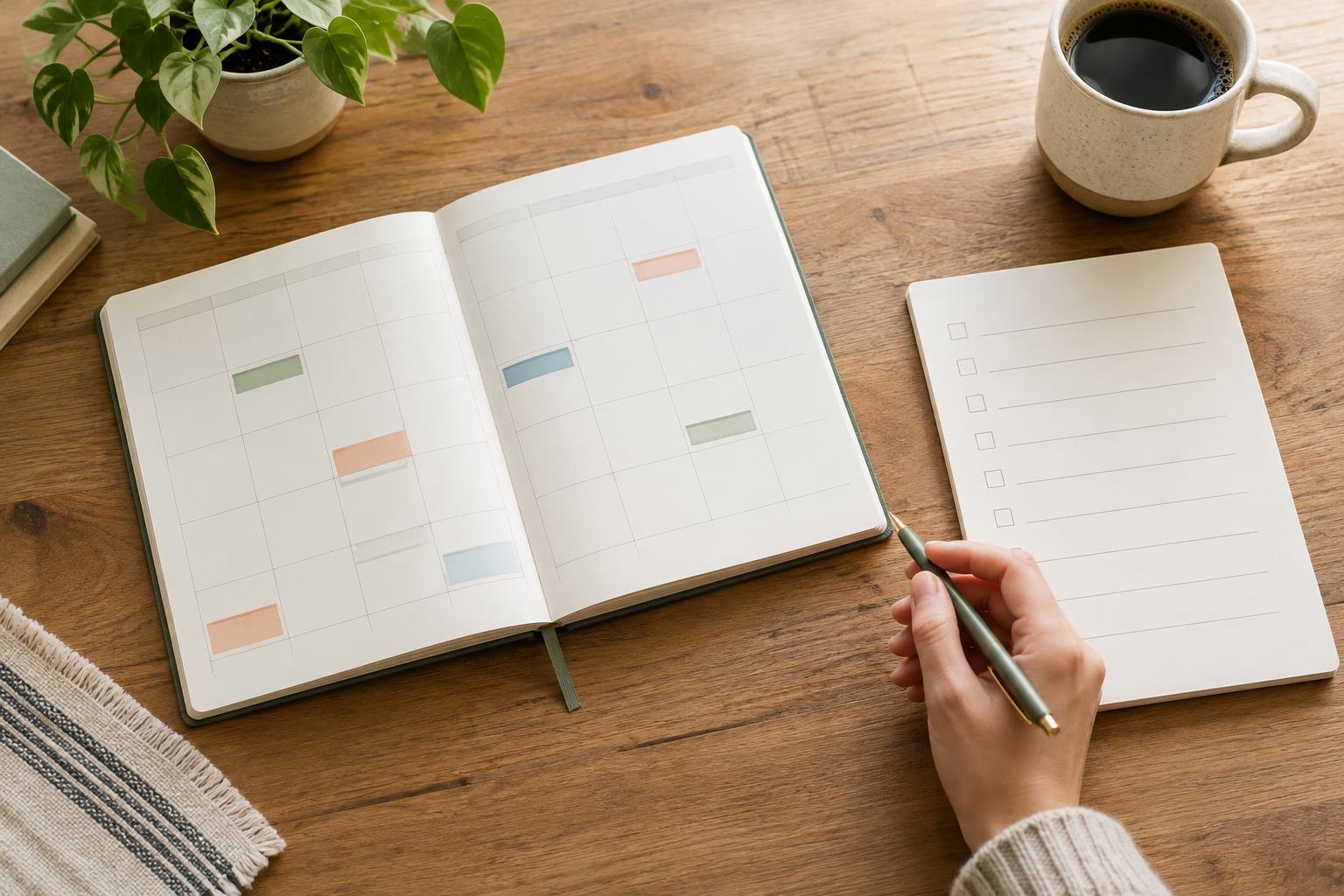
Set aside a few minutes to look at tomorrow without trying to plan every hour. Check any commitments you already know about, note what you need to bring and choose the one task you most want to remember. A short written note can keep those details in one place, whether you use paper or your phone. If you have several priorities, separate what must happen tomorrow from what can wait.
This is also a good moment to deal with small loose ends that would otherwise interrupt your evening. Put a form by the door, reply to a simple message if it genuinely needs a response, or write down something you cannot act on yet. The goal is not to finish all your work. It is to stop relying on memory to carry it into the next day.
Reset the spaces you will use first
A full clean-up is rarely necessary. Focus instead on the places you will encounter in the morning: perhaps the kitchen counter, bathroom sink or spot where you get dressed. Clearing one surface, putting dishes together and returning stray items to their usual places can make those spaces easier to use. Choose a stopping point so a quick reset does not expand into a late-night project.
Make the reset fit the evening you actually have. On a busy night, it might mean washing a mug and clearing enough counter space to make breakfast. On a quieter night, you might also pack lunch or set out clothes. Both count. A routine that works at more than one energy level is easier to return to than one that depends on an ideal day.
Prepare what can be prepared
Look for decisions and tasks that are simpler to handle before the morning rush. You might check the weather when choosing clothes, charge a device you will need, fill a water bottle or place a work bag near the door. Group related items together: if you plan to exercise, for example, keep the clothes and any equipment in one spot. Small preparations are most helpful when they are easy to find again.
Avoid preparing so much that the routine becomes tiring. If laying out a complete outfit feels fussy, choose just the item that usually causes a delay. If tomorrow's plans may change, pack only the things you know you will need. Think of preparation as reducing avoidable decisions, not attempting to control the whole day.
Leave room to end the evening
An evening routine should have a finish line. Once the practical steps are done, choose a simple way to shift away from planning and chores. That could be reading, listening to music, tidying up a hobby project or sitting with a drink you enjoy. You do not need to make relaxation productive. Giving it a place in the routine helps keep tomorrow's preparations from taking over tonight.
Try your routine for several evenings, then keep only the steps that earn their place. If you regularly skip something, make it smaller, move it earlier or remove it. You can also create a minimum version for late or unpredictable nights: check tomorrow's schedule, put essentials in their place and clear one useful surface. The aim is not a flawless evening. It is to make the next morning a little easier to begin.