Start with the path through the door
A welcoming entryway begins with an easy arrival. Before adding a bench or basket, notice what happens when you come home carrying a bag or groceries. Can you open the door fully, take off your shoes and move into the room without stepping around anything? In a tight space, a clear route often matters more than an extra piece of furniture.
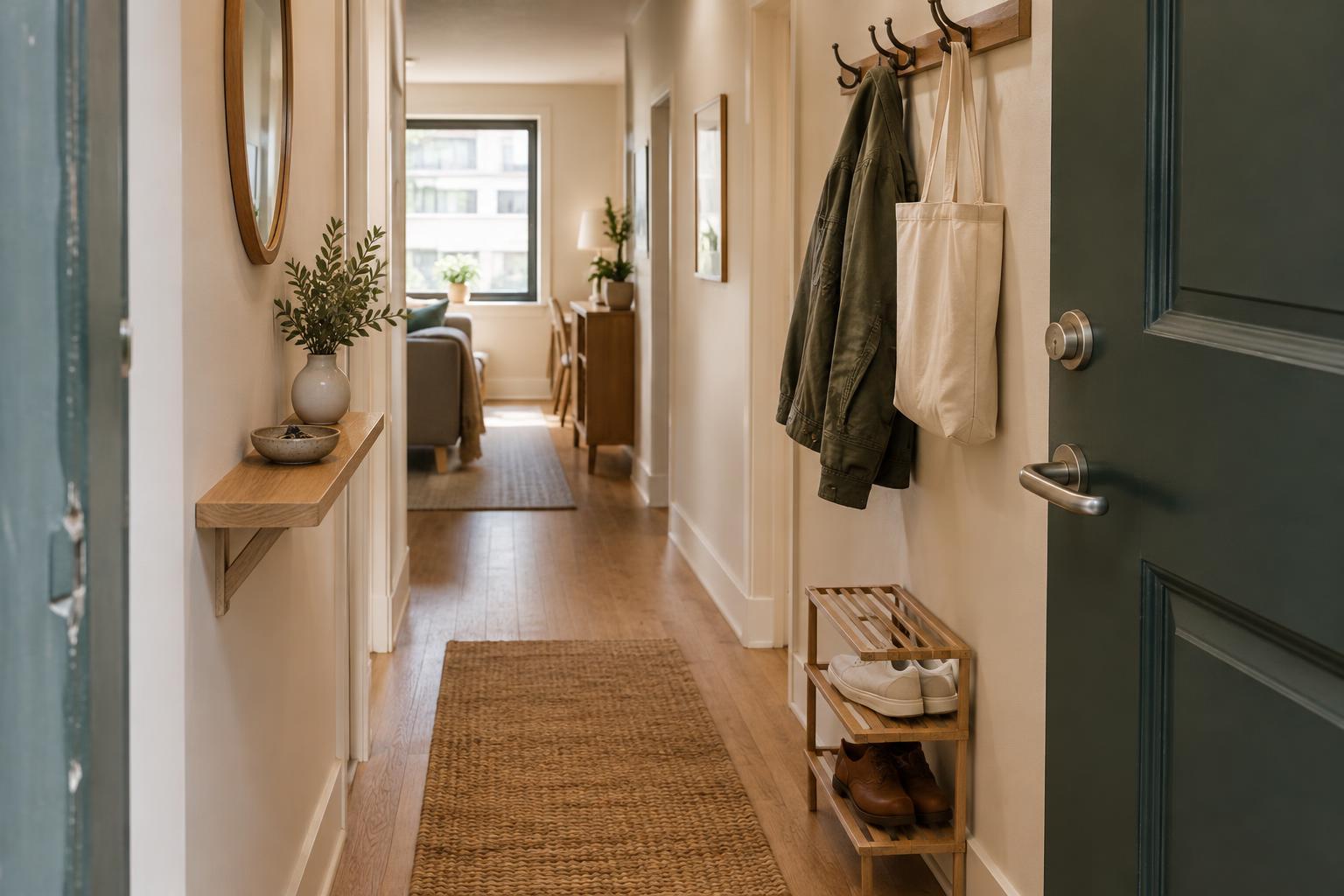
Remove items that belong elsewhere, then look at the space left behind. A narrow wall may fit a few hooks, while a corner might hold a slim shoe rack. If the door opens against a wall, check that anything mounted there will not catch on the handle or block the swing. Leave enough room for everyone in the household to enter comfortably, including anyone who needs a wider, unobstructed path.
Give daily essentials a small landing zone
Keys, bags and outgoing mail tend to collect near the door whether or not you make room for them. Give the things you use every day a deliberate home. A shallow tray on an existing shelf can hold keys and sunglasses; a wall hook can keep a frequently used bag off the floor. If you have no suitable surface, a compact wall-mounted ledge may offer a landing spot without taking up walking space.
Keep this zone selective. It should hold what helps you leave and return, not become storage for every receipt or spare item. A small container for mail can be useful if you empty it regularly. Put occasional-use belongings in a nearby cupboard or another room, reserving the entryway for the routine you actually have.
Choose storage that fits the space and the habit
The best small-space storage is easy to use when you are tired or in a hurry. Hooks often work better than hangers for coats worn daily. A low, open basket may be more convenient than a lidded box for scarves or dog-walking supplies. For shoes, consider how many pairs truly need to stay by the door; rotating out-of-season footwear can make a modest rack feel sufficient.
Use vertical space carefully. Wall hooks, a slim rail or a shelf above head height can help free the floor, but avoid placing heavy or frequently used items where they are awkward to reach. If you rent, check what your walls and agreement allow before installing anything. Freestanding options can work too, provided they are stable and do not narrow the route through the doorway.
Add warmth without adding clutter
A small entryway can feel welcoming without being full of decoration. Choose one or two details you enjoy seeing when you arrive: a print, a small plant where there is suitable light, or a mirror that lets you check your appearance on the way out. A mirror can also reflect available light, though its placement matters more than its size. Hang it where it is useful rather than where bags or coats will cover it.
Think about what you touch and see first. A doormat sized to fit the door swing gives wet or dusty shoes a place to land. If the area is dim, a nearby lamp or brighter, suitable bulb may make it feel more inviting. Keep surfaces and textiles simple enough to clean, especially if the entryway takes the brunt of bad weather.
Make the setup easy to reset
Even a well-planned entryway will get messy if its storage is harder to use than the floor. After living with a new arrangement for a week or two, notice what still piles up. If shoes gather beside the rack, it may be too full or inconveniently placed. If coats end up on a chair, the hooks might be out of reach or occupied by items you rarely wear.
A quick reset can keep the space pleasant: return stray belongings to their rooms, clear the landing tray and leave only the shoes and outerwear currently in use. The aim is not a picture-perfect entrance. It is a doorway that helps you come in, put things down and feel at home.