Choose what the photo is about
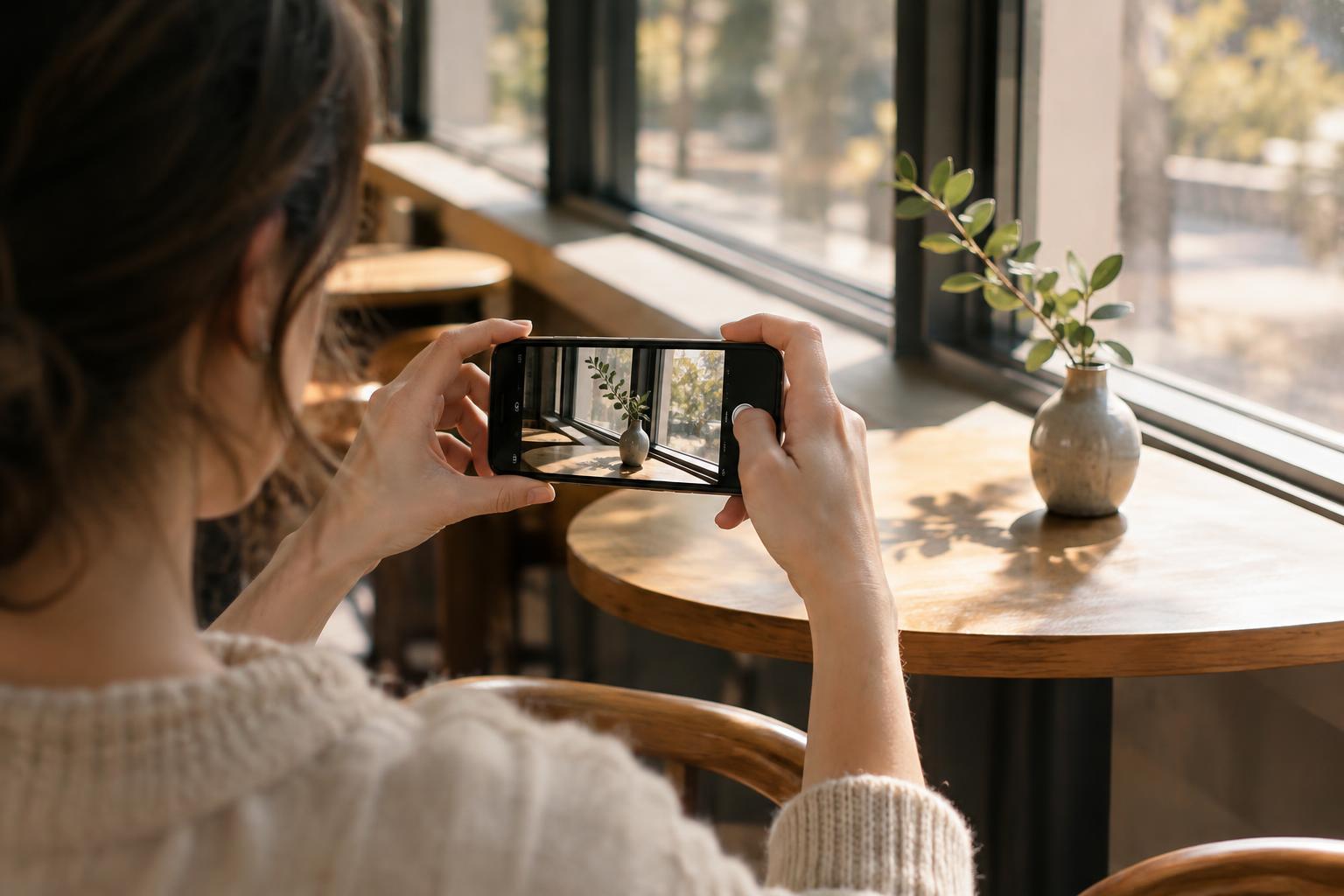
Before lifting your phone, pause and name the thing that caught your attention. It might be a bright mug on a quiet table, a friend’s expression or the curve of a staircase. That detail is your subject. Once you know what matters, you can decide what belongs in the frame and what distracts from it. A photograph does not have to show everything you saw to convey what made you stop.
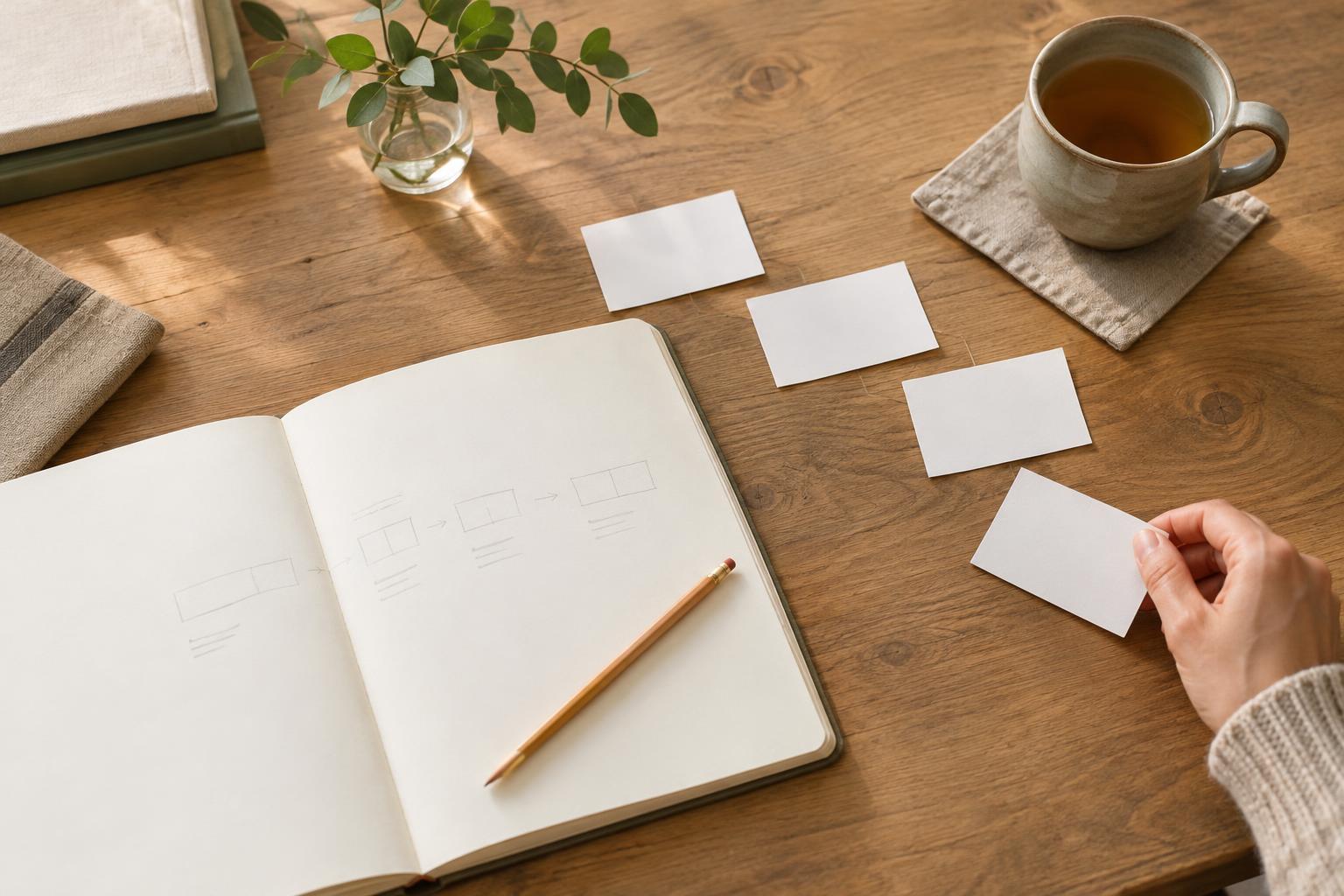
Start by taking one straightforward shot, then make a simpler version. Move closer, step to one side or leave out an object near the edge. Check the corners of your screen for stray bags, signs or other details that pull your eye away. If the scene still feels busy, ask what you could remove by changing your position rather than rearranging the space. That small decision can give your subject more room to stand out.
Move your feet before using zoom
Your position changes the relationship between everything in a photo. A chair photographed from standing height may look ordinary; from a lower angle, its shape might become the focus. Try taking the same subject from eye level, from a crouch and from a few steps farther away. You are not looking for one correct viewpoint. You are noticing how each choice changes the story.
Pay attention to what sits behind your subject. Moving a little left or right can place a person against a plain wall instead of a cluttered shelf, or separate a flower from a similarly colored background. If you cannot move closer, leave some space around the subject and consider cropping later. Avoid zooming automatically: first see whether a different angle gives you a cleaner frame.
Give the eye a path through the frame
Lines can help a viewer enter a photograph. A path, row of books, table edge or stretch of shadow can lead toward your subject. Look for shapes that already exist in the scene, and try placing yourself where they point somewhere useful. You can also create depth by including something close to the phone, your subject farther back and a quiet background beyond it.
For a quick way to vary your framing, turn on your phone camera’s grid if it has one. Try placing the main subject away from the center, near one of the grid lines, and see whether the surrounding space adds context. Then take a centered version too. A centered arrangement may suit a doorway or another symmetrical scene, while an off-center one may better show where a person is looking or moving. Use the grid as a prompt to experiment, not a rule to follow every time.
Let space and light do some work
An interesting frame does not have to be full. Empty wall, open sky or a clear tabletop can make a small subject feel more deliberate. This is especially useful when you want a calm mood. On the other hand, filling the frame with a repeating pattern can make an everyday detail feel lively. Decide whether you want the surrounding space to feel quiet or busy, and compose with that choice in mind.
Light can also guide attention. Notice where it falls before you take the picture: a pool of window light may bring out the texture of a notebook or the shape of a plant. If your subject is hard to see against a bright background, try turning so light falls across it instead. Tap the subject on your screen to check focus and exposure, then adjust the brightness control if your camera offers one. Even a small change can help you keep the detail you care about visible.
Practice with one scene, then choose
You do not need a special outing to practice composition. Pick one ordinary scene, such as your breakfast table or a corner of a room, and make five different photos of it. Try a wide view, a close detail, a low angle, a frame with generous empty space and one that uses a line to lead the eye. Keep the subject the same so you can see what each change in composition does.
Afterward, compare the images before editing. Which one makes the subject easiest to notice? Which includes a detail that gives the scene character? Choose your favorite and make only a few adjustments, such as straightening a tilted horizon or cropping an awkward edge. The aim is not to make every photo look polished. It is to build the habit of looking carefully, trying a few possibilities and keeping the frame that best conveys what interested you.