Start with the messes you actually have
A material can be durable in one way and demanding in another. A hard surface may resist scratches but show every fingerprint; a soft fabric may hide crumbs yet absorb spills. Before choosing anything, picture an ordinary week in the room. Where do wet shoes land? Which chair gets used during meals? What gets set down on the kitchen counter? Those answers are more useful than a general promise that a product is “low maintenance.”
Make a short list of the problems each surface needs to handle: moisture, stains, abrasion, heat, or frequent wiping. Then decide how much upkeep you are willing to do. If you know you will not reseal a surface or follow a special cleaning routine, treat that as a design constraint rather than a personal failing. A good choice is one that still works on a busy Tuesday.
Choose flooring for traffic and cleanup
Entryways, kitchens and other high-traffic spaces benefit from flooring that tolerates the cleaning they require. Tile is often straightforward to mop, though grout lines may need more attention than the tile itself. Vinyl flooring can offer a wipeable surface, but its performance varies by product, installation and the condition of the subfloor. If you prefer wood, check the finish and care guidance carefully; standing water is a concern for many wood floors.
Think beyond the top surface. Textured flooring may provide useful grip, but deep texture can hold dirt. Light floors can show dark marks, while very dark floors may make dust more noticeable. A midtone with some visual variation often makes everyday debris less prominent. Bring samples home if you can, and view them near your windows at different times of day.
Small washable rugs or mats can take some wear at doors and sinks. Check that they lie flat and that any backing is suitable for the floor beneath them. It is easier to clean or replace a mat than to expect one flooring choice to solve every problem.
Pick upholstery you can maintain
For seating that sees snacks, pets or daily lounging, ask how the fabric should be cleaned before falling for its color. Check the manufacturer’s care instructions, whether covers can be removed, and whether a suggested cleaning method is realistic for your household. “Stain-resistant” does not mean stain-proof, and a removable cover is only convenient if you can clean and refit it without a struggle.
Tightly woven fabrics can be easier to keep tidy than loose weaves that catch claws or trap crumbs, although the best option depends on how the furniture is used. Very pale, solid upholstery may reveal marks quickly; busy patterns can disguise them but may make a room feel busier too. Try a fabric sample against the kinds of spills and lint you commonly deal with, following its care directions rather than assuming every cleaner is safe.
Comfort still matters. A durable sofa that feels unpleasant will not make a home easier to live in. Test the seat, consider cushions that can be rotated, and keep a washable throw where it is genuinely useful—not as a permanent cover for a purchase you are afraid to use.
Compare hard surfaces by their trade-offs
Counters and tables face a different mix of wear: spills, hot dishes, cutting tools and repeated wiping. Some surfaces need periodic sealing, while others have simpler routine-care instructions. No countertop is immune to damage. Use cutting boards and trivets, and check the maker’s guidance before using abrasive pads or strong cleaners. That approach protects your choice without requiring you to treat the room like a showroom.
Cabinet fronts, hardware and paint deserve the same practical attention. Smooth doors are generally simpler to wipe than detailed profiles with grooves. A washable paint finish may be useful in a busy room, but sheen changes how a wall looks and can highlight imperfections. Test a patch in the space before committing. For handles and taps, consider whether the finish tends to show fingerprints or water spots—and whether you mind seeing them between cleanings.
Make the final choice with samples and care instructions
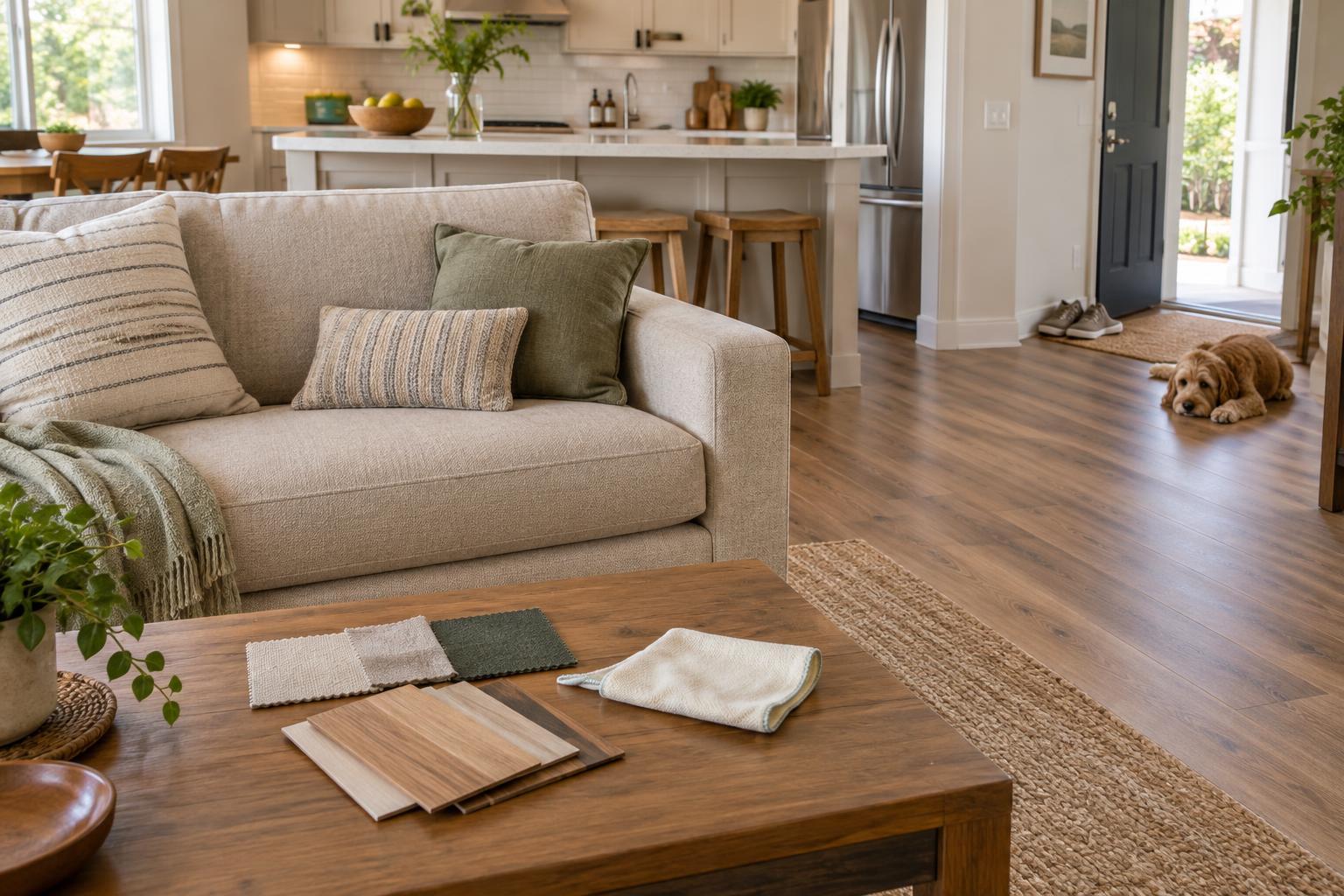
When you have narrowed the options, compare samples together in the room. Place flooring beside cabinet colors and upholstery near the walls. Look at them in daylight and under your usual lamps. Touch them, too: a surface that feels cold, slippery or rough may bother you more in daily use than a slight difference in appearance.
Before ordering, read the cleaning guidance and any warranty conditions. Ask what happens if a section is stained or damaged: can a cover be replaced, a tile swapped, or a finish touched up? Repairability can matter as much as initial toughness. If you are choosing between two materials you like equally, favor the one whose care instructions fit the time and energy you actually have.
The goal is not a home that never shows wear. It is a home where ordinary life is easy to manage. Choose materials for the people who use the space, give the hardest-working areas a little extra protection, and leave room for things to develop character.