Start with your everyday weather
The most useful jacket is not necessarily the warmest or the most versatile-looking one. It is the one you will reach for on an ordinary day. Before shopping, think about the weather you encounter while commuting, running errands or taking a walk. Is rain frequent or occasional? Does wind make mild days feel chilly? Do you spend long stretches outdoors, or mostly move between heated buildings?
Your routine matters as much as the forecast. Someone who walks to work may value a hood and room for a warm layer, while someone who drives may prefer a shorter, less bulky jacket. If your weather changes throughout the day, outerwear that is easy to carry or wear open may be more useful than a heavily insulated coat. Let those common situations guide your choice before considering unusual conditions.
Match the jacket to rain, wind and temperature
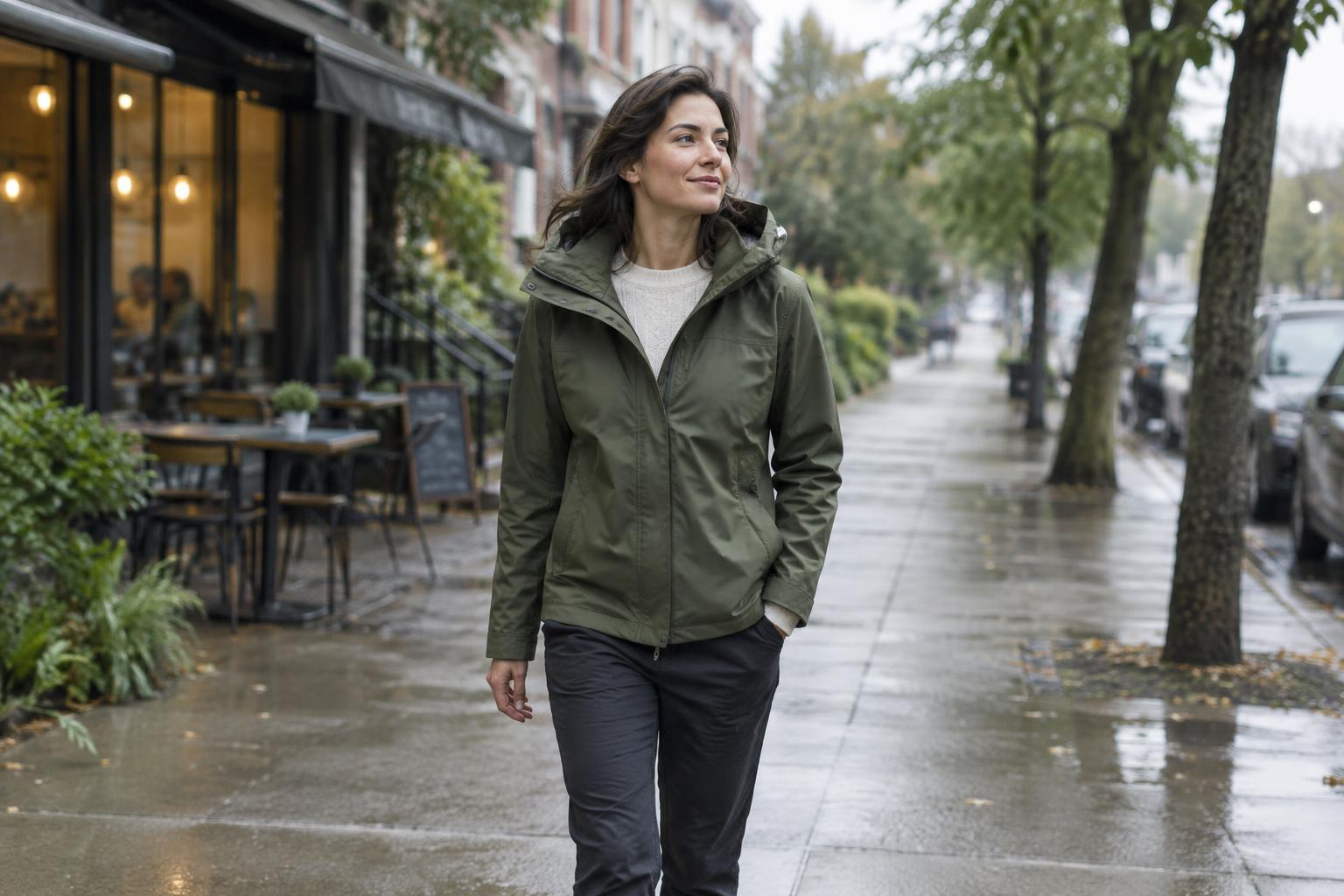
In a rainy climate, look for a jacket designed to keep water out, with a protective hood and closures that do not leave obvious gaps. A water-resistant finish can be handy for brief, light showers, but it may not be enough for a long walk in steady rain. If you often carry a bag, check whether its straps interfere with the hood or pull the jacket out of place.
For windy but relatively dry days, a closely woven outer layer can be more comfortable than a thick, loose sweater alone. In cold weather, insulation helps retain warmth, but the right amount depends on how active you are and what you wear underneath. In humid or mild climates, prioritize a lightweight layer that feels comfortable over a T-shirt. A jacket that is too warm may spend most of its time in your hand.
Use layers for changeable conditions
If your climate shifts between cool mornings and warmer afternoons, build a small layering system rather than expecting one jacket to do everything. A light outer shell can block wind or rain, while a sweatshirt, fleece or knit layer adds warmth when needed. You can remove the middle layer without giving up protection from a passing shower.
Try the pieces together before buying. Your outer layer should let you move your arms comfortably over the clothes you plan to wear beneath it. Check that the sleeves do not ride far up when you reach forward and that the hem stays where you want it when you sit. If you rarely wear more than a thin top, avoid sizing up so much that the jacket feels awkward on most days. Layers are useful only if the combination is comfortable enough to wear.
Choose details that suit your routine
Small design choices often determine whether outerwear becomes a favorite. A hood can be convenient when you want your hands free, but it should stay in place when you turn your head. Pockets need to hold what you usually carry without making the jacket pull or sag. Adjustable cuffs or a drawcord hem can help keep drafts out, while a two-way zip may make a longer coat easier to wear when sitting.
For casual style, choose a shape and color that work with several outfits you already own. A clean-lined jacket may feel at home with jeans, trousers and casual dresses; a roomier style can suit relaxed layers. There is no need to choose the most neutral option if you enjoy color. The better test is whether you can picture yourself wearing the jacket on a normal Tuesday, not just on a carefully styled outing.
Check comfort and care before committing
When trying on outerwear, wear or bring the layers you expect to use with it. Zip or button it fully, raise your arms, sit down and put your hands in the pockets. Notice whether the collar rubs your neck, the hood limits your view or the fabric feels noisy or stiff. A jacket may look right on a hanger and still feel wrong in motion.
Read the care label, too. Some outerwear can be cleaned easily at home; other pieces need more attention to preserve their finish or shape. If you expect to wear a jacket frequently, realistic upkeep is part of its value. Choosing for your climate does not require a separate coat for every forecast. Start with the conditions you face most often, then pick the protection, layers and details that make getting dressed simpler.