Start with what your day looks like
A base layer is the clothing that sits closest to your skin, usually under a sweater, shirt or trousers. Its job is to add warmth without making the rest of your outfit feel bulky. The right choice depends as much on your plans as it does on the temperature: a walk to the shops, a heated office and an afternoon outdoors can each call for a different layer.
Think about how often you move between indoors and outside. If you tend to warm up on a commute, choose a lighter base layer that feels comfortable when you are active. If you will spend longer periods sitting or standing in the cold, a warmer fabric may make more sense. You can also adjust your outer layers as the day changes; your base layer does not have to do all the work.
Choose fabric for comfort and moisture
Fabric makes a noticeable difference because a base layer stays against your skin for hours. Merino wool is often chosen for its soft feel and ability to provide warmth without much bulk, though texture varies, so check how it feels to you. Synthetic fabrics such as polyester can be light, stretchy and quick to dry. Blends may offer a useful balance of softness, stretch and easy care.
Cotton can feel comfortable at first, but it tends to hold on to moisture. If you expect to sweat and then cool down outdoors, a cotton base layer may feel damp. For a mostly indoor day with little activity, it may still suit you. The goal is not to find one universally best fabric, but to choose one that feels good through the day you actually have.
Before buying, check the care label as well as the fabric name. A layer that needs a washing routine you will not follow is unlikely to become an everyday favourite. If your skin is sensitive to texture, pay attention to seams, labels and necklines too.
Get the fit close, not restrictive
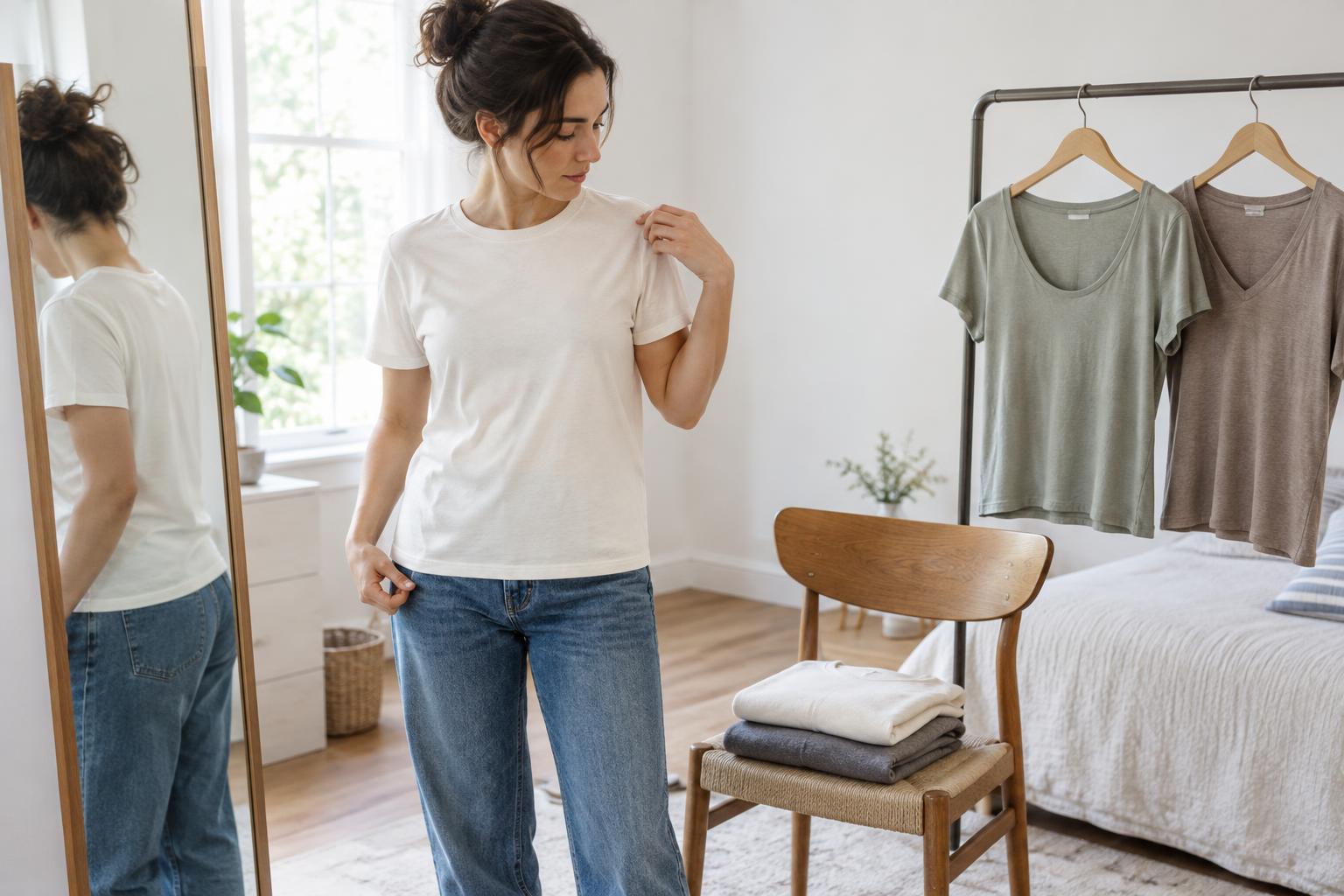
A base layer works best when it sits near the body without pinching. Too loose, and it can bunch beneath other clothes; too tight, and it can pull at the shoulders, waist or knees. Try reaching forward, sitting down and lifting your arms. If you are shopping online, compare the garment measurements with a fitted top or pair of leggings you already like rather than relying only on a size label.
Consider where the layer ends. A longer top that stays tucked in can prevent a chilly gap at the waist, while a shorter one may feel better under an untucked shirt. For bottoms, look for a waistband that stays comfortable when you sit and hems that do not gather awkwardly inside socks or boots. Flat seams and smooth cuffs can help a layer disappear beneath your outfit.
Necklines matter as well. A crew neck adds coverage but may show under an open collar. A scoop or V-neck can stay hidden under more tops, while a higher neck can make a scarf optional on milder days. Choose based on the clothes you plan to wear over it.
Build an outfit you can adjust
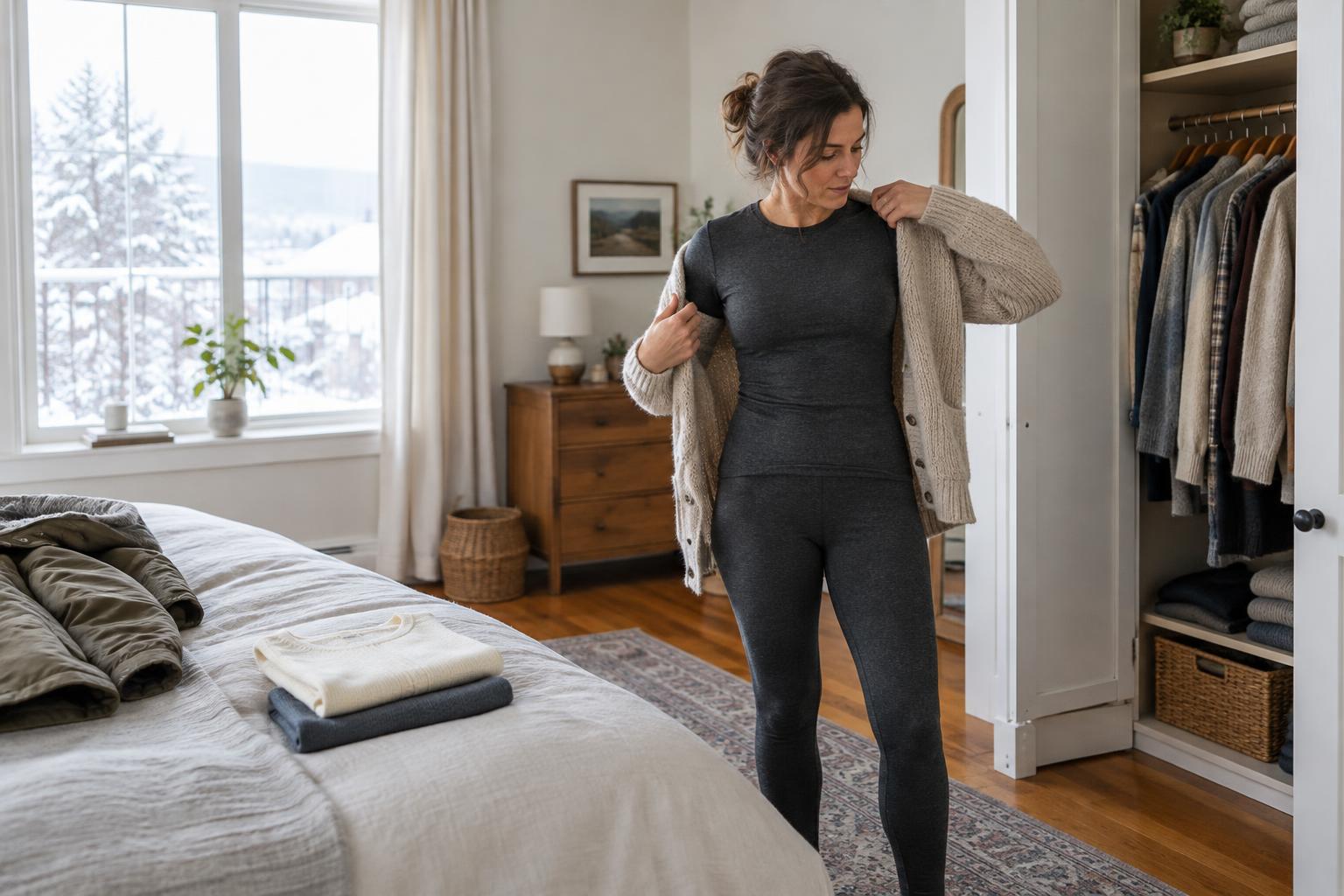
The easiest cold-weather outfit to live in is one you can change without starting over. Pair a lightweight base layer with a shirt, knit or sweatshirt, then add a jacket for outside. You can remove the jacket or middle layer when you get warm while keeping the base layer comfortably in place.
Avoid judging warmth by thickness alone. A very heavy base layer under a chunky sweater can feel restrictive indoors. If you are unsure, begin with a lighter option and use your middle or outer layer for extra warmth. For legs, thin base-layer bottoms can fit under relaxed trousers, but they may be uncomfortable beneath already snug jeans. Check how the full outfit moves before committing to it for the day.
Colour can make a base layer more useful, too. A shade close to your usual clothes is less distracting if it shows at the collar or cuffs. If you like that visible edge, treat it as part of the outfit rather than something to hide.
Try a simple comfort check
You do not need a drawer full of technical clothing to start. Choose one top that suits your most common cold-weather day and wear it with an outfit you already know. Notice whether you feel comfortable after moving around, sitting indoors and stepping back outside. Pay attention to any rubbing, bunching or dampness, not just how warm you feel when you first get dressed.
After wearing it a few times, you will have a clearer idea of what to change. You might want a lighter fabric, a longer hem or a different neckline. A useful base layer is one you can put on without thinking much about it—and keep on comfortably until the day is done.