Start with the clothes you reach for
A versatile wardrobe palette is not a rule about which colors you are allowed to wear. It is a small group of colors that makes your favorite clothes easier to combine. The best place to find it is your current wardrobe, not a set of swatches chosen in isolation.
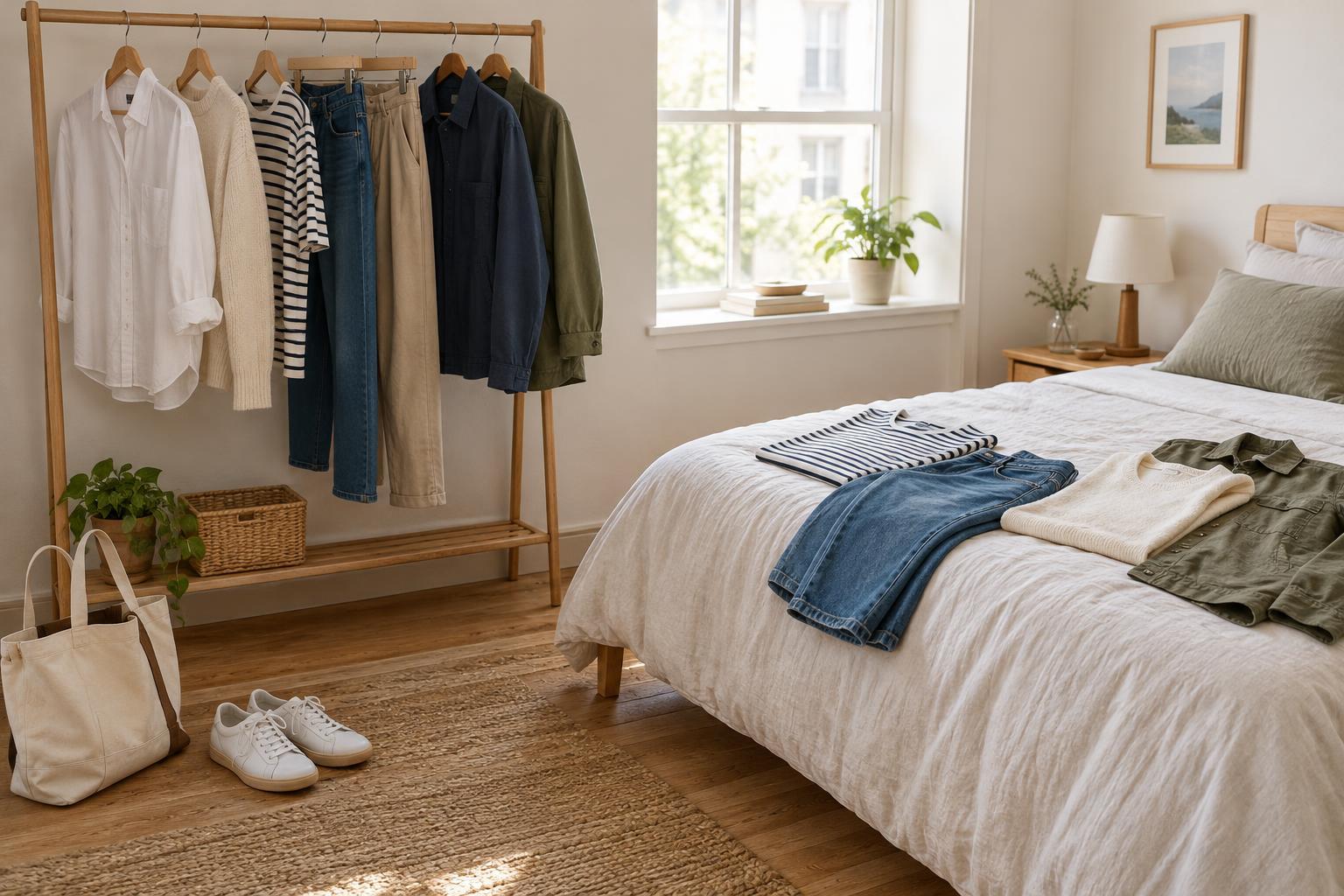
Pull out a few outfits you wear often and notice what they have in common. Which colors appear in the pieces you rely on most? Which items are comfortable and suit your usual activities but rarely get worn because they are hard to pair? Set aside any color you like in theory but consistently pass over when getting dressed. Your answers will give you a more useful starting point than trying to build a completely new wardrobe at once.
Choose a few dependable base colors
Base colors do much of the mixing in a wardrobe. They often appear in trousers, jeans, skirts, jackets, shoes, or bags: pieces you may wear repeatedly with different tops. Black, navy, charcoal, brown, cream, and denim blue are familiar options, but none is essential. Olive or a muted burgundy can also function as a base if it works with much of what you own.
Start with two or three base colors rather than collecting every neutral. For example, navy and cream can support a softer-looking wardrobe, while charcoal, black, and denim may fit one with a more casual feel. Check the actual shades of your clothes as you choose. A warm, yellow-leaning cream and a cool, gray-leaning white can create different effects beside the same jacket. They do not have to match perfectly, but you should enjoy wearing them together.
Add accent colors you genuinely like to wear
Accent colors bring variety to a practical foundation. Choose one or two you would be happy to see in a shirt, knit, scarf, or other piece you wear regularly. They might be bright, muted, light, or deep. If you love a color but would rather carry it as a bag than wear it near your face, that still counts. A palette should reflect your preferences, not force every favorite color into every type of garment.
Think about how your accents relate to your bases. Rust might pair easily with cream and denim; cobalt could stand out against black and charcoal. You can choose accents with a similar softness for a quieter look, or combine a vivid accent with restrained bases for contrast. Advice about color “seasons” or undertones may offer ideas, but it does not need to settle the decision. If you like how a color looks on you and can imagine wearing it often, that is a strong reason to keep it.
Test the palette with real outfits
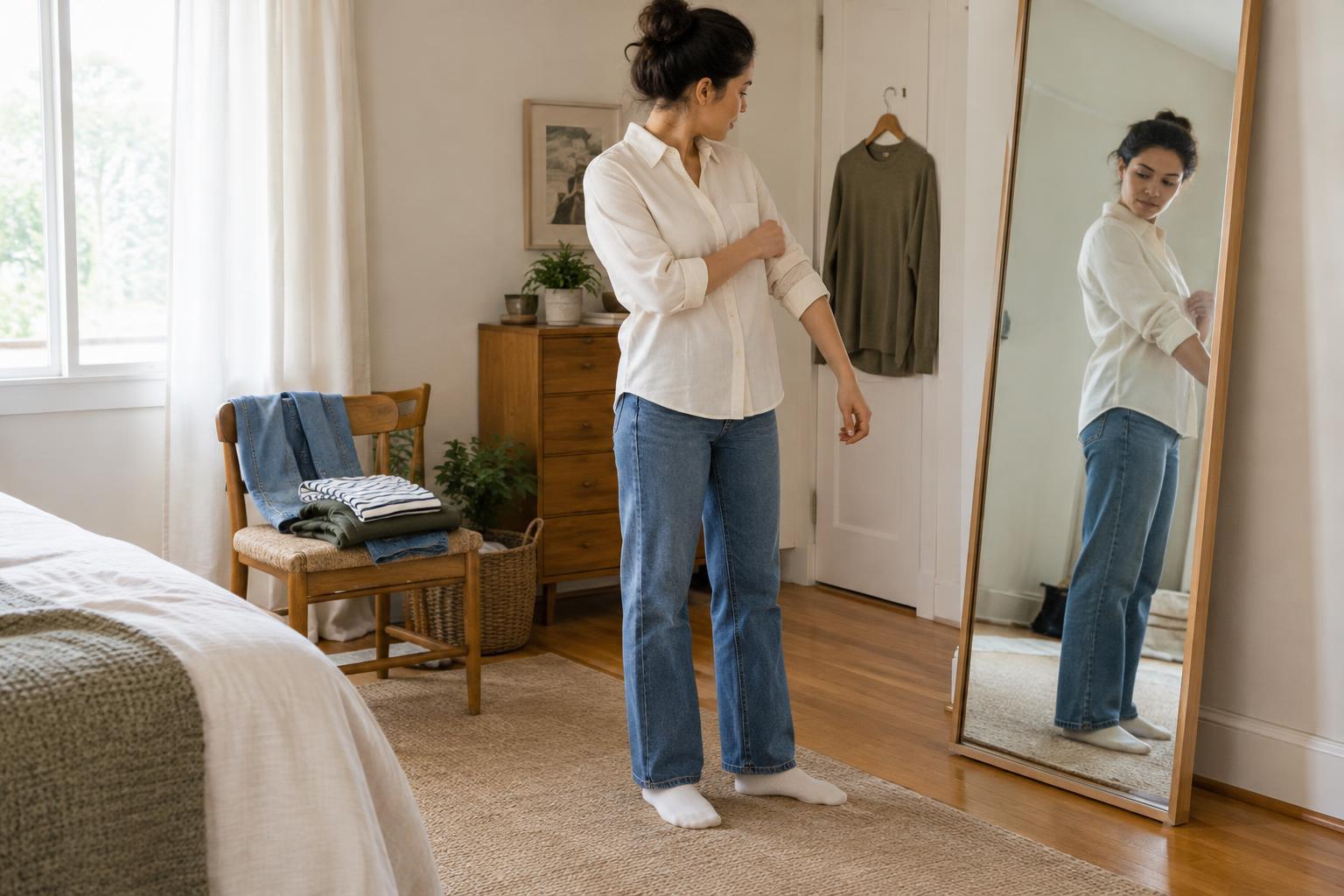
Before shopping for anything, try making several outfits from the pieces you already have. Place one base-colored bottom beside a few tops, then add the shoes and outer layer you would actually wear. Repeat with a different bottom or jacket. This quick exercise shows whether your proposed colors work across complete outfits, rather than only looking appealing side by side.
Notice where combinations break down. Perhaps your jackets work with your trousers but not with your favorite dresses, or your only accent top needs shoes you seldom wear. The answer may be to adjust the palette, not to buy more. Photographs of successful outfits can help you remember combinations on busy mornings. Patterns belong in the test too: a striped shirt or printed skirt may connect several of your chosen colors and make the palette feel less uniform.
Use it as a guide, not a restriction
Once you have a workable palette, use it to make decisions about future additions. When considering a new item, picture at least a couple of outfits you could make with clothes you already own. If the color is outside your usual range but you love it and have a clear way to wear it, there is no need to reject it. A palette is most helpful when it reduces uncertain purchases without removing the pleasure of getting dressed.
Your colors can also change with your routine. A new workplace, different weather, or a growing preference for brighter clothes may shift what feels useful. Revisit the palette occasionally and keep the parts that still help. The goal is not a perfectly coordinated closet; it is a wardrobe in which more of your clothes feel easy to wear.