Start with what the room needs
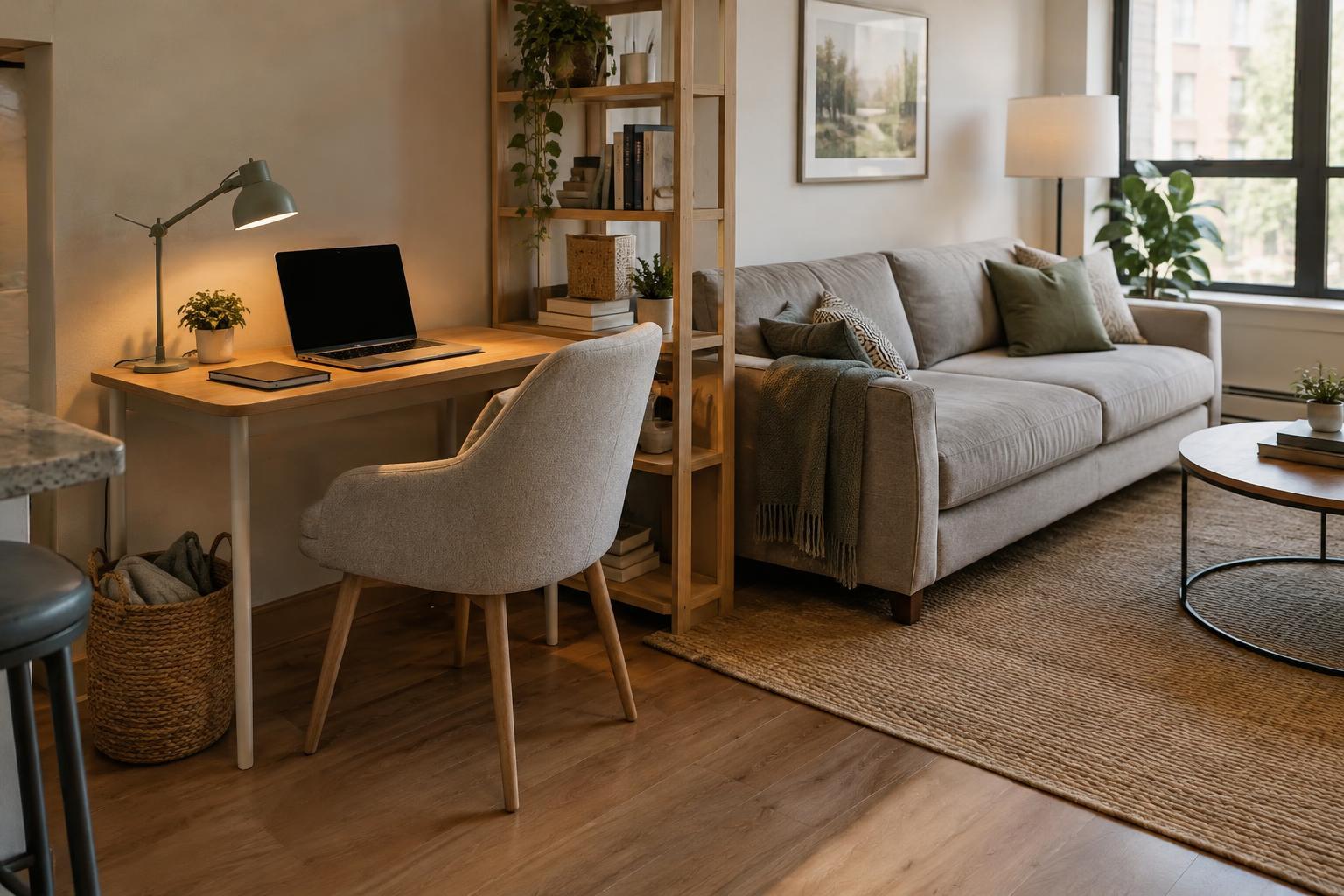
A rug can make a seating area feel settled, soften a bedroom floor or add comfort to a space where you spend time standing. Before looking at colors and patterns, decide what job you want it to do. Is it meant to connect several pieces of furniture, protect a busy walkway or bring warmth to one corner? That answer will help you narrow down the size and material.
Notice how the room works on an ordinary day. Follow the paths people take, check where chairs move and watch how doors open. A rug that looks perfect in an empty floor plan may be awkward if its edge lands where everyone turns a corner. If you can, mark the proposed outline on the floor with painter’s tape. Walk around it and move the furniture as you normally would before committing to a size.
Choose a size that connects the furniture
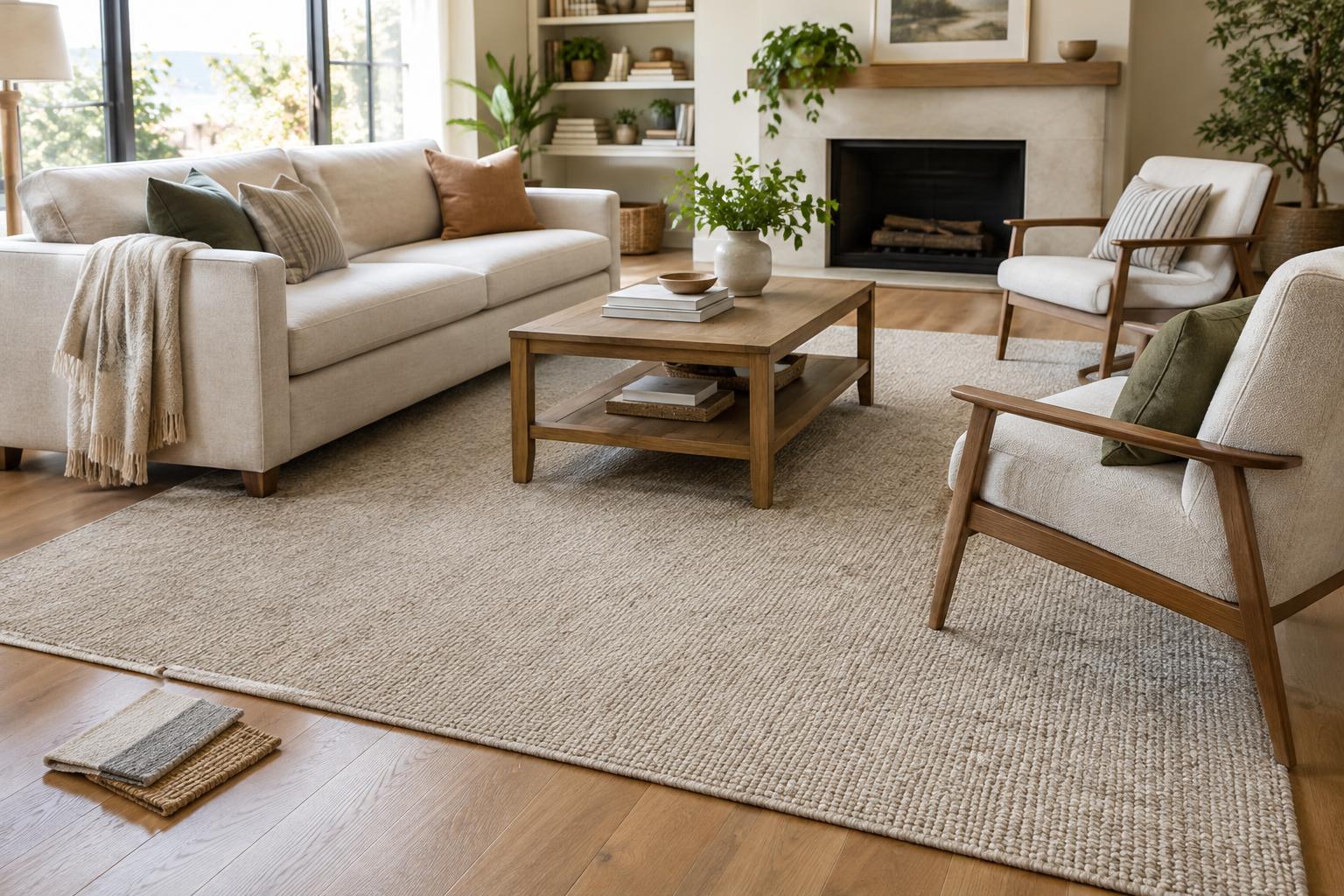
In a living room, think of the rug as the base of a conversation area rather than a small accent in the middle of the floor. A useful approach is to place at least the front legs of the sofa and nearby chairs on it. If there is room and the budget allows, a rug large enough to hold all the seating can make the arrangement feel especially unified. Keep the placement intentional: a rug that barely reaches the coffee table can make otherwise generous furniture look disconnected.
For a bedroom, focus on where your feet land when you get out of bed. A rug under the bed should extend far enough beyond the sides to be useful, not disappear beneath the frame. Smaller rugs or runners beside the bed can be a sensible alternative, especially if the bed is heavy or the room is narrow. In a dining area, allow for chairs to slide back without catching on the rug’s edge. If that requires a rug that overwhelms the room, a bare floor may work better.
Leave some visible floor around a rug when possible, but do not treat a particular border width as a rule. Oddly shaped rooms, door swings and built-in furniture can change what looks balanced. Measure the space and the furniture together; rug labels alone will not tell you how a size will feel at home.
Match the material to daily wear
Material affects how a rug feels underfoot and how you care for it. Wool often feels soft and resilient, though it may shed at first and usually needs more careful cleaning than an easily washable rug. Cotton rugs tend to be lighter and more flexible; check the care label and your machine’s capacity before assuming a large one can go in the wash. Synthetic fibers can be a practical choice for busy areas because many are easy to clean, but texture and durability vary from rug to rug.
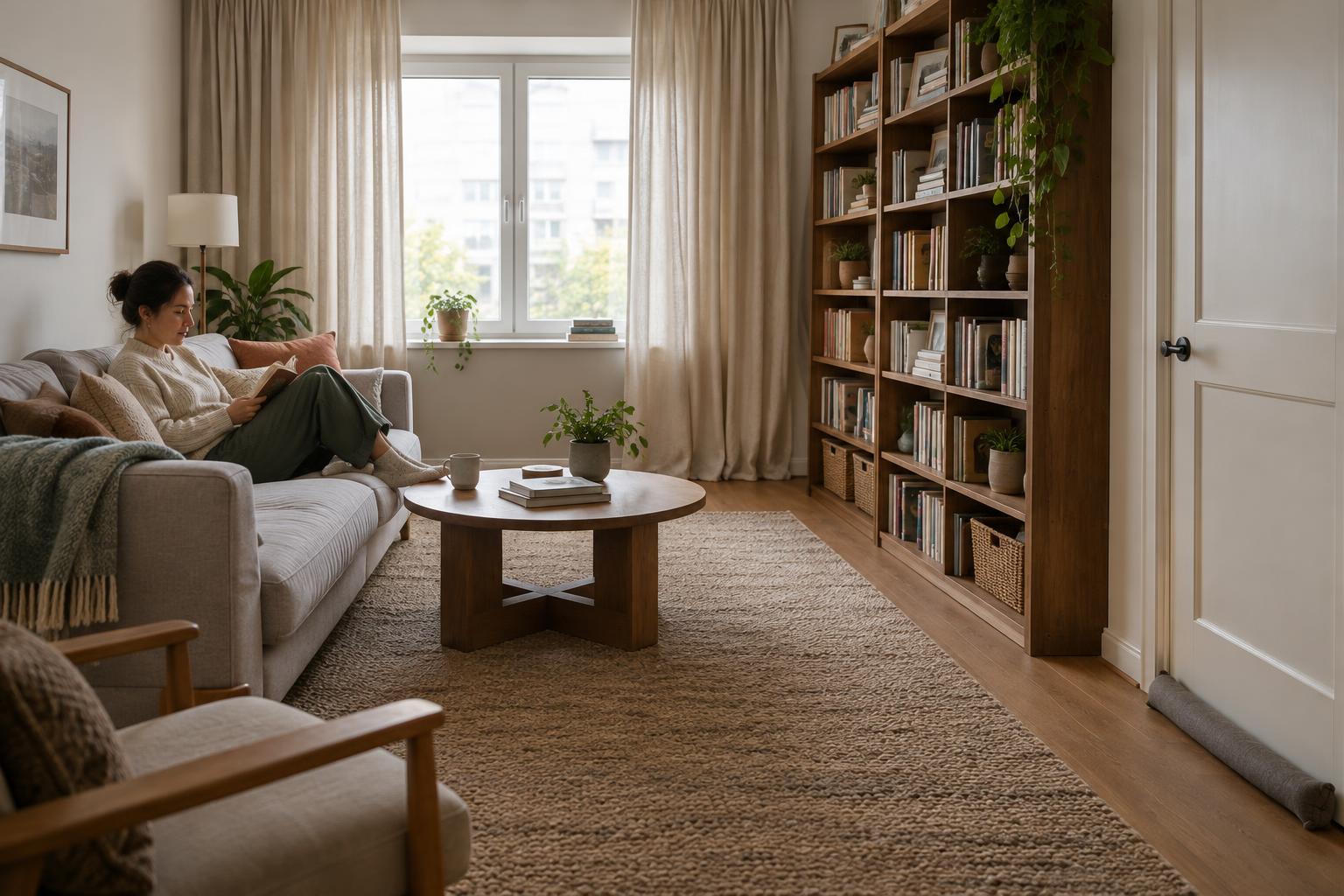
Natural plant fibers such as jute and sisal bring visible texture and a relaxed look. They can feel rougher under bare feet, and spills may be harder to remove, so consider them for spaces where softness and stain resistance are not the top priorities. Pile matters too. A plush rug can be inviting in a bedroom, while a flatter weave is often easier to vacuum and less likely to interfere with dining chairs. If a rug will sit near a door, check that the door clears its full thickness, including any pad.
Make the final choice room by room
For a living room that hosts snacks, pets or frequent visitors, look for a rug you will feel comfortable maintaining. A patterned or textured surface may make small bits of everyday wear less noticeable. In a bedroom, comfort can take priority, provided the rug is manageable to clean. For a dining area, favor a surface that lets chairs move and gives you a realistic way to deal with spills. In an entryway, choose a low-profile rug suited to regular cleaning, and make sure it does not bunch up underfoot.
Check care instructions before buying, particularly if the rug is large or heavy. Consider where you would take it to clean it, how often it may need attention and whether its color suits the kind of mess the room sees. A rug pad can help keep some rugs in place and add cushioning; choose one compatible with your flooring and the rug, and confirm that the combined thickness will not create a tripping point.
Finally, look at samples in your room if that option is available. Light can change how a color appears, and a texture that looks subtle online may feel quite different in person. The best rug is not necessarily the boldest or softest one. It is the one that fits the furniture, feels good where you use it and asks for a level of care you can comfortably keep up.