Start with the job the item needs to do
Before judging the fit, picture an ordinary day in the garment. A shirt for desk work needs to feel comfortable while you sit and reach forward. Trousers for walking around town need to stay in place without constant adjustment. A jacket you plan to wear over knitwear needs enough room for that layer. Fit is not just how closely something follows your shape; it is whether you can wear it as intended without thinking about it all day.
Try the item with the shoes, underwear or layers you would normally pair with it, if you can. A different bra can change how a top sits, while shoes can affect where a trouser hem falls. If you are trying something on at home, leave the tags attached until you have finished checking it and know the return conditions.
Look at the garment from more than one angle
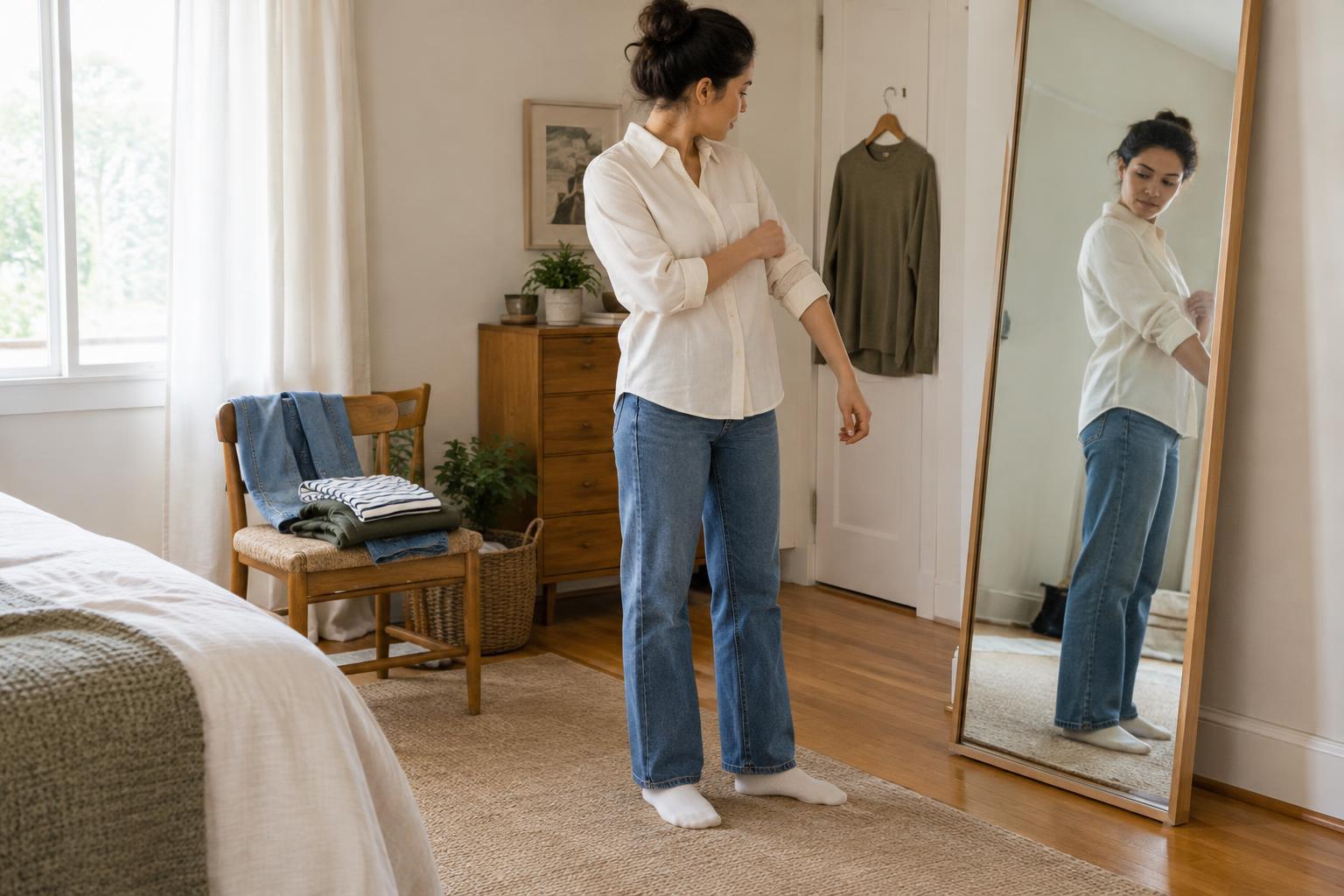
Stand naturally in front of a mirror, then turn to the side and back. Notice whether shoulder seams sit comfortably, waistbands remain level and hems fall where you want them. Fabric pulling into tight lines can point to a spot that needs more room. Excess fabric is not automatically a problem, especially in a relaxed style, but check whether it creates a shape you like rather than bunching awkwardly.
Pay attention to openings and closures. Buttons should fasten without straining or gaping during normal movement, and a zip should lie comfortably when closed. Cuffs, necklines and armholes should not dig in. For trousers and skirts, check the rise as well as the waist: an item may feel fine at the waistband while pulling through the hips or feeling uncomfortable when you bend.
Move as you would during the day
A still mirror check only tells part of the story. Sit down, stand up, bend to pick something up and reach your arms forward and overhead. Take a few steps. Does the top ride up farther than you like? Does the waistband pinch when seated? Do you have to pull a skirt or trousers back into place after walking? Small adjustments in a fitting room can become tiring when repeated all day.
Check coverage while you move, too. You may be happy with a neckline, sleeve length or hem while standing but feel differently when you sit or reach. If you would normally carry a bag or wear a coat over the piece, test that combination when possible. The aim is not to find a garment that never shifts; it is to decide whether any shifting feels manageable to you.
Consider the fabric and the care it needs
Fabric affects how a fit feels over time. A soft, stretchy piece may be easy to move in but cling in places you had not noticed. A firmer woven fabric may hold its shape but need more room through the shoulders, hips or thighs. Feel for scratchy seams, stiff labels and fabric that feels too warm for the situations where you plan to wear it. Comfort counts as part of fit.
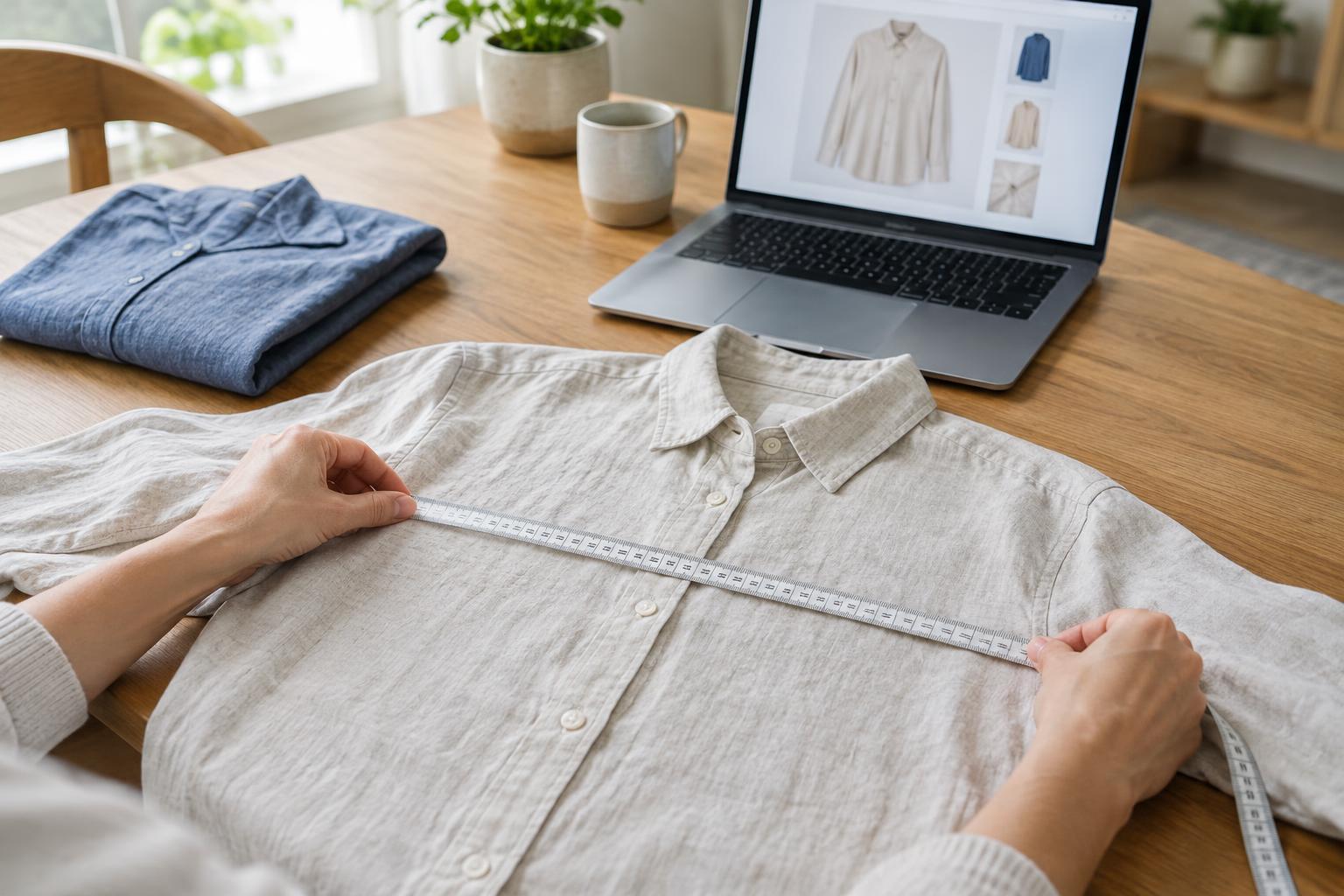
Read the care label before deciding. If an item requires care you are unlikely to give it, even a great fit may not make it a useful purchase. Do not rely on a garment shrinking or stretching to become the right size: either change can vary by fabric and care. If you already know a style tends to change shape with wear, ask whether you would still like it a little looser or more relaxed.
Make the keep-or-return decision easier
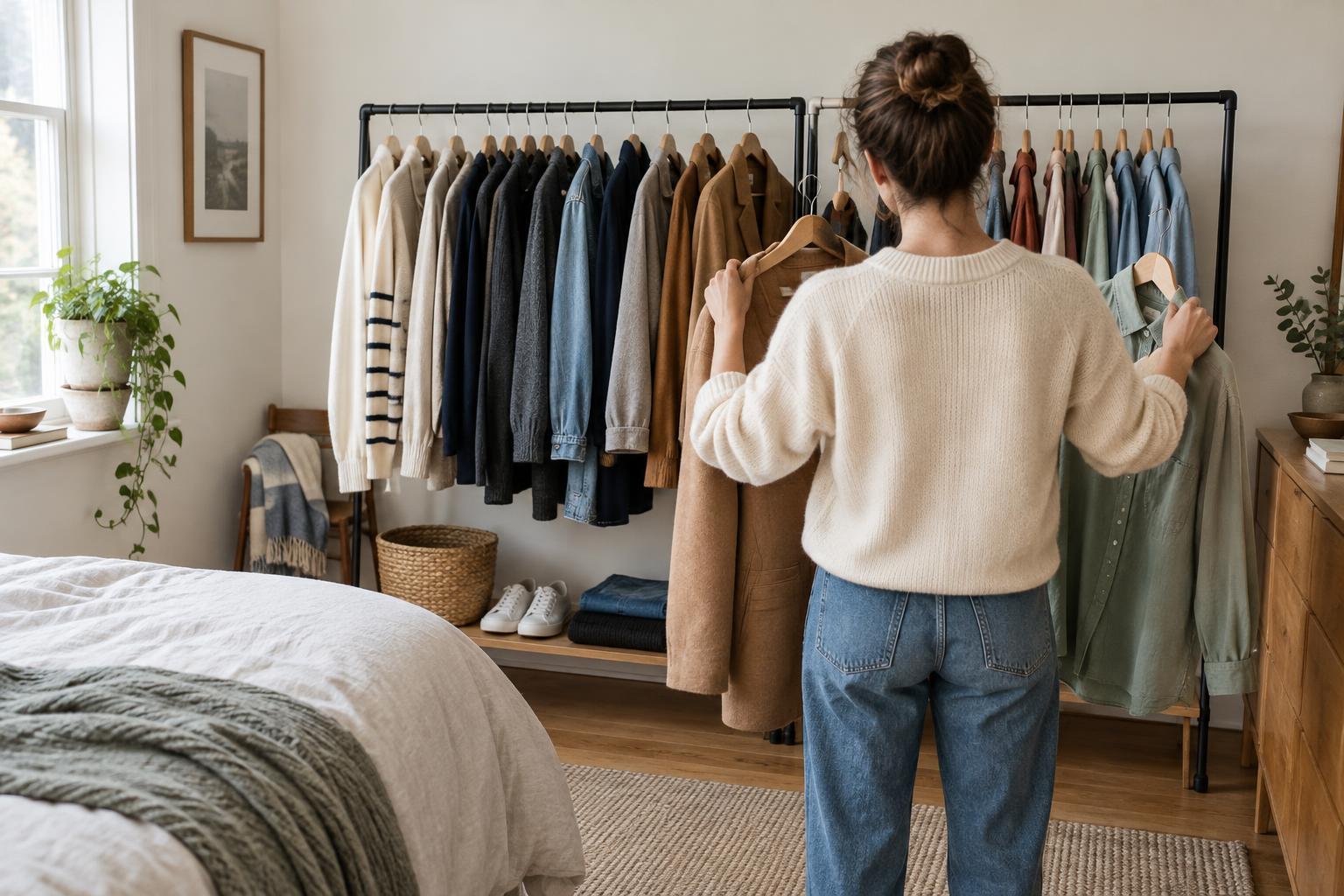
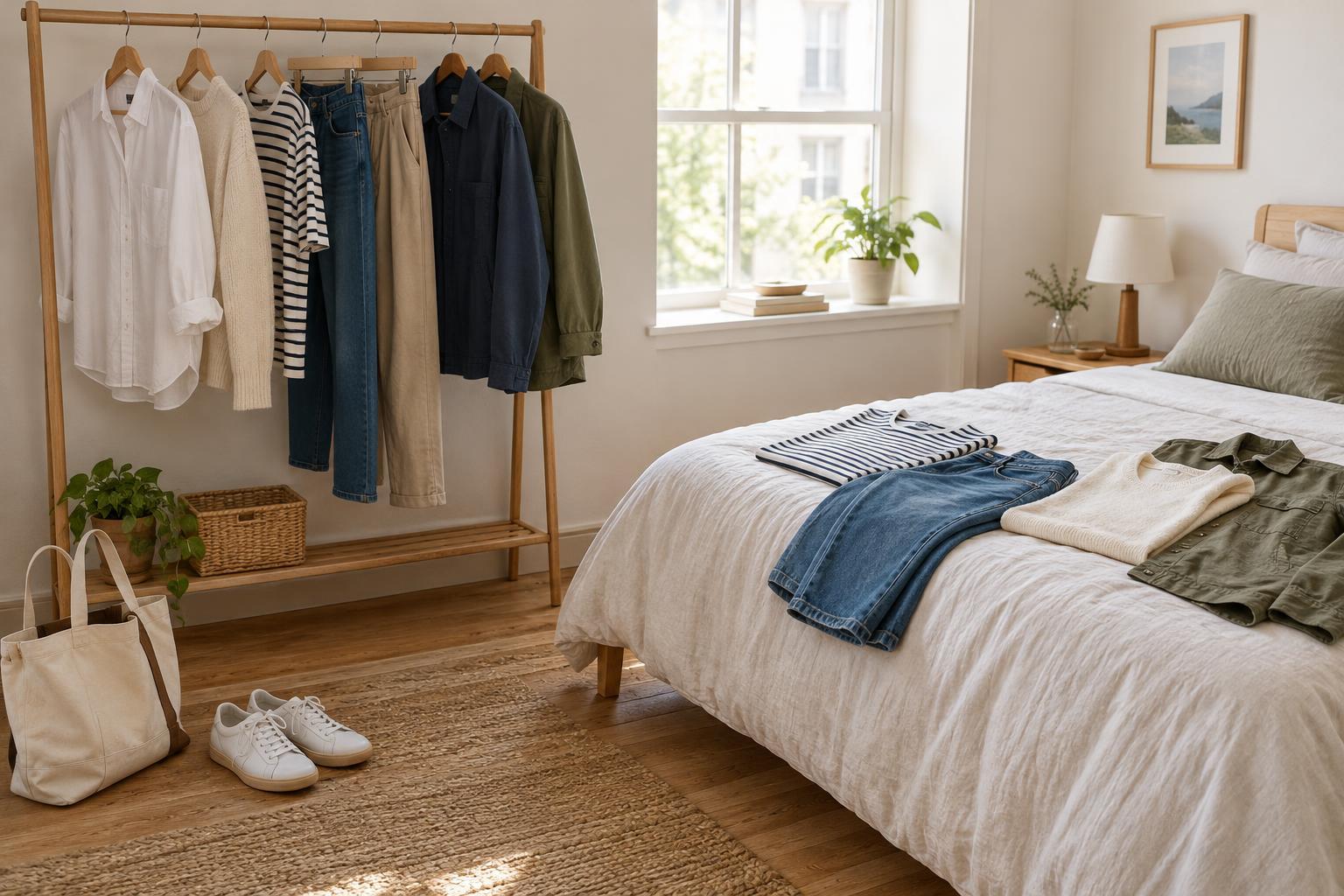
Once you have checked comfort, look at the item beside a few things you already own. Can you put together an outfit you would actually wear? Does the length work with your usual shoes or layers? A garment can fit well on its own but be less useful if it only works with something you would need to buy. Taking a quick photo can help you see the whole outfit rather than focusing on one detail in the mirror.
Separate minor, fixable issues from a fundamental mismatch. A simple hem may be worth considering if you are willing to arrange it, but alterations cannot be assumed to solve every fit problem. If the garment pinches, restricts movement or needs frequent adjusting, try another size or cut rather than convincing yourself you will get used to it. The best everyday fit is one that lets you get on with your day.