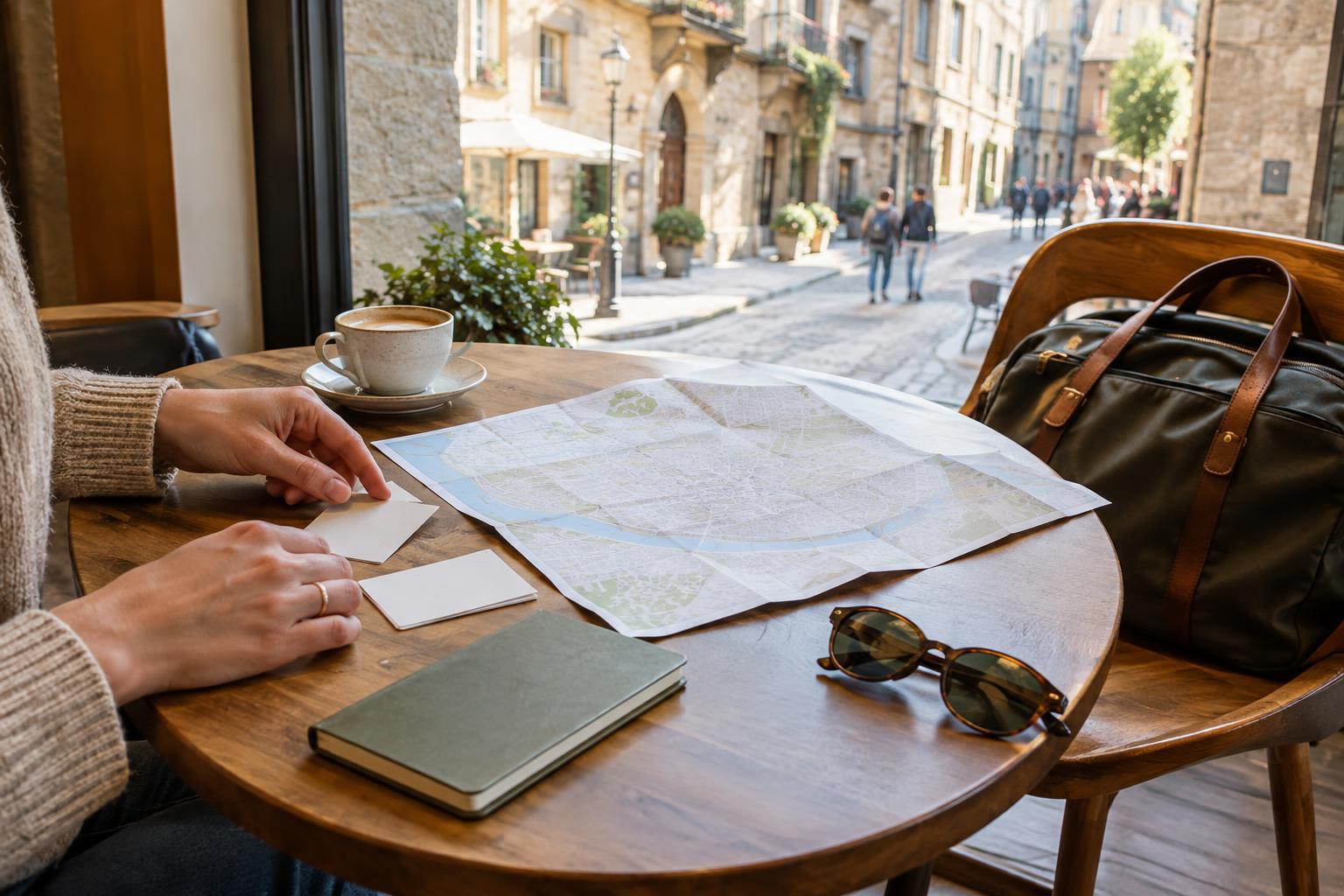
Start with the trip you actually want
Before making a list of places to visit, decide what would make the break feel worthwhile. You might want a change of scenery, one memorable meal, time outdoors or simply a slower morning than usual. Ask anyone traveling with you to name one priority too. Those answers give you a better starting point than a long list of attractions that may not fit into two days.
Choose two or three highlights for the whole trip, not two or three for every part of the day. Check their opening hours and whether you need to book, then treat them as anchors. Everything else can be optional. If one highlight involves a long walk or a late evening, balance it with something gentler rather than building a schedule that only works when everyone has plenty of energy.
Sketch two days in broad blocks
Divide each day into morning, afternoon and evening. Give each block a loose purpose rather than a minute-by-minute timetable: explore a neighborhood, spend time at a museum, take a scenic walk or settle in for dinner. This makes it easier to see whether your plans are concentrated in one area or require repeated trips across town.
Build the first day around your arrival time, not the time you hope to arrive. Getting from a station or airport, dropping off bags and finding your bearings all take space in the day. On the second day, work backward from your departure and keep the final block light. A café stop or nearby stroll is easier to enjoy when you are not wondering whether you will make your train.
Make room for the ordinary details
Meals, transit and breaks are part of the itinerary, even if they are not the reason for the trip. Note roughly where you will eat near each anchor and how you will get between areas. You do not need to choose every restaurant in advance, but having a couple of options can prevent a tired group from searching for food at the least convenient moment. Check whether a favorite spot requires a reservation if you would be disappointed to miss it.
Add breathing room between activities, especially when you are unfamiliar with the place. A walk may be longer than it looks on a map, and a view worth stopping for can change your pace. If you are traveling with children, managing mobility needs or carrying luggage, make the plan more spacious still. An itinerary should help everyone enjoy the trip, not turn reasonable delays into a problem.
Keep backup options close, not complicated
For each outdoor anchor, identify one indoor alternative in the same general area. For a booking you cannot change, keep the time before and after it flexible. If a place turns out to be crowded or less interesting than expected, have one nearby option you could choose instead. These alternatives are not another checklist; they are ways to avoid rebuilding the whole day when something changes.
It also helps to mark your plans as fixed, preferred or optional. Fixed items include transport departures and timed tickets. Preferred items are the experiences you hope to fit in. Optional items are pleasant extras if you have the time and energy. When you need to adjust, you can drop an optional stop without feeling that the trip has gone wrong.
Carry a plan you can edit on the move
Keep your itinerary in one easy-to-open note. Include addresses, booking details, departure times and the names of a few nearby alternatives. Save anything essential so you can find it without relying on a signal. Share the note with your travel companion if you have one; it is easier to make a relaxed decision together when both people can see what is fixed and what can move.
Once the trip begins, use the plan as a guide rather than a test. At the end of the first day, take a minute to ask what you enjoyed and how much energy you have for tomorrow. You may want to keep the morning open, swap an activity or return to a place you liked. A good two-day itinerary gives you enough direction to get going and enough freedom to enjoy being there.