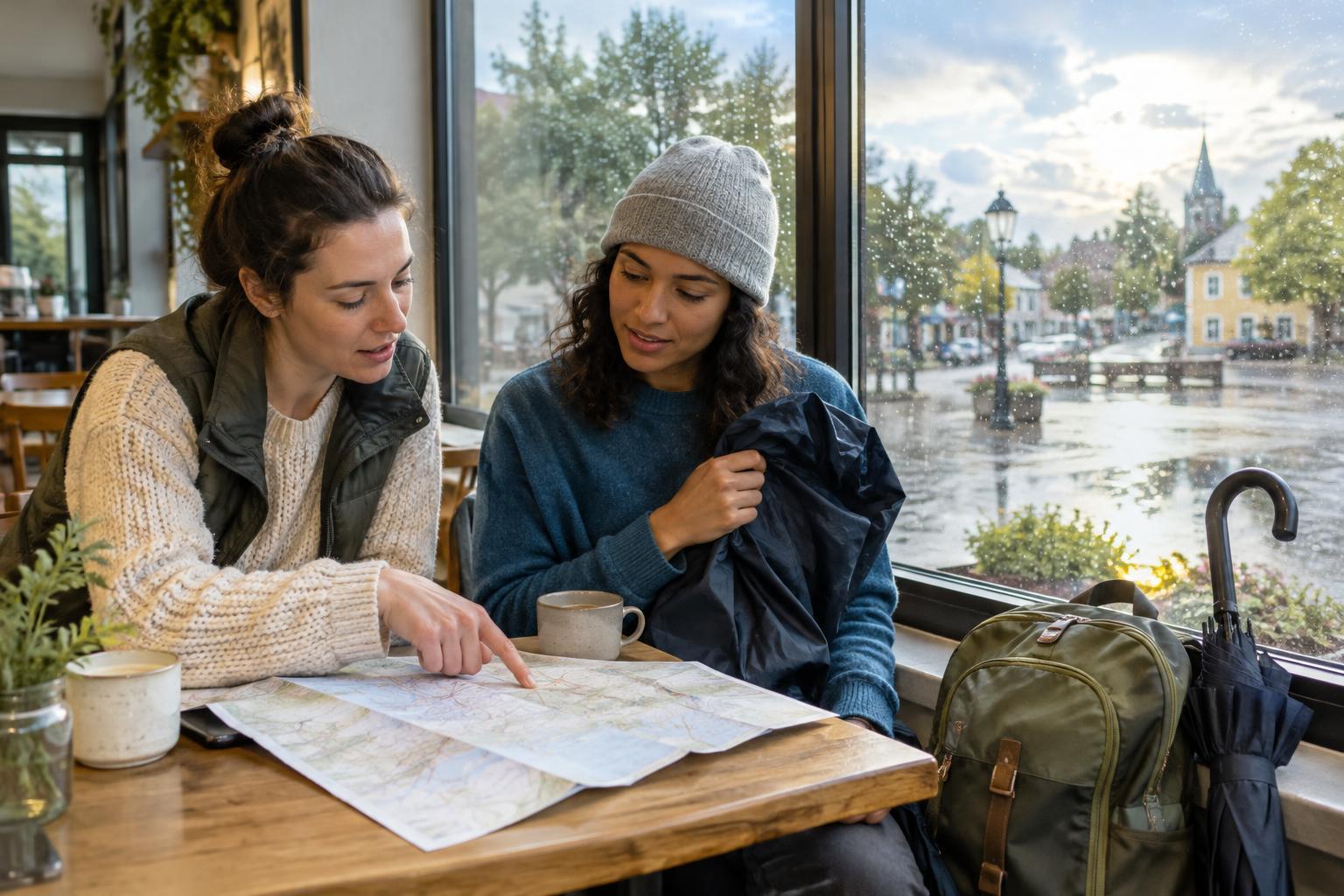
Start with what matters most
A short break can feel tightly planned because there is little time to spare. When the weather changes, it is tempting to replace the whole itinerary at once. Before you do, name the part of the trip that matters most. Perhaps you want time outdoors, an unhurried meal, a change of scenery or simply a day without your usual errands. That priority can guide your adjustments, even if the original plan no longer fits.
Separate your plans into three groups: things you would be disappointed to miss, things you can move to another time, and things you chose only because they were nearby. If rain is expected during an afternoon walk, for example, you might move the walk to a clearer morning and let a casual browse or long lunch fill the afternoon. A useful change protects the purpose of the break rather than every detail on the schedule.
Make a small menu of alternatives
You do not need a second itinerary. For each weather-dependent activity, find one nearby alternative that suits the same mood. A scenic walk might become a visit to a garden centre or a relaxed drive with a stop for a view. An outdoor coffee could become a table by a window. A planned picnic could move indoors if your accommodation has a comfortable place to eat.
Try to keep alternatives simple enough to choose on the day. Note opening hours and whether booking is needed before you rely on a place, but leave room to decide later. It also helps to identify one low-effort option for a tired or especially wet afternoon: a bookshop, a film, a café or a quiet hour back at your room. Having a modest fallback makes the forecast feel less like a verdict on the trip.
Rearrange the day, not just the activity
Weather often changes by the hour, so the order of your plans may matter more than the plans themselves. Put the most exposed activity in the most promising part of the day, if that is practical, and give indoor stops the less comfortable hours. Leave a little space between commitments so you can wait out a shower, change clothes or take a different route without feeling behind.
Think about the journey between places too. Two appealing indoor stops may be a poor combination if getting from one to the other means a long, unpleasant walk. Group nearby activities and check how you would travel if conditions worsen. For a very short trip, one main outing and one optional extra can be more satisfying than a packed list that becomes stressful to rearrange.
Pack for flexibility, not every possibility
A few versatile items can make an ordinary weather change easier to manage. Consider a light waterproof layer, comfortable shoes, an extra pair of socks and a bag that keeps essentials dry. Layers are useful when you expect to move between chilly streets and warm indoor spaces. If you are travelling with others, agree on what each person needs to stay comfortable; a damp afternoon feels different to someone who forgot a warm layer.
Packing also includes the less visible details of a plan. Save the address of your accommodation, keep tickets or booking information easy to find, and know which activities can be changed or cancelled. If you expect poor reception, keep key details available offline. These small preparations help you make a calm decision when you are already out, rather than returning to your room to work everything out.
Know when to change course completely
Some conditions call for more than a timetable swap. If travel is disrupted, visibility is poor, paths are slippery or local guidance advises against an activity, choose a safer option rather than trying to rescue the original plan. Check relevant forecasts and conditions close to departure, especially for exposed places or travel that depends on a particular route. A missed viewpoint is easier to accept than an avoidable difficult journey.
Once you have made a reasonable adjustment, give the new plan a chance. A short break does not have to look like the version you imagined to feel worthwhile. Choose a comfortable pace, keep one thing you were excited about if you can, and let the rest of the day be shaped by what is actually possible. Flexibility is not a consolation prize; it is part of making good use of the time away.