Start with what the window needs to do
Before choosing a fabric or finish, notice how you use the room throughout the day. A bedroom may need darkness in the morning and privacy after sunset. A living room might need relief from screen glare without losing all its daylight. A window facing a close neighbor calls for a different solution from one overlooking a quiet garden. Write down your priorities for each window rather than assuming every room needs the same covering.
It helps to separate light control from privacy. A sheer covering can soften sunlight and blur the view into a room during the day, but it may offer little privacy at night when the lights are on indoors. An opaque covering can provide more privacy when closed, yet leave the room darker than you want. If you need both daylight and dependable evening privacy, consider a covering you can adjust or a combination of two layers.
Know what each option does best
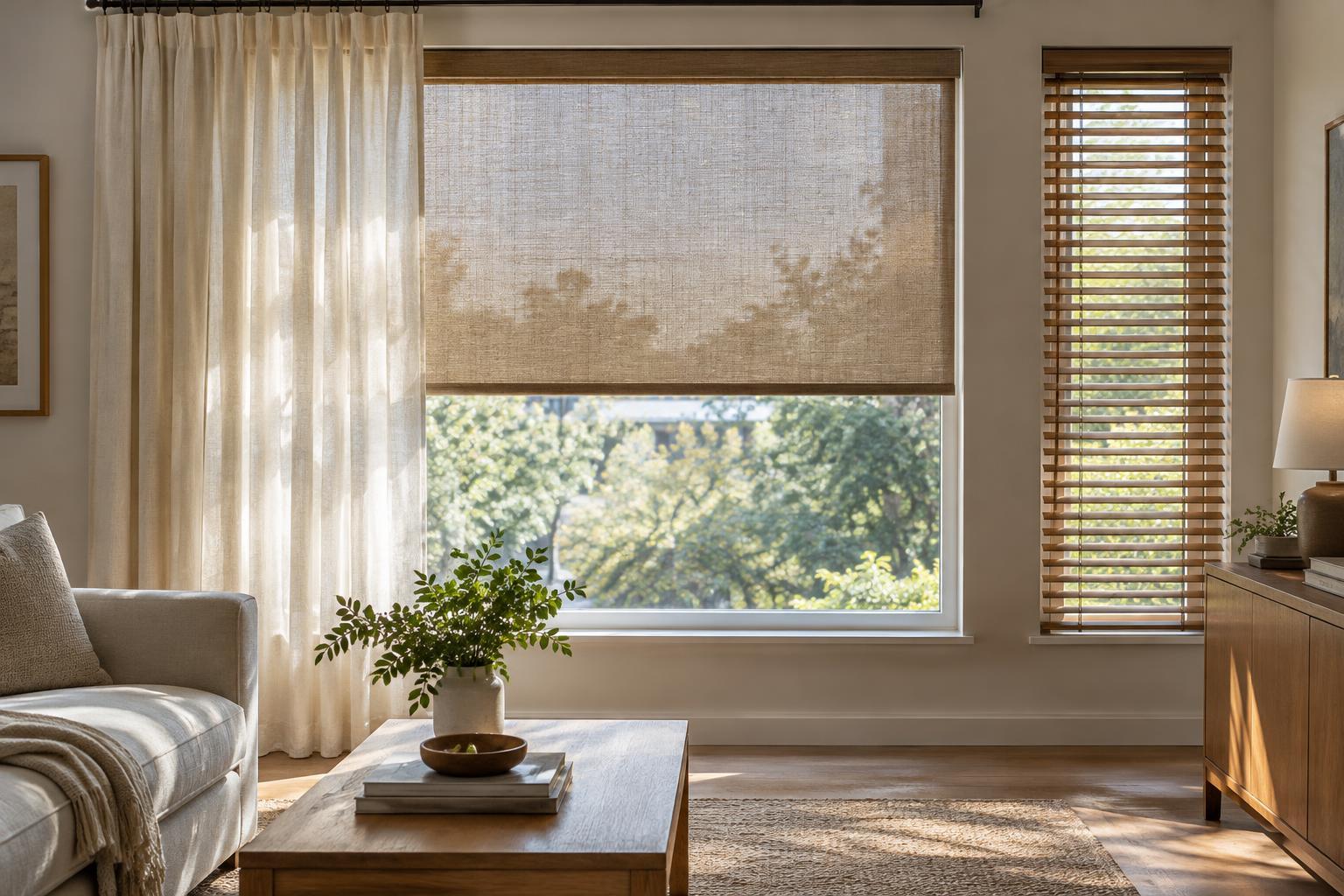
Curtains bring softness to a room and offer a wide choice of fabrics. Lightweight panels filter light; heavier or lined panels can make a room feel darker when drawn. Curtains are also easy to open fully when you want an unobstructed view. Keep in mind that light can enter around their edges, especially if the panels are narrow or the rod sits close to the window frame.
Blinds have slats that you can tilt to redirect light while limiting a direct view inside. That makes them useful where you want to change the balance of light and privacy during the day. The trade-off is that slats can gather dust, and even closed blinds may let some light through the gaps. Their look is more structured than curtains, which may be a benefit or a drawback depending on the room.
Shades are usually one continuous piece of material that raises and lowers. A light-filtering shade can soften brightness, while a more opaque version blocks more light and views when lowered. Some styles offer adjustable top-down positioning, which can let daylight in above eye level while covering the lower part of a window. Because shade designs vary, check how a particular one looks and functions when partly raised, not just when fully closed.
Match the covering to the room
For a bedroom, think about the light that reaches the bed, not just the window itself. If early light bothers you, a closely fitting shade paired with curtains may reduce light around the sides better than either layer alone. For a living space, adjustable blinds or a light-filtering shade can keep the room usable when the sun is bright without making it feel shut off.
In a kitchen or bathroom, consider how close the covering will be to splashes, steam and everyday cleaning. A material that is easy to wipe may be more convenient than a delicate fabric in those spots. For a ground-floor room, check privacy from outside after dark with the indoor lights on. The result may be different from what you see during a sunny afternoon.
You do not have to use one treatment across an entire home. Repeating a color or simple finish can create a sense of connection while letting each room have the level of light control it needs.
Check fit and daily use before buying
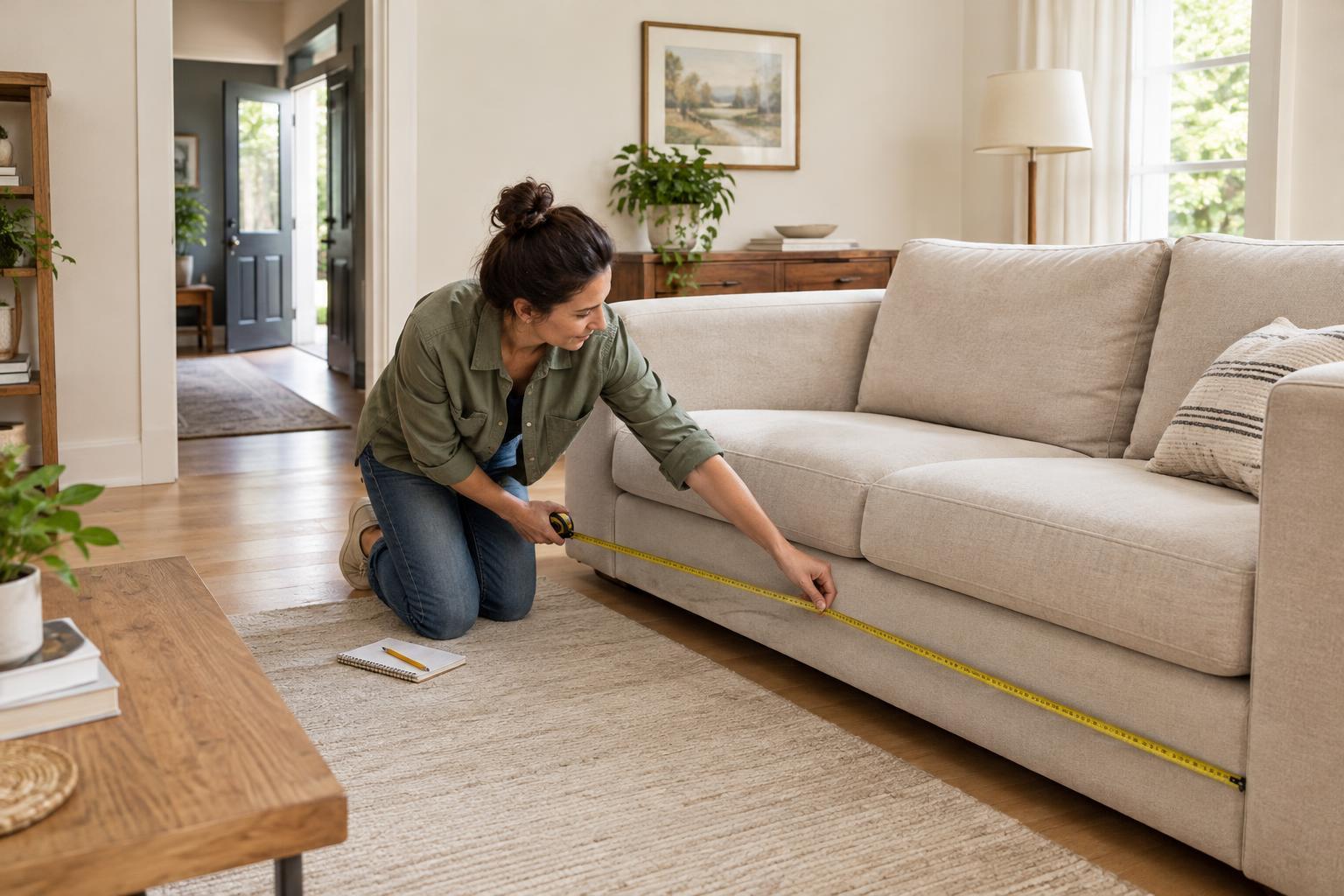
Decide whether the covering should sit inside the window frame or extend beyond it. An inside-mounted option gives a tidy, contained look but needs enough frame depth and accurate measurements. An outside-mounted option can cover more of the edges and may suit a shallow frame. Measure each window on its own, even if several look identical, and follow the measuring directions for the product you choose.
Picture the covering in motion, too. Will curtains clear a radiator or a frequently used door? Can you reach the blind or shade comfortably? Is there room for panels to stack beside the glass when open? These details often matter more in daily life than a small difference in appearance. In homes with young children, choose a cordless option or follow the product’s safety guidance for any cords.
Choose a flexible solution if you are unsure
If no single option seems right, layering can solve competing needs. A shade can handle daytime glare while curtains add softness and another level of coverage in the evening. Blinds can provide adjustable privacy, with curtain panels framing the window even when they are not drawn. Each layer should have a clear purpose; adding more fabric or hardware is not automatically better.
For a simpler choice, start with the problem you notice most often: a bright screen, an exposed view or a room that feels too dark. Pick a covering that addresses that problem first. A window treatment works best when it makes the room easier to live in, not merely when it looks good in a photograph.