Start with your day, not the fabric label
A good everyday outfit needs to feel comfortable through the parts of your day that actually happen: a commute, a long stretch at a desk, an errand in warm weather or a wash at the end of the week. No single fabric handles all of those equally well. Cotton often feels familiar and soft, linen suits people who like an airy feel, and synthetics can make clothing lighter, stretchier or quicker to dry.
The fabric name is only a starting point. A loose cotton shirt may feel cooler than a close-fitting linen one, while a thin synthetic top may breathe better than a heavy cotton sweatshirt. Weight, weave, fit and construction all affect how a piece wears. When choosing, think about where you will wear it, how often you want to wash it and whether you mind wrinkles or prefer a crisp look.
Cotton: comfortable and versatile, with a few trade-offs
Cotton is a dependable choice for T-shirts, button-downs, jeans and casual layers. It can feel soft against the skin and comes in many weights, from light jersey to sturdy canvas. That variety makes it easy to build familiar outfits around cotton basics. For a top you will wear repeatedly, pay attention to the feel of the fabric and whether it has enough substance to hang the way you like.
Cotton absorbs moisture, which can be pleasant in ordinary wear but less convenient when you expect to sweat heavily or need a garment to dry quickly. Some cotton pieces also wrinkle or shrink, especially if their care instructions call for gentler washing or drying than your routine allows. Before buying, check the label and consider whether you are willing to follow it. A shirt that suits your schedule is more useful than one that only looks good straight off the hanger.
Linen: airy texture for relaxed outfits
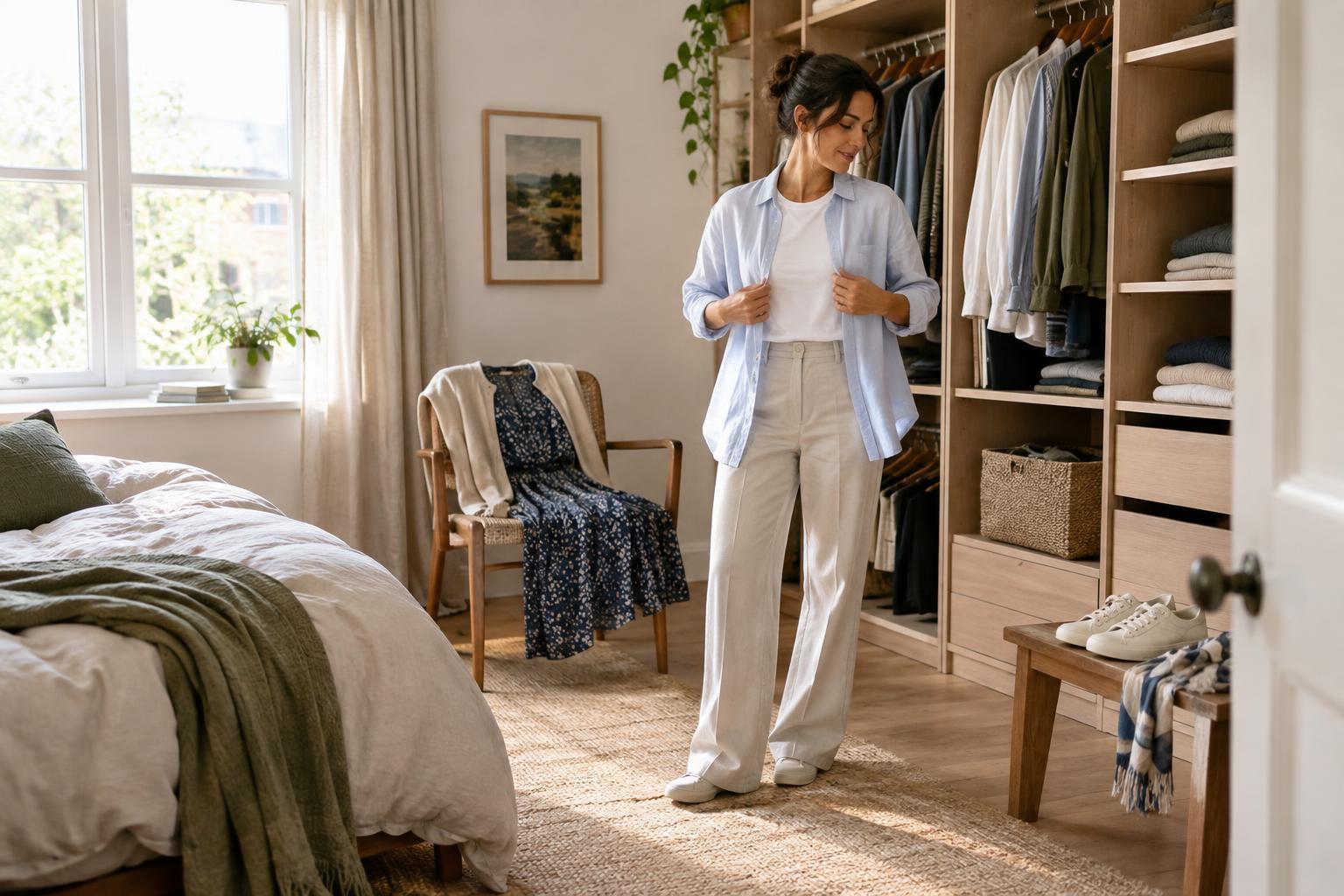
Linen is often a strong option for warm-weather shirts, trousers and dresses. Its characteristic texture gives even simple pieces a relaxed look, and looser linen garments can feel comfortable when you want room for air to move. It also works well as a layer: an open linen shirt over a tank or T-shirt can make a casual outfit feel more considered without adding much bulk.
The most noticeable trade-off is creasing. Linen tends to wrinkle as you sit and move, so it may not suit days when you want a sharply pressed appearance from morning to evening. Its feel varies, too; some pieces are soft from the start, while others feel firmer and may soften with wear and washing. If you like the look but not the rougher texture of a particular garment, keep looking rather than assuming all linen feels the same.
Synthetics: useful when performance and easy care matter
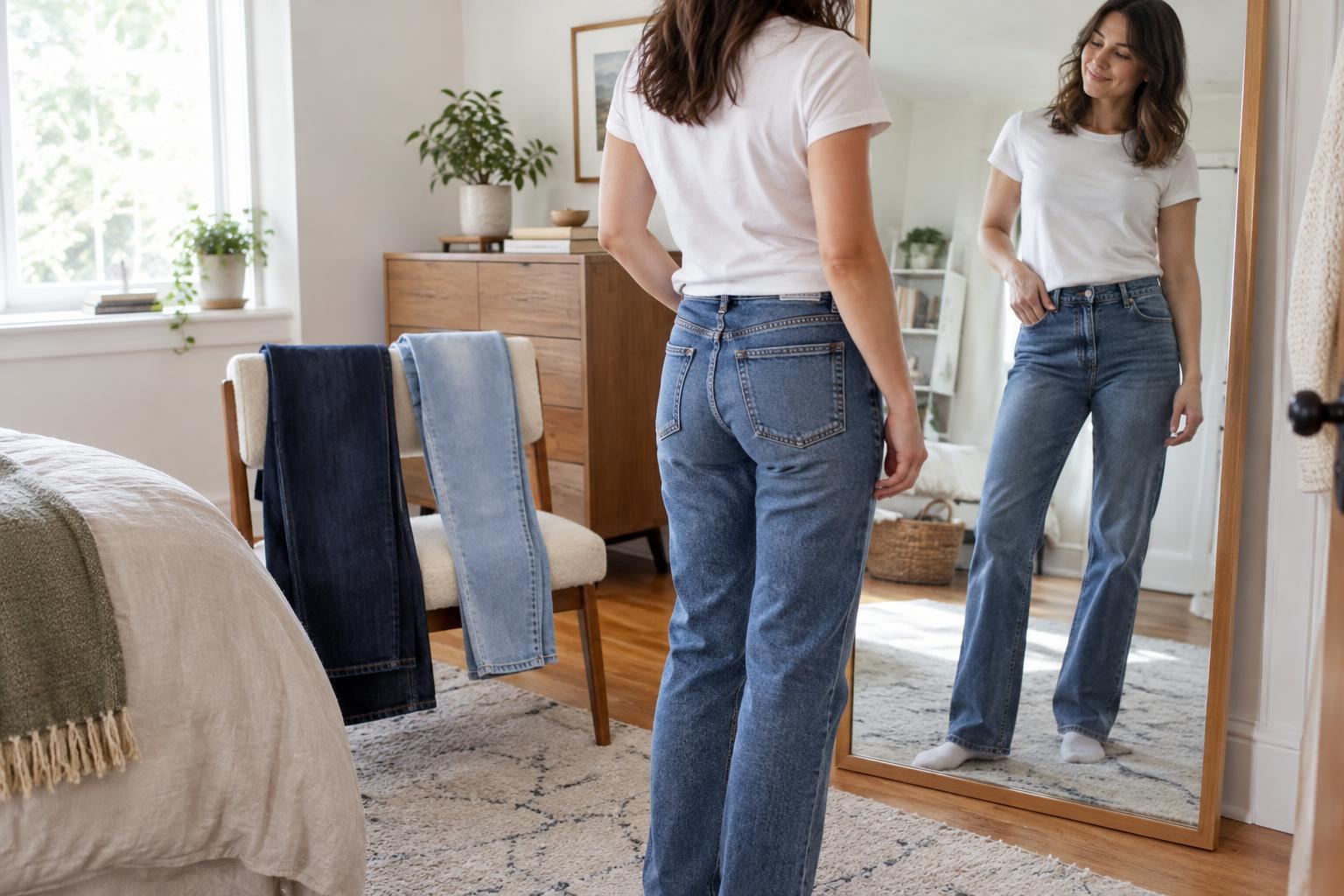
Synthetic fibers such as polyester and nylon appear in everything from casual tops to lightweight outerwear. Depending on the garment, they can add durability, help clothing dry faster or make it easier to pack with fewer wrinkles. A small amount of elastane can add stretch to jeans or trousers, which may make them more comfortable for sitting, walking and bending throughout the day.
There are trade-offs. Some synthetic garments may feel less comfortable in heat, and some can hold on to odors even after a short wear. The experience depends on the fabric and its construction, so judge the actual piece rather than the fiber alone. If a top feels clingy, traps warmth or is awkward to care for in the fitting room, it is unlikely to become your easiest everyday choice.
Choose a wardrobe mix that fits your routine
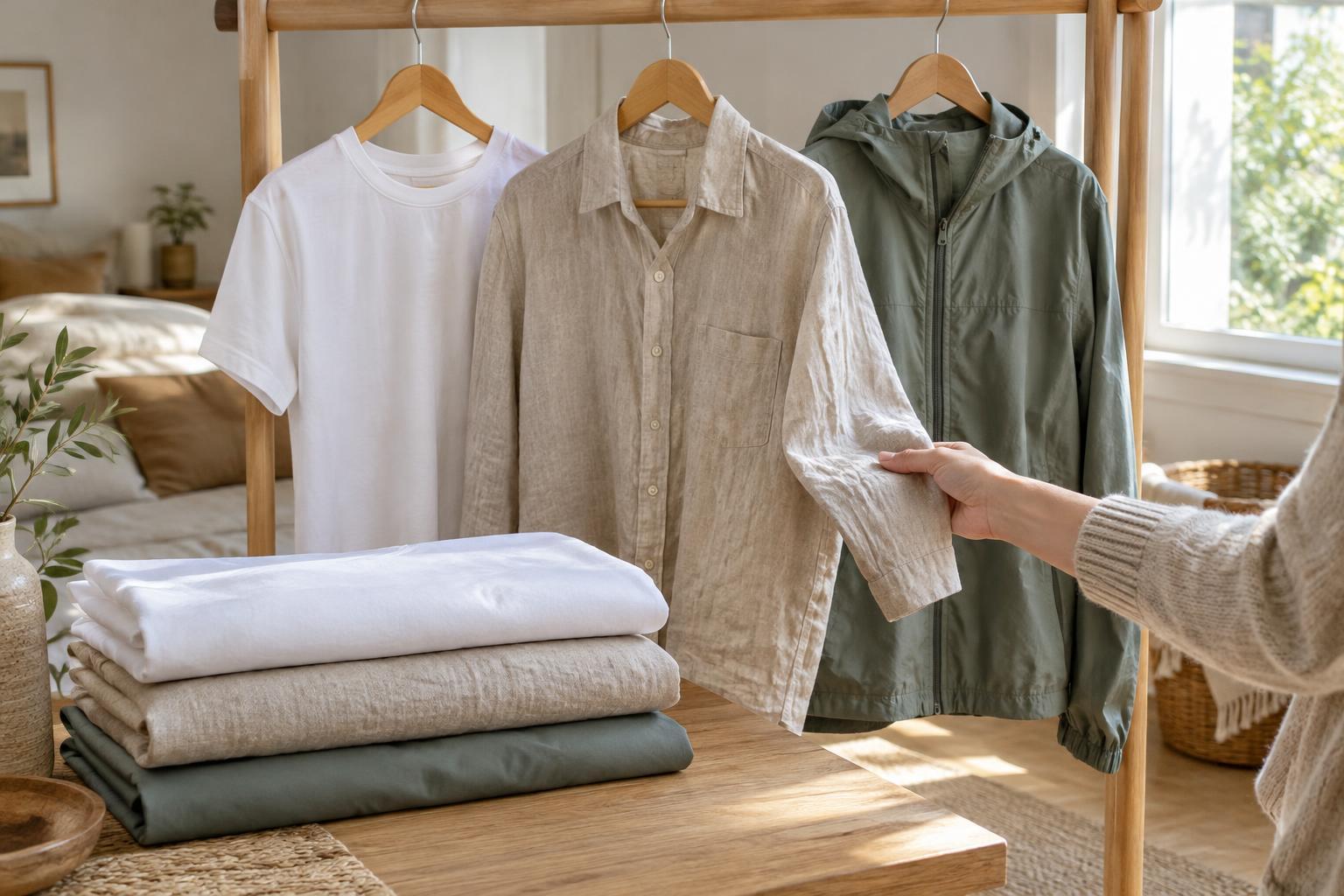
You do not need to pick one fabric for everything. Cotton can be an easy default for tees and everyday shirts; linen can fill the gap when you want a breezy, relaxed outfit; and synthetics or blends can be useful for travel, active commutes or clothes that need stretch. A cotton-synthetic blend may be worth trying if you want some of cotton’s familiar feel with different drying or wrinkle behavior, though the result varies by garment.
When shopping, use a quick three-part check. First, feel the fabric against your skin and move in it. Second, look at the care label and imagine washing it on a normal week. Third, decide whether its natural appearance after a few hours of wear will still feel like you. The best everyday fabric is the one you will comfortably put on, care for and wear again.