Start with the way you move through the room
One of the most common placement mistakes is arranging furniture for a pleasing view from the doorway while overlooking how people actually cross the room. A coffee table may look centered in a photo but force everyone to sidestep it on the way to the sofa. A chair can fit neatly into a corner yet prevent a cabinet door from opening fully.
Before moving anything, walk the routes you use most: from the door to a seat, through the living room to the kitchen, or around the bed to a closet. Notice where you turn sideways, step around a leg, or brush against furniture. Then shift the pieces that interrupt those routes. You do not need a perfectly straight path, but you should be able to move through the room without thinking about every step. Check door swings and drawers, too; a layout only works if you can use the room’s storage.
Bring seating into conversation range
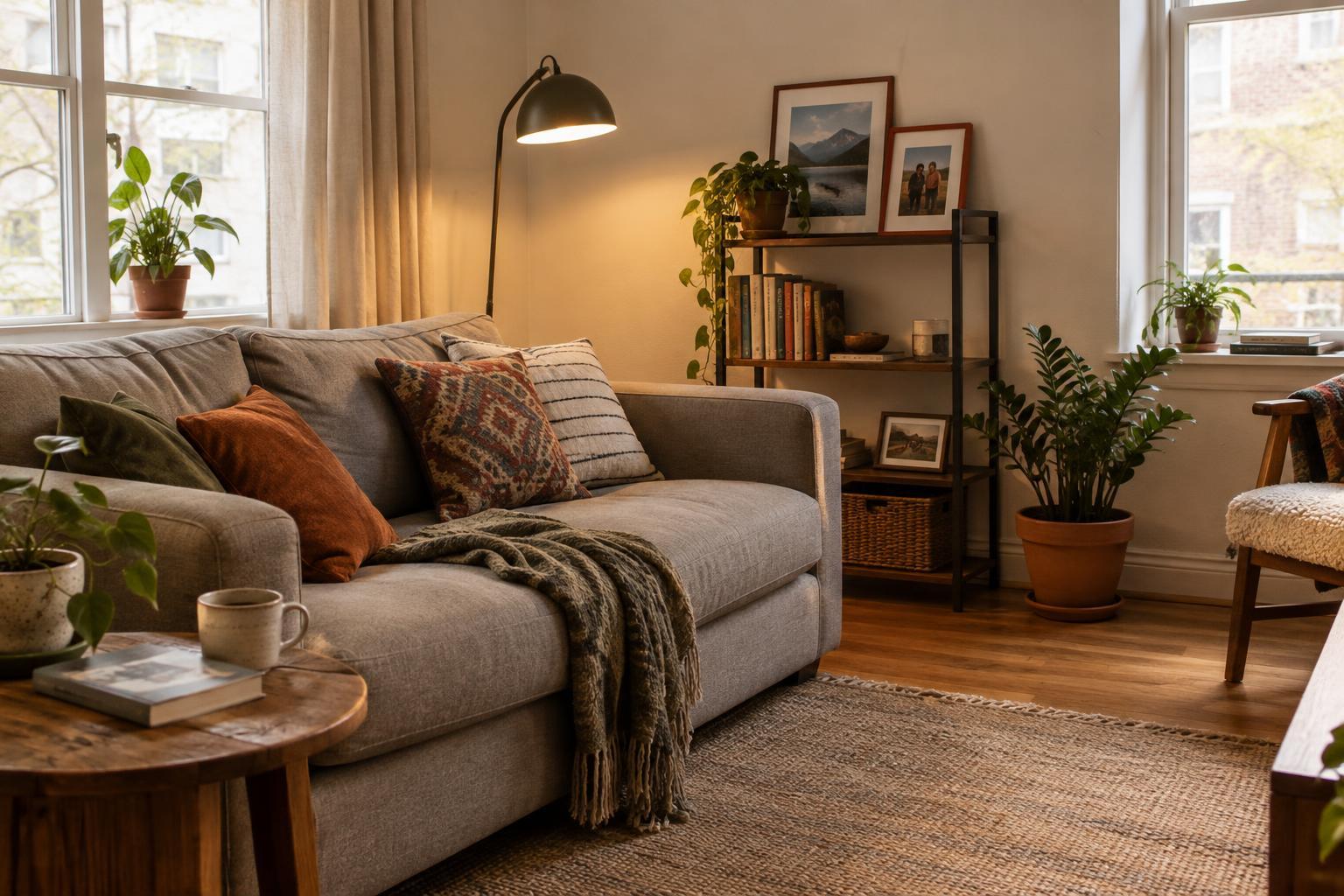
Pushing every sofa and chair against a wall can leave an empty middle and make conversation feel strangely distant. It is a tempting approach, especially when you want a room to seem larger, but open floor space is most useful when it serves a purpose. If people have to lean forward or raise their voices to talk, try moving a chair closer to the sofa or pulling the sofa a little way off the wall.
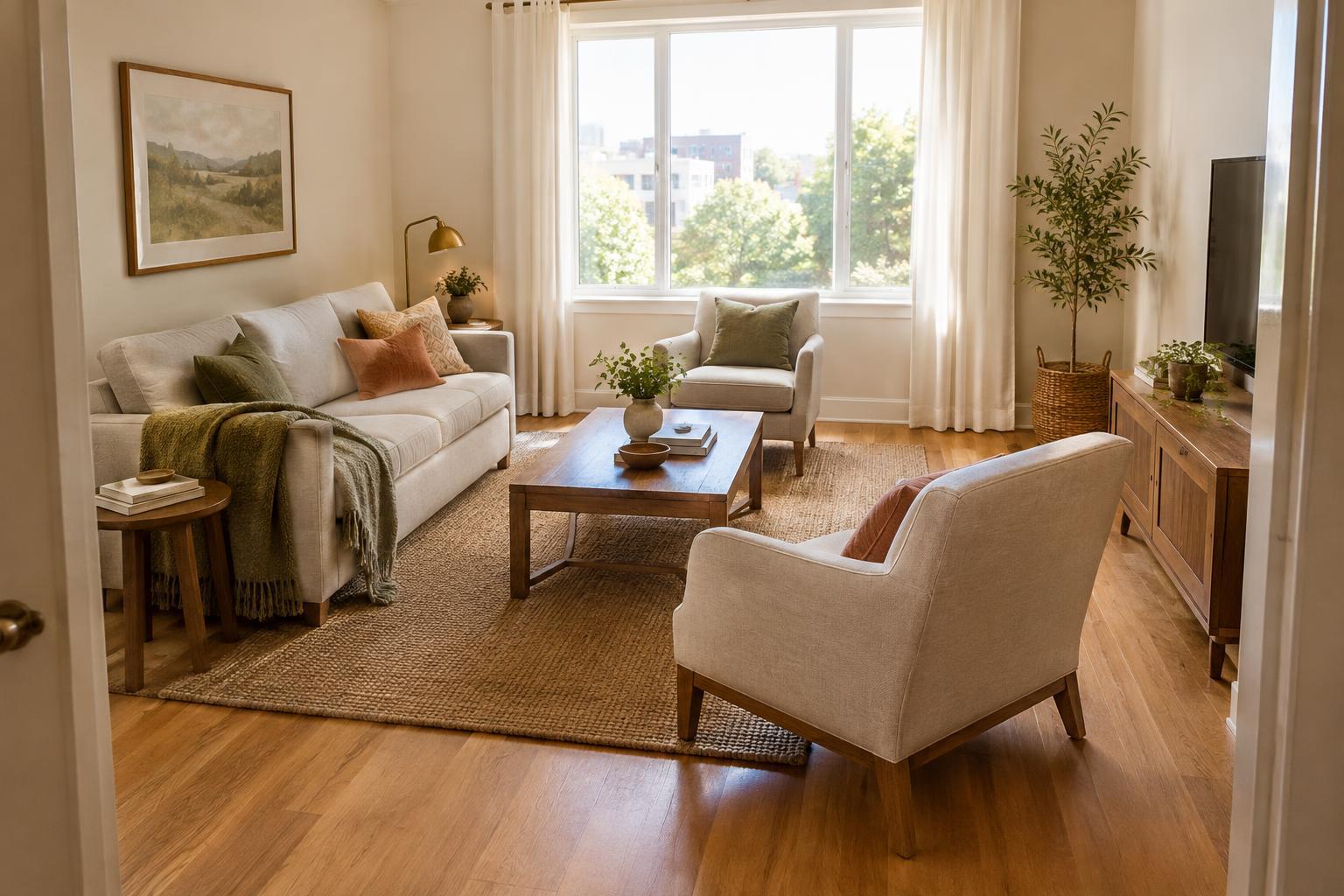
Give seats a relationship to one another rather than lining them all up toward a screen. An armchair angled toward the sofa can create a welcoming spot without requiring a matching set. Place a small table where someone can put down a drink, and make sure each seat is easy to enter and leave. In a tight room, even a modest adjustment in angle may make the arrangement feel more sociable.
Match the layout to the furniture you own
A large piece is not automatically wrong for a small room. Trouble begins when several pieces compete for the same space or when their positions make the room harder to use. A deep sofa, broad coffee table, and bulky side chairs may leave little room for knees or walking. Rather than pressing everything against the walls, decide which pieces earn their footprint. You might keep the comfortable sofa, swap the coffee table for a smaller one, and move an occasional chair to another room.
Also watch for furniture stranded in the middle of the floor. A rug can help connect a seating group, but a tiny rug beneath only the coffee table may make the larger pieces look unrelated. If a bigger rug is not an option, focus on the furniture arrangement: keep chairs close enough to feel part of the group and position tables where they are genuinely useful. The goal is a clear relationship between pieces, not a rule about where every leg must sit.
Leave room for light and everyday tasks
Furniture placement often goes wrong when a room is arranged around one feature at the expense of everything else. A sofa may face the television perfectly while blocking a window, or a reading chair may sit far from the lamp it needs. Think about what you do in each spot during an ordinary day. Can you see well enough to read? Is there a convenient surface for a cup or book? Can you open the curtains without reaching over a chair?
Try moving taller pieces away from windows if they make the room feel dim, and place lamps where their light reaches the activity they support. You can still give a fireplace, view, or screen a prominent place without making it the only consideration. A slight turn of the sofa or a lamp beside an armchair may allow the same area to serve more than one purpose.
Edit crowded corners, then test the changes
Corners tend to collect whatever has no obvious home: an extra chair, a plant stand, a basket, and perhaps a small table. Filling every gap can make a room feel busy and create awkward places to clean. Empty space is not wasted if it lets the furniture you use feel comfortable. Remove one item from a crowded area and live with the change for a few days before deciding whether it needs replacing.
There is no single correct layout for every room. Start with the most frustrating spot, move one or two pieces, and use the space as you normally would. Sit in the chairs, open the drawers, carry laundry through the doorway, and notice what improves. Small experiments are easier to reverse than a complete rearrangement, and they help you build a room around your habits rather than an idealized floor plan.