Start with the chores you tend to forget
The hardest part of recurring chores is often remembering them at the right time. Laundry may be obvious when the hamper is full, while wiping cabinet handles or changing sheets can slip past for weeks. You do not need to record every small thing you do at home. Start by writing down the tasks that repeatedly catch you by surprise or create a scramble when they are left too long.
Walk through your home with a piece of paper or a note on your phone. Make a rough list by area: kitchen, bathroom, living spaces, and laundry. Then circle only the chores that need a reminder. If you already take out the rubbish without thinking about it, leave it off. A useful tracking system is a small one you will actually look at.
Give each task a loose rhythm
Next to each circled chore, add a simple cue for when it usually needs attention. Some tasks fit a weekly rhythm, such as washing towels. Others make more sense when tied to a visible sign: clean the fridge when spills appear, or run a load of laundry when the hamper is nearly full. The point is to help your future self notice the task, not to set a perfect schedule.
Try grouping time-based chores into three buckets: this week, this month, and occasionally. There is no need to assign a day to every job. If a fixed day helps, use one; if it makes the plan feel brittle, keep the timing flexible. A missed Tuesday should not turn a simple chore into a failed routine.
Keep the list where decisions happen
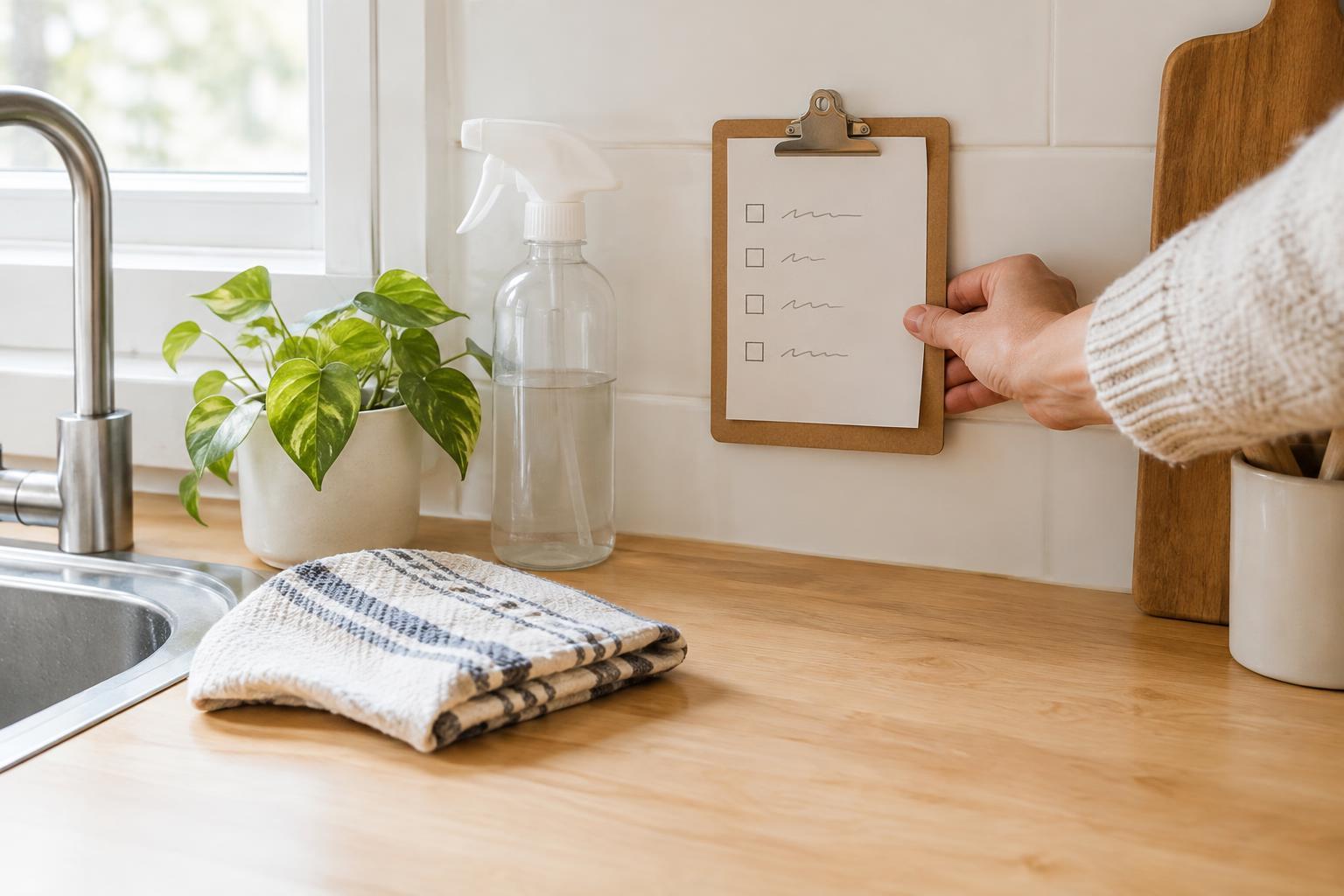
Choose one place to track the chores: a sheet on the fridge, a note pinned to your phone, or a small notebook kept in a familiar spot. Avoid splitting tasks across several apps and scraps of paper. When you have ten minutes to spare, you should be able to glance at one list and choose something useful.
A basic layout is enough. Write the weekly tasks at the top, the monthly tasks below, and the occasional ones at the bottom. Put a check beside a task when it is done, or add the date if that helps you remember how long it has been. At the start of a new week or month, clear the relevant checks. For tasks that depend on a visible cue, keep the task on the list as a reminder to look, not as a demand to do it every time.
If more than one person shares the work, make the list accessible to everyone involved. A name beside a task can clarify who plans to handle it, but leave room to swap when schedules change. The list should make the work visible, not become a scoreboard.
Build in a quick reset
A chore list needs a brief check-in to stay useful. Pick a moment you already pause during the week, such as before making a shopping list or while planning meals. Spend a few minutes looking at what remains undone and choosing one or two priorities. You are not trying to catch up on everything at once; you are deciding what matters most before the next check-in.
When a task keeps getting skipped, ask why. It may be too vague, so change “clean bathroom” to “wipe sink and mirror.” It may take more time than the slot you have available, so break it into smaller parts. Or it may not need doing as often as you first thought. Adjusting the list is part of using it well.
Let the system stay ordinary
A good household chore system will not make chores exciting, but it can take some of the mental work out of noticing them. Keep the list short enough to scan, put it somewhere you will see it, and review it often enough that it stays trustworthy. If you stop using it for a while, you do not need to reconstruct every missed task. Look around, choose what needs attention now, and start the list again from there.
Over time, you may find that some chores no longer need tracking and others do. Let the list change with your home and your available time. Its job is simply to give you a clear next step when you need one.