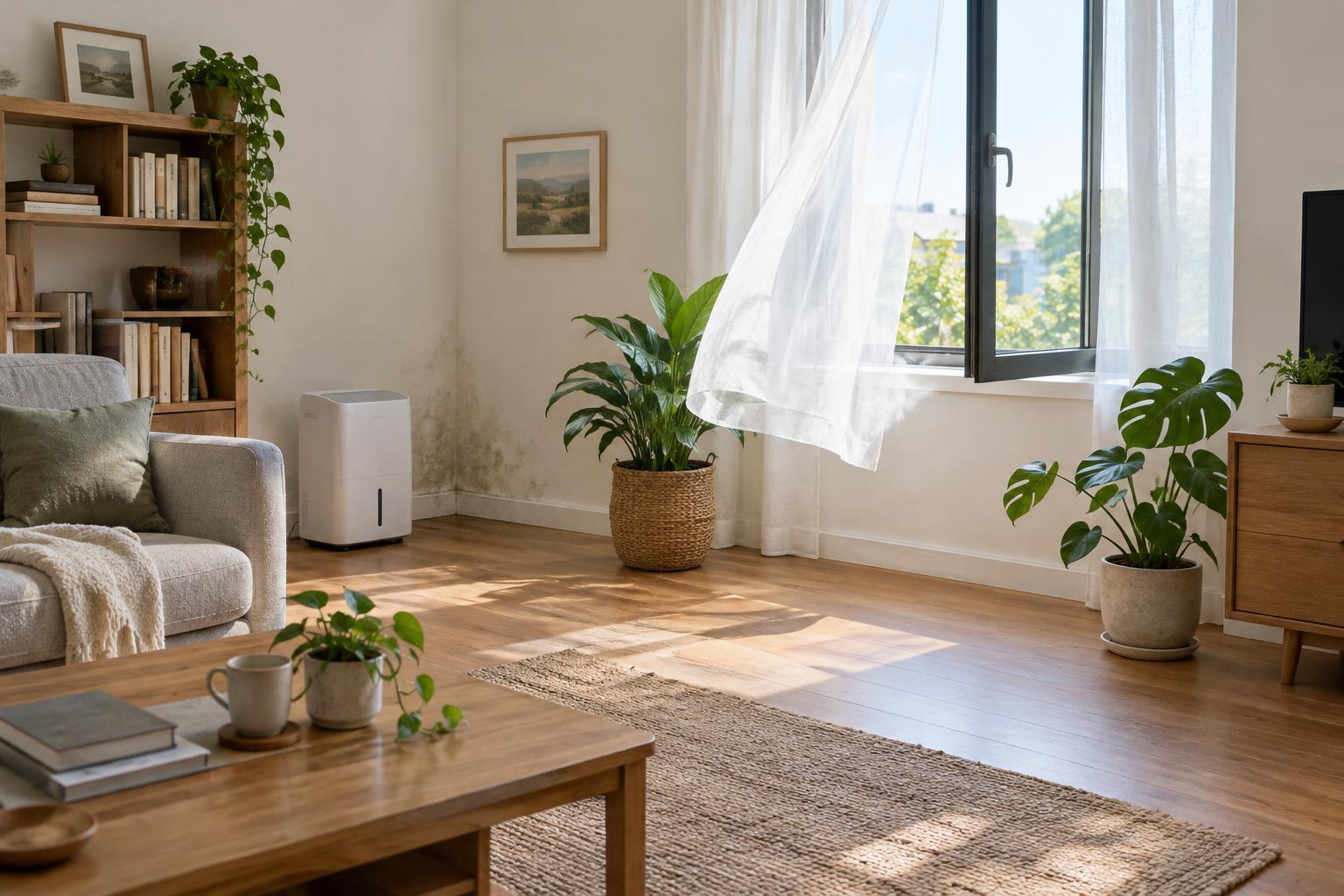
Start by noticing where the air feels stuck
Airflow and humidity are related, but they are not the same problem. Airflow helps move air through or out of a room. Humidity is the amount of moisture in that air. A fan may make a still room feel more comfortable, yet it will not remove moisture if it only circulates the same indoor air. Before buying anything, spend a few days noticing which rooms feel stuffy, which surfaces stay damp, and when those changes happen.
Look for condensation on windows, a musty smell in closets, towels that take a long time to dry, or dampness around a bathroom or laundry area. A small humidity meter, often called a hygrometer, can help you compare rooms and notice patterns. Its reading is more useful alongside what you see and feel than as a number to chase. If dampness is concentrated near a pipe, roofline, or window frame, investigate a possible leak rather than treating it as a ventilation problem alone.
Give moisture an exit where it starts
Showers, cooking, and laundry add moisture to a home. The easiest time to manage it is while it is being produced. Run a bathroom exhaust fan during a shower and leave it on for a while afterward if the room remains damp. When cooking, use a vented range hood if you have one, and cover pots when practical. Wipe up water left on counters, window sills, and bathroom surfaces so it does not linger.
Check where exhaust fans lead. A fan that moves damp air into an attic or another enclosed space is not solving the problem. If you are unsure how yours is set up, ask a qualified person to check it. Keep vents free of dust and avoid blocking them with storage. In homes without suitable exhaust fans, a brief period of window ventilation may help when outdoor air is suitable, though an open window is less useful when it is very humid, smoky, or otherwise unpleasant outside.
Make room for air to move
Good airflow does not require a constant draft. Start with simple obstacles: move furniture a little away from supply and return vents, avoid stacking belongings against them, and give crowded closets some breathing space. Leaving a small gap between large furniture and a cool exterior wall may help air reach a spot that otherwise stays clammy. Let towels and bath mats dry fully rather than leaving them in a heap.
When outdoor conditions allow, opening windows on different sides of a home can create a path for fresh air. Even a short airing may feel more effective than leaving a single window barely open all day. A portable fan can help guide air through that path or move air out of a stuffy room. Choose a stable location, keep cords clear of walkways, and remember that the fan is moving air—not removing the moisture that caused it.
Match the tool to the problem
If a room stays humid despite better habits and working exhaust fans, a dehumidifier may help. Choose one suited to the space, follow its placement instructions, and empty and clean it as directed. It works best when you also address moisture sources; otherwise, it may run often without fixing the underlying issue. Air conditioning can remove some moisture while cooling, but its effect depends on the equipment and how it is used.
Heating, cooling, and ventilation systems also need ordinary upkeep. Replace or clean filters according to the equipment instructions, and keep vents unobstructed. A dirty filter can restrict airflow, but a new filter will not repair a leak or dry a wet wall. If you rent, tell your landlord or building manager about fans that do not work, persistent condensation, or water damage. In any home, recurring damp patches or a strong musty odor deserve closer attention rather than another attempt to cover the smell.
Build a small routine you can keep
A manageable routine beats a long list of tasks you will forget. After a shower, run the fan, spread out towels, and leave the room able to dry. After cooking, use the hood and clear any pooled water. Once a week, check the places moisture tends to hide: behind furniture, around windows, beneath sinks, and near laundry. Adjust your approach with the seasons and the weather instead of assuming the same window-opening habit will work every day.
The aim is not a perfectly controlled indoor climate. It is a home where damp areas dry, air can move, and new problems are easy to spot. Start with one room that bothers you, change one or two habits, and see whether it feels different over time. If moisture keeps returning or materials remain wet, focus on finding and fixing the cause before adding more gadgets.