Start with the week you actually have
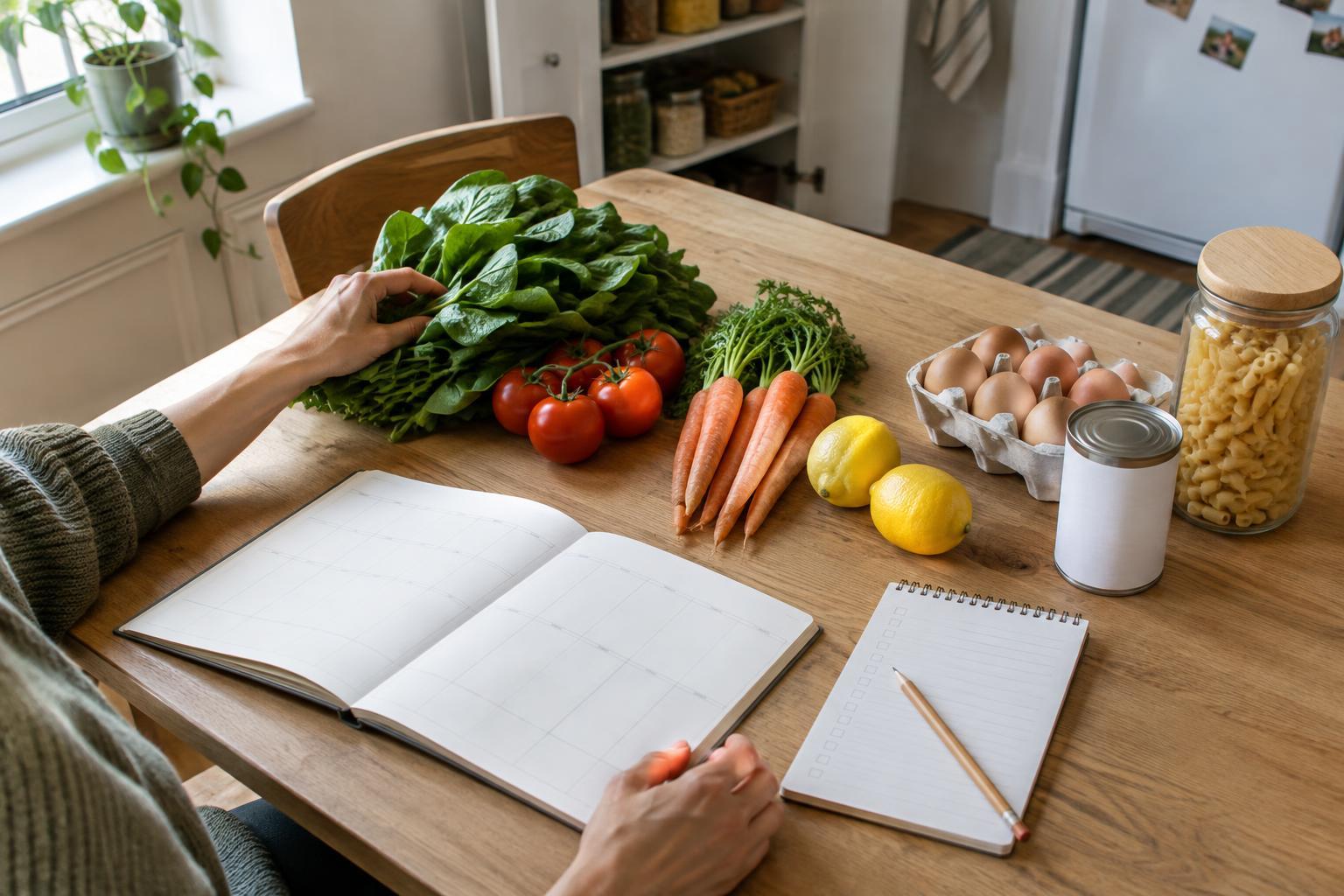
A useful meal plan begins with your calendar, not a collection of recipes. Look at the coming week and notice which evenings are busy, when you expect to be home, and whether you have any meals already covered. You do not need to plan every breakfast, lunch, and dinner. If evenings are where you tend to get stuck, plan dinners first and keep the rest simple.
Choose a planning window that feels manageable. Three or four dinners may be enough for a first attempt. You can leave another night for leftovers, a quick pantry meal, or a change of plans. This gives you a little direction while keeping the plan flexible enough to use.
Pick meals that share a few ingredients
Start with dishes you already know how to make. A meal plan is easier to follow when it does not require you to learn a new technique every night. Think in simple formats: a tray of roasted vegetables with a protein you like, pasta with a quick sauce, rice bowls, or soup with bread. You can vary the ingredients without changing the basic method.
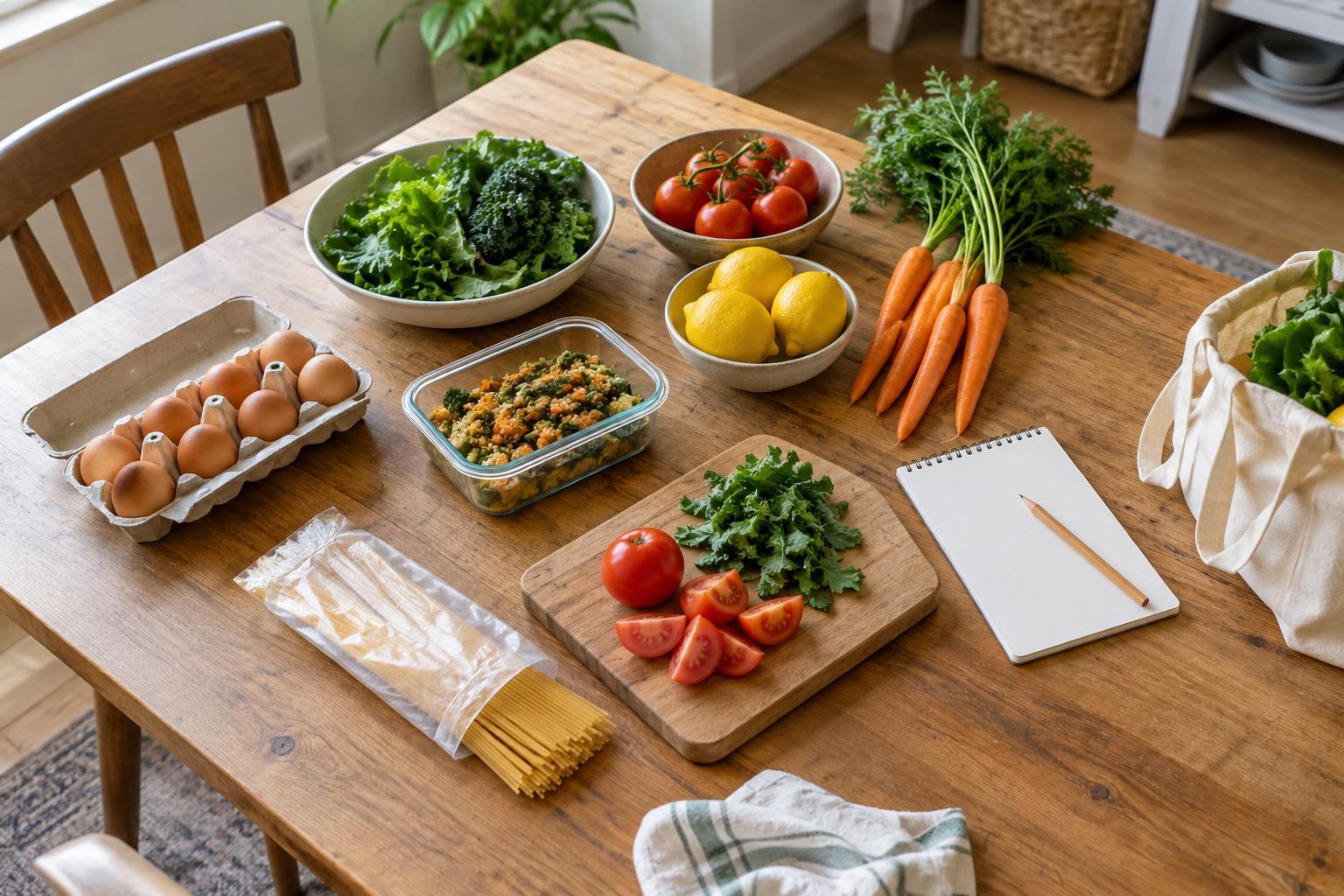
To make shopping and cooking easier, look for overlap between meals. If you buy a bag of carrots, you might roast some and add the rest to a soup. A pot of rice can accompany one dinner and become the base of another. You do not have to use every ingredient twice; even one or two shared items can make the week feel more connected.
Include at least one especially easy option for a tiring day. This might be an omelet and toast, a sandwich with cut vegetables, or a frozen meal you enjoy. An easy option is part of the plan, not evidence that the plan has failed.
Check your kitchen, then write one shopping list
Before buying anything, take a quick look in your fridge, freezer, and cupboards. Note ingredients that need using soon, along with staples you already have. You may find that a half bag of pasta, a jar of sauce, or frozen vegetables can form the start of a meal. Planning around what is on hand helps prevent duplicates and gives those ingredients a purpose.
Write your shopping list from the meals you have chosen. Grouping items by produce, proteins, pantry goods, and refrigerated items can make the trip easier to navigate. Check amounts before adding staples such as oil, rice, or spices. If an ingredient is needed for only one recipe and you are unlikely to use the rest, consider a substitution or a different meal.
Prepare only what will help future you
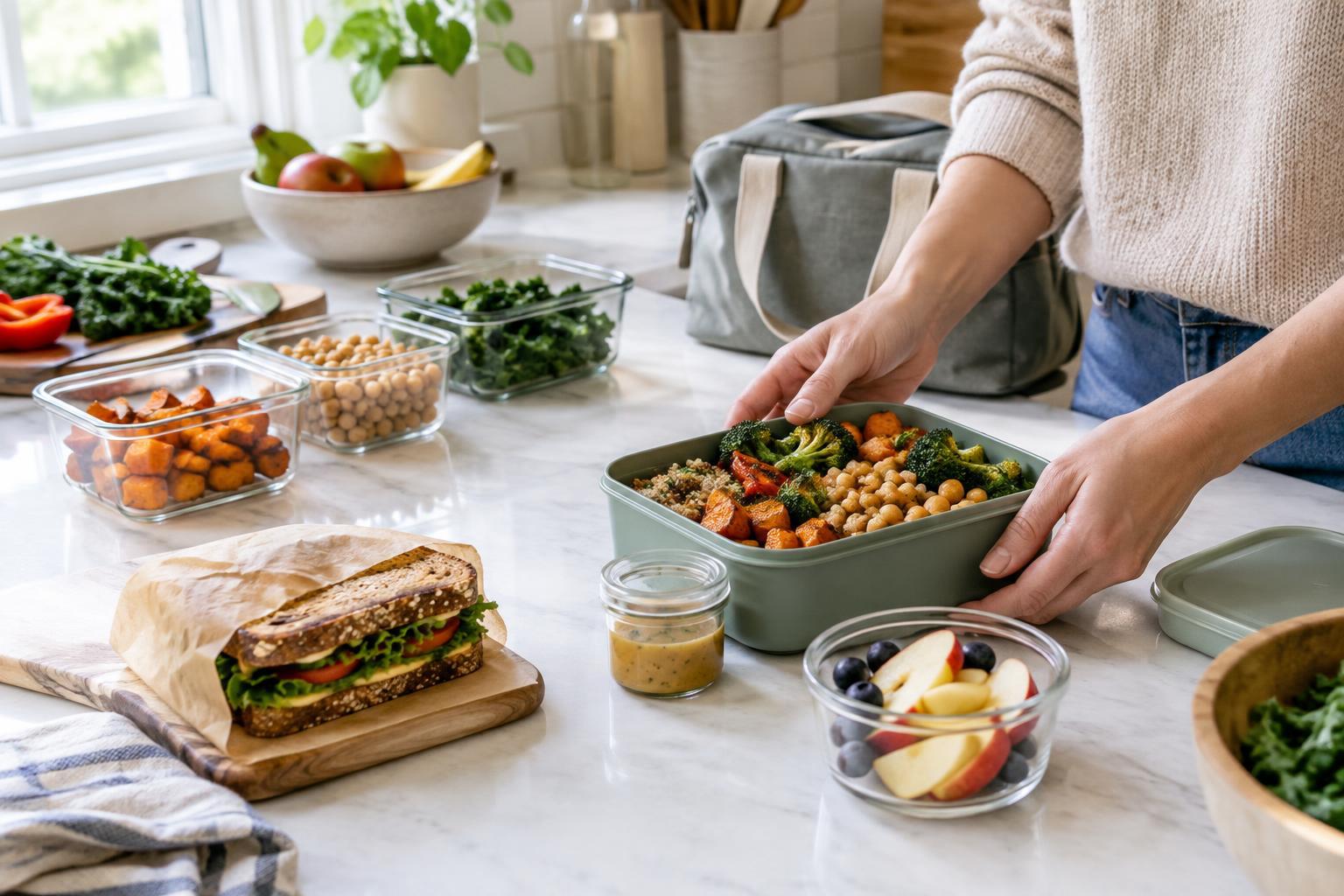
Meal planning and meal prepping are not the same thing. You can have a useful plan without spending hours cooking in advance. If you have a little time, pick one or two tasks that will remove a weekday hurdle: wash vegetables, mix a simple dressing, cook a pot of grains, or portion out ingredients for a meal you know you will make.
Be realistic about storage. Keep perishable foods refrigerated, put cooked food away promptly, and freeze portions you do not expect to eat soon. If you are unsure how long something will keep, check reliable storage guidance rather than relying on the plan to tell you. It is also fine to leave ingredients unprepared when they will hold up better that way.
Use the plan as a guide, not a rule
Keep your plan somewhere you will see it, such as a note on your phone or a sheet on the fridge. It can be as short as a list of meals and the ingredients each one needs. You can assign meals to particular days if that helps, but you can also choose from the list each evening based on your time and energy.
At the end of the week, take a minute to notice what worked. Did a meal make good leftovers? Was there a day when cooking felt unrealistic? Did you buy too much of one ingredient? Use those observations to make next week’s plan a little more practical. The goal is not to build a perfect system. It is to make the familiar question of what to eat easier to answer.